

Renewable energy made up just more than 10 percent of all the domestically-produced energy in the U.S. in the first half of this year and about 7 percent of that energy used in the country.
This story from the Greentech Media web site says the information comes from a U.S. Energy Information Administration report released this week:
According to the report, renewable energy accounted for 3.61 quadrillion British thermal units of the 34.16 quadrillion Btu domestically produced energy the country used from January to June.
That represents a 5 percent growth from 3.44 quadrillion Btu of renewable-energy production in the first half of last year. Most of that growth came from wind power, which increased production by nearly 49 percent from the year-ago quarter to 244 trillion Btu.
Biofuels and biomass energy make up the largest portion of U.S. renewable-energy generation, producing 1.88 quadrillion Btu in the first half of 2008, followed by hydropower, which accounted for 1.38 quadrillion Btu. Geothermal power made up 17 trillion Btu and solar made up only 41 million Btu.
“The significant contribution being made by renewable energy sources to the nation’s energy supply documented by the U.S. Energy Information Administration is far greater than most Americans realize,” said Ken Bossong, Executive Director of the Sun Day Campaign, a nonprofit that promotes renewable energy. “Repeated statements by nuclear and fossil fuel interests that renewables contribute only a tiny fraction of the nation’s energy supply are not only misleading but flatly wrong.”
The rub is the country used 50.67 quadrillion Btu of energy, and about 16 1/2 quadrillion Btu were imported. While progress has been made in the field of renewables, the bottom line is we’re still just too dependent on non-renewable, foreign energy sources… but it’s getting better.
 It took them a little longer than they hoped, and it did involve one pit stop for fuel, but two ad men turned biodiesel advocates did finish a coast-to-coast run, entirely on biodiesel.

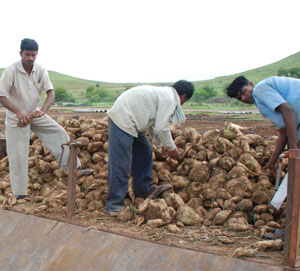 The WBDA, presented by the United Nations Development Program, the International Chamber of Commerce and the International Business Leaders Forum, acknowledge the contribution of the private sector to help achieve the UN Millennium Development Goals. The award recognized Syngenta’s tropical sugar beet as “an example of technological innovation that helps increase sustainable agricultural productivity to meet the world’s growing demand for food, feed and fuel.”
 The fuel, produced from wheat straw at Iogen’s Ottawa demonstration facility, is being purchased by Shell for use in upcoming fuel applications. Iogen officials say the current purchase is the first of many opportunities for the companies to jointly showcase the technical and commercial viability of cellulosic ethanol.
 The ads will be running on nationally syndicated shows including Rush Limbaugh and Sean Hannity, in addition to local radio stations throughout the United States.
 Officials in Snohomish County in Washington state are looking at making their own biodiesel for the future of energy for themselves… and they hope the rest of the country will look to them as the example of what energy independence could be.
 “The American Soybean Association greatly appreciates the work of the Senate to extend the biodiesel tax credit,” said ASA President John Hoffman, a soybean producer from Waterloo, Iowa. “Passage of this legislation to extend the biodiesel tax credit enhances the viability of the U.S. biodiesel industry, which is an important market for U.S. soybean farmers. ASA now urges House members to swiftly pass the measure and send it to the President to be signed into law.”
 A United Nations forum on Millennium Development Goals this week featured a discussion on energy and biofuels that allowed the CEO of world’s largest ethanol producing company a chance to share ideas on how ethanol can help address both poverty and energy dependence in developing nations.
 “With a billion acres of idled cropland across the globe and the price of agricultural commodities above the cost of production for the first time in decades there is an unbelievable opportunity for underdeveloped countries to simultaneously lift people out of poverty and solve their crippling addiction to energy imports,” Broin said.