

 According to Green Tech, the inventor of the EFuel100 MicroFueler home ethanol maker has signed on Sierra Nevada Brewing to make ethanol from beer dregs. E-Fuel said that the beer company will start testing EFuel’s refrigerator-sized portable ethanol refineries in the second quarter of this year using discarded beer yeast as a feedstock for ethanol.
E-Fuel last year unveiled its $9,995 home ethanol machine which ferments a mix of water and sugar into ethanol. Sierra Nevada every year generates 1.6 million gallons of “bottom of the barrel” beer yeast waste, which it now sells to farmers as feed. The MicroFueler will be able to raise the alcohol content in that mix to 15 percent and remove water.
Initially, Sierra Nevada plans to use the ethanol in its own vehicles. Once it has excess fuel, it will look to supply employees and distribute through E-Fuel’s distribution network, a company representative said.
In a statement, Sierra Nevada Brewing president and founder Ken Grossman said the MicroFueler has the potential to improve the environment by reducing waste and to make fuel domestically.

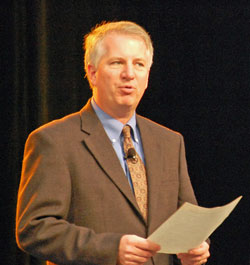 A new initiative was announced at the opening general session of the National Biodiesel Conference Monday –
 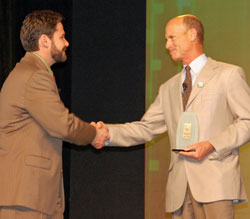 Awards were presented at the National Biodiesel Conference in San Francisco Monday to people who have helped the industry grow.
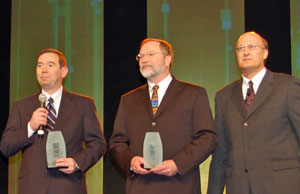 National Biodiesel Board Vice Chairman Gary Haer (right) with
  Iowa-based Renewable Energy Group (REG) is making more inroads in the Western United States as it has opened a new biodiesel terminal in Southern Colorado.
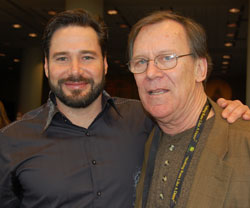 One of the first companies to realize biodiesel’s potential for both farmers and farm machinery was New Holland, thanks to the influence of Gene Hemphill, manager of North American Industry Affairs for the company, pictured here (right) with
 Rahal Letterman’s number 17 Team Ethanol car driven by Ryan Hunter-Reay won its first race last year at Watkins Glen, N.Y. Hunter-Reay was also named Indy 500 Rookie of the Year, but at this point he has no ride for the 2009 season.
  Organized by the Nebraska Ethanol Board, the Emerging Issues Forum is an annual regional conference for ethanol producers, marketers and related industries. Special topics this year will include ethanol policy under the new administration, innovations in corn fractionation, financial and legal issues, the blend wall, and the dynamics of RINs.
  “These projects will be among many Obama Administration investments that will help strengthen our economy and address the climate crisis. A robust biofuels industry – focused on the next generation of biofuels – is critical to reducing greenhouse gas emissions, reducing our addiction to foreign oil and putting Americans back to work,” said Secretary of Energy Steven Chu.
  The
The