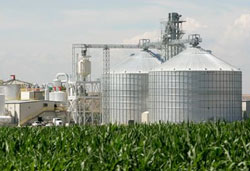
Iowa Biodiesel Plant Ready to Go Back On Line

John Davis

novalogoA biodiesel plant in Iowa should be back on line later this month after a fire last fall idled the 10-million-gallon-a-year facility.

This story from the Iowa Independent says Nova Biosource Fuels’ Clinton County Bioenergy Plant has been repaired after the September 30, 2008 fire:

“The repairs to the damaged equipment are now completed at a cost of less than $100,000,” [Kenneth Hern, chief executive of Nova Biosource Fuels, Inc.] said. “We are optimistic that the refinery will be functioning and ready to re-establish operations during early 2009. We want to extend our appreciation to our engineering and construction staff, who efficiently and effectively repaired the damaged equipment, returning the refinery to a production-ready status.”

The fire was believed to have been started by a build up of methanol vapors in the column during a ventiliation process, a portion of the maintenance activities. The plant in Clinton is slated to resume production as a 10 million gallon per year facility.

The plant was the first commercial scale biodiesel refinery to use Nova’s proprietary processing technology.

Biodiesel

Santa Cruz Making Fryer to Fuel Biodiesel

John Davis

santacruzThe city of Santa Cruz, California has teamed up with several partners to make biodiesel.

This article from Biodiesel Magazine says the U.S. EPA, the Santa Cruz Metropolitan Transportation District, biodiesel producer Energy Alternative Solutions Inc., the California Restaurant Association, waste oil collector Salinas Tallow Co. and the city of Santa Cruz are making locally sustainable biodiesel:

The Ecology Action “Fryer to Fuel” program in Santa Cruz has already diverted 60,000 gallons of waste cooking oil grease from landfills, according to the Olof Hansen, U.S. EPA Region 9 representative.

Fryer to Fuel is similar to the SFGreasecycle program currently implemented by the city of San Francisco, but on a much smaller scale. In San Francisco, more than 10 liquid waste haulers collect grease from about 500 restaurants. In Santa Cruz, three licensed haulers collect grease from approximately 30 restaurants.

Hansen said Salinas Tallow agreed to make the 184 gallon containers for all of the participating program customers, at the company’s cost. “This was a significant contribution to the program, as each bin cost approximately $600,” he said.

After collected the grease from restaurants and food service businesses, it’s transported to the collector’s central location. The collector delivers the cleaned grease to biodiesel producer Energy Alternative Solutions for conversion into fuel. Energy Alternative Solutions then transports the finished product to the fleet operators at their desired locations.

The article goes on to point out that the city not only gets the environmental benefits of clean-burning biodiesel produced in a sustainable way, but the program also keeps all the sewer-clogging grease out of the city’s system.

Biodiesel

Biodiesel Board CEO Fights Kraft’s Fear-Mongering

John Davis

joe-jobethumbnailThe National Biodiesel Board is refusing to let food companies spread fear and misinformation in the continuing food-versus-fuel debate.

NBB CEO Joe Jobe, responding to Kraft Foods’ CEO Irene Rosenfeld’s blame of biofuels for the rise in food prices, has submitted his own opinion piece to USA Today asking how Kraft can continue to make soaring profits at the cost of its customers… while trying to wrongly blame biodiesel and ethanol:

[Rosenfeld] said, “Forty percent of the food supply is being diverted for use in fuel.” Almost half of all grains, meats, dairy, vegetables and fruit in the world are being converted to fuel? This is fear-mongering at its worst.

The United Nations Food and Agriculture Organization found that of the 10.4 billion acres of available farm land, only 3.7 billion acres are used. Of that, less than 1% is used for biofuels such as ethanol and biodiesel.

Food companies have blamed biofuels all year for higher prices. Rosenfeld’s statement shows how far companies will go to distract Americans as Kraft raked in $1.4 billion in earnings last quarter. Adjusted for inflation, corn and wheat have dropped by 50% since spring, and soybean prices are lower than at almost any other time since the Great Depression even as biofuels production expands. This year, oil companies made more than ever in profits. The difference is, when oil prices dropped, so did the price at the pump. Too bad Big Food isn’t living up to Big Oil’s standards.

So the next time you’re picking up a box of “the Cheesiest” maybe you should ask, why is it still the priciest? Rest assured it’s not biodiesel’s and ethanol’s faults.

Biodiesel, Ethanol, food and fuel, News

2010 Cadillac SRX to be E85 Compatible

2010-cadillace85The 2010 Cadillac SRX will officially be announced at the Detroit Auto Show later this month as E85 compatible. The vehicle is intended to serve as GM’s newest luxury crossover option. It will be optionally powered by either a 3.0L VVT E85 direct-inject V6 or a 2.8L turbocharged V6. Both engines will have an automatic transmission and are capable of producing anywhere from 260-hp (2.8L V6) to 300-hp (3.0L V6).

General Motors currently has more E85 vehicles on American roads than any other automobile manufacturer. In 2009, they offer the following as flexible fuel: Buick Lucerne, Cadillac Escalade, Chevrolet Avalanche, Chevrolet Express, Chevrolet HHR, Chevrolet Impala, Chevrolet Silverado, Chevrolet Suburban, Chevrolet Tahoe, GMC Savana, GMC Sierra, GMC Yukon, Hummer H2, and Pontiac G6.

Pricing for the 2010 Cadillac SRX has yet to be announced.

Car Makers, E85, Ethanol, News

Hydrogen, Electric Cars Featured at LA Auto Show

John Davis

Car makers are making more varieties of alternatively-fueled vehicles, and the public is taking note of their efforts.

This piece from Evelyn Kanter of Motor Matters on the Washington (DC) Times site gives a first-person account of impressions of a couple of Japanese alt fuels vehicles that were shown at the recent Los Angeles Auto Show:

mievThe Mitsubishi MiEv — stands for Mitsubishi Innovative Electric Vehicle — is a four-seater mini car and is roomier than it appears partly because the battery pack is under the seats, with a compact 47 Kw electric motor behind it that drives the rear wheels.

Mitsubishi uses an advanced lithium-ion battery. It’s smaller, lighter and more powerful than the nickel-metal-hydride batteries that power other electric vehicles. The lighter weight helps improve its top speed of 81 mph.

The MiEv is not merely an upgraded golf cart. This is a real car. The MiEv goes on sale in Japan later in 2009, and plans are to bring it to the U.S. in 2010 when Chevrolet is scheduled to introduce its plug-in Volt. Price isn’t set, but a Mitsubishi representative told me that MiEv will be about $30,000 in Japan. It has been in test mode for two years with utility companies in Japan, and two vehicles are being loaned to Southern California Edison for fleet testing.

hondaclarity2Along with the MiEv plug-in electric, another alternative fuel car that intrigues me is the hydrogen fuel-cell car. Honda’s FCX Clarity is the first on the market, and it’s a winner. A revolutionary fuel-cell stack design can be placed under the console between the two front seats, compact enough to leave room for cup holders.

Honda uses the dominant hydrogen technology — an electric motor that runs on electricity generated by the fuel cells, equivalent to 134 horsepower. The only thing that comes out of the tailpipe is water, which, I was told, is clean enough to drink by Environmental Protection Agency standards, although I did not try.

Kantor goes on to point out that the Honda has a great look to it, with the luxury of a midsize sedan. And of course, more than 70 miles to the gallon.

Car Makers, Hydrogen

Philly Utility to Run on Wind, Biodiesel Power

John Davis

peco2A Philadelphia-based utility has announced plans to use wind and biodiesel power, along with more hybrid vehicles to help power its headquarters.

This story from the Philadelphia Business Journal says Peco Energy Co. wants to buy enough wind-generated electricity to cover 15 percent of its power needs at its Center City Philadelphia headquarters through the end of 2011:

The electric-and-gas utility said it will buy 4,050 megawatt hours of wind-generated power per year over a three-year period that began last month. The amount represents a 50 percent annual increase from Peco’s last wind energy purchase for the building, which was from 2005 through November 2008.

The deal is part of an environmental initiative on which Peco is spending more than $15 million. Under the initiative, Peco has transformed the roof of its headquarters into a green roof, is replacing the message board atop its headquarters with one that uses light-emitting diodes and boosting the number of hybrid and biodiesel vehicles in its fleet.

Peco is owned by Chicago-based Exelon Corp., which is trying to offset or reduce its greenhouse gas emissions by more than 15 million tons nationwide by the year 2020.

Biodiesel, Wind

E85 Fueled Car Beats Record

ok-mustangAccording to NEWSOK, Brent Hajek, an Oklahoma farmer and race car museum owner, topped 252.78 miles per hour at a race while using E85. His 1969 Mach 1 Mustang beat the previous record of 246 miles per hour.

“Basically most of those cars in that class are the nitro cars,” Hajek said. “When we heard that we thought it was going to be the equivalent of taking a pea shooter to a bazooka contest. But we got to playing around with this car and thought ‘this thing is really making some real horsepower [with E85]’”

He sees signs at gas stations that boast “no alcohol in our gas,” and he knows that a lot of people believe it doesn’t perform as well as pure gasoline. But Hajek offers a challenge.

“You say it cuts your performance?” he asks. “Why don’t you go out there and see if you can go faster than we did.”

PHOTO CREDIT: PATRICK QUIRK

E85, Ethanol, News

Colorado State Hopes to Use 100% Wind

John Davis

Colorado State University officials hope to one day power their school using 100 percent wind power.

This story in the Fort Collins Coloradoan says the school plans to apply in February to put up an 8,000-acre wind farm that could power the entire university:

CSU officials said earlier this year the wind farm could be operational in 2010. The wind power from the farm won’t go directly to CSU, but rather be pumped into the power grid as part of the larger energy portfolio.

The university said in March 2007 the wind farm would include at least 25 wind turbines capable of producing 65 megawatts with the potential to produce 200 megawatts.

CSU uses about 16 megawatts during peak demand.

Interim university President Tony Frank said he thinks the project makes sense both financially and from the standpoint of giving students and faculty hands-on experience with turbines.

“I can’t see a focus on renewable energy being a bad trait or anything other than more important as we go forward,” Frank said. “We always try and ask ourselves, do these (projects) make fiscal sense for us? We don’t want to be doing things just to be doing them.”

The biggest issue might be what to do when the wind doesn’t blow enough to power the turbines. But after just recently driving through that area of Southern Wyoming and Northern Colorado (and you should see the number of windmills in that region), it seems to me that will NEVER be a problem!

Wind

Colorado Hands Out $620K in Ethanol, Biodiesel, Wind & Biomass Grants

John Davis

coloradodeptofag1The State of Colorado has handed out $620,000 in grants for research and development into a variety of renewable energy sources, including ethanol, biodiesel, biomass and wind energy.

This press release from the state Department of Agriculture says the 14 grants have been hand out through the “Advancing Colorado’s Renewable Energy” (ACRE) program:

“ACRE is a statewide effort to promote energy-related projects beneficial to Colorado’s agriculture industry,” said Tom Lipetzky, Markets Division Director at the Colorado Department of Agriculture. “The grants awarded by this project are an important step toward helping our agriculture industry to be a leading participant in the new energy economy.”

Projects must in some way benefit or be tied to agricultural production or the utilization of agricultural land or water. Grants were awarded in three categories: feasibility studies, project participation and research.

Feasibility studies address the viability of establishing an agricultural energy-related project and may address the market for the product, engineering requirements, economic viability, environmental concerns, legal requirements, management, and other necessary study components. A maximum grant amount of $25,000 was awarded to three feasibility projects:Read More

Biodiesel, biomass, Ethanol, Government, News, Wind

Nebraska Wind Farm Nears Completion

John Davis

The biggest wind farm in Nebraska’s is set to be operating commercially in the first few months of 2009by the first quarter of 2009, officials say.

This story from the Columbus (NE) Telegram says Elkhorn Ridge developers are finishing up testing of the wind turbines that are located near Bloomfield in north-central Nebraska:

midwestwindenergyColumbus-based Nebraska Public Power District has signed a 20-year agreement with Midwest Wind Energy, a private developer, to buy 80 megawatts of electricity from the $140 million wind farm.

Officials say the partnership is the first of its kind in Nebraska, a public power state. As a Community Based Energy Development or C-BED project, Nebraska residents will own 33 percent of Elkhorn Ridge…

When Elkhorn Ridge is completed, the 27 turbines will dwarf any others in Nebraska. Each can produce 3 megawatts of electricity, enough to power 250 to 300 homes. The project can serve about 25,000 residences annually.

By comparison, the two wind turbines operated by Lincoln Electric System north of Lincoln have a combined generation capacity of 1.2 megawatts.

Several other utilities in the state will get power from the wind farm.

Wind