


 BP and Verenium Corporation have taken another step in a partnership announced last year by forming a joint venture to develop and commercialize cellulosic ethanol from non-food feedstocks. Both companies have agreed to commit $45 million in funding and assets to the company.
The collaboration will be focused on the development of a commercial-scale cellulosic ethanol facility in Highlands County, Florida and expects to break ground on that site in 2010. The estimated construction cost for this 36 million gallon-per-year facility is between $250 and $300 million. Production from this plant is expected to begin in 2012. With plans to add additional capacity, the joint venture company also intends to develop a second site in the Gulf Coast region.
The joint venture company will initially be based in Cambridge, Massachusetts, will be comprised of a team from both BP and Verenium and will be governed by a board with equal representation from both parent companies.
 According to
  Less than six months after opening a biodiesel plant in petroleum country, Iowa-based Renewable Energy Group has opened its Houston biodiesel facility for 24-hour a day pickup for trucks… the first of its kind in the Houston area.
 This story from The Daily Oklahoman
 The American Lung Association of Wisconsin will be sponsoring the UW-Platteville Society of Automotive Engineering (SAE) Clean Snowmobile Challenge team in a project designed to inspire students and showcase innovative, cleaner energy technologies. As part of SAE’s Clean Snowmobile Challenge, the group modified a stock snowmobile to operate on E85.
 Renewable energy and biofuels are among the big winners in the $787 billion economic stimulus package signed by President Barack Obama today.
 The
The  Geldof, an Irish musician who launched his activist career by organizing Live Aid in 1985, will discuss how he believes biofuels can help developing countries become more energy independent without impacting food production. He and along with other speakers will discuss the sustainable bio future and how this could help eradicate poverty, particularly across the African continent.
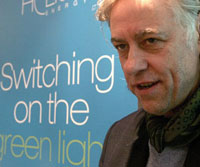 In an interview with WBM, Geldof explained how he sees biofuels helping Africa. “Import substitution. More money in the economy. More jobs. Domestic fuel at the local level,” he says. “Africa has always used “bio-fuel” as a primary source – wood, dung, residue etc. They can build responsibly on this tradition.”
 A wind energy project in Southern California soon could be lighting up 50,000 homes. The Acciona Wind Energy USA wind farm will be Santa Barbara County’s first renewable wind-energy project after the county Board of Supervisors gave unanimous approval to the project.
 Writing about a green fuel could earn you some green for school! The American Lung Association’s Minnesota and South Dakota field offices, in conjunction with their respective states’ soybean promotion councils, are offering scholarships to students who write essays on biodiesel.
 In Minnesota, winners will receive $1,000, while second place gets a $500 scholarship. South Dakota winners get $500, and second place receives $250.
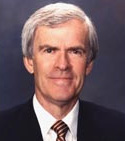 Senator Jeff Bingaman (D-NM), chairman of the Senate Energy and Natural Resources Committee, said in a recent
  Meanwhile, Secretary of Agriculture Tom Vilsack recently said in an