

The final 2008 ethanol production and demand numbers are in and despite industry issues towards the end of the year, it was another record with both numbers up over 40 percent from 2007.
 According to year-end figures released by the Energy Information Administration, American ethanol facilities produced more than 9.2 billion gallons of ethanol in 2008, up from some 6.5 billion gallons in 2007. On average, the U.S. ethanol industry produced 601,000 barrels per day (b/d), compared to 423,000 in 2007.
Ethanol demand continued to outpace production last year. According to the Renewable Fuels Association, demand averaged 630,000 b/d in 2008 or more than 9.5 billion gallons total. By comparison, ethanol demand in 2007 averaged 446,000 b/d.
“Despite the economic challenges facing this country and this industry in 2008, America’s ethanol producers still managed to meet the goals put before them and build the necessary foundation for a strong and robust future for renewable fuels,” said RFA President Bob Dinneen. “While challenges will still persist through 2009, this industry is poised to help lead this nation out of its economic downturn and provide the kind of economic, energy, and environmental stability that is desperately needed.”
 There are several new alternative energy grants available for wind energy and biomass energy. The first grant, “20% Wind by 2030: Overcoming the Challenges” was posted on February 27, 2009 and closes on March 5, 2009. The government is posed to award up to 99 grants for a total of $8 million. You can get more information and apply online at
  The study was commissioned by
  As I told you
 Ethanol debuted on the fashion runway last year…as a pair of jeans. Yes, jeans. Fashion meets environment with these stylish jeans that are made from cotton grown with less pesticides and sold in recycled packaging.
 about the clothing line nor the programs that are supported through the purchase of the jeans. I tried contacting the organization but as of press time, haven’t heard anything back.
 Blodgett Oil Company recently entered a competition to see if their painted “E85 Tractor” entry could win as the “sexiest tractor” at a local Red Cross Tractor Races Fundraiser.
  About twenty tractors were entered in the competition. During the race, the tractors were moved along a board game like space in a large banquet room, with the attendee’s betting on who will win the race. Whoever had the most bets, won the race. Attendees also betted on the “Sexiest Tractor”.
  “2008 really was a banner year for the industry,” said Sloan. She anticipates that 2009 won’t be as big of a year due to the economic situation but does see a bright future going forward citing the provisions in the stimulus package.
 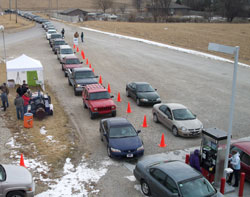 Manhattan, KS looked more like Manhattan, NY yesterday as cars were lined up to get E85 for just 85 cents a gallon and E10 for only a dollar, plus a free lunch at the Manhattan Farmers Cooperative Association.
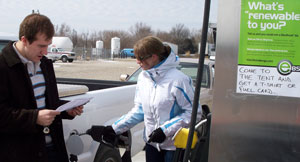 “We were very happy with the event. Many students learned of the opportunity via Facebook and email, and this is exactly what this contest is about, educating students where they spend there time – online,” reported Robert White, Director of Market Development for the RFA.
 Vice President Joe Biden might be known a bit for saying some crazy things, but his latest pronouncement… that some green jobs could pay as much as $50 an hour (see