

 A proposed federally-owned “green bank” could finance many renewable energy projects, getting the credit markets for alternative energy moving again and spurring the burgeoning green economy.
This article from BusinessGreen.com says Congressman Chris Van Hollen’s (D-Maryland) Green Bank Act 2009 would create an organization for lending money to clean energy project owners underwritten by treasury bonds:
Under the proposals, the bank, chartered for 20 years of operation, would help to finance government purchases of renewable energy, make existing energy infrastructure more efficient, and encourage the creation of more local manufacturing capacity for renewable energy. It would also help move the US towards energy independence, said the text of the Act.
The bank would be set up using $10bn in federal funds, and would be able to carry outstanding loans amounting to $50bn in bonds at any single time. It could underwrite up to 80 per cent of a project’s capital expenses, effectively restoring the flow of credit to large numbers of renewable energy projects that have been stalled as a result of the tightening credit market.
One group of backers says the initial $10 billion in capital the bill calls for could finance 15 gigawatts of renewable power.
Significantly, the legislation categorises nuclear plants as clean energy projects, which would make them eligible for a slice of the funding after all other federal funding sources had been exhausted.
The Coalition for Green Bank (CGB), a group of energy companies and advisors, praised the legislation, saying that the initial $10bn capitalisation alone could fund up to 15GW of renewable energy.
 Keep our friends at
  The Sioux Falls Landfill is now providing methane gas to help power the daily operations of POET’s 105 million gallon per year ethanol
 The very first “Ask the Expert” event will take place at the
  Hey – in case you haven’t heard,


 “We were really pleased to see the quantified reduction of CO2 and other pollutants,” said Ryan Donovan, VP of Operations and Business Development of States Logistics. “This is something that we can take to our customers, like Clif Bar & Company, and they can show their customers. We all benefit from having this information available to show the efforts being made to reduce carbon footprint throughout the supply chain.”
 “This information is valuable to any fleet using biodiesel,” said Tom Verry, Director of Outreach and Development for NBB. “We picture eventually offering this as a value-add report for BioTrucker Fuel Card holders.”
 Gulf Ethanol Corporation has annouced the change of its name to Gulf Alternative Energy Corporation. The name change encompasses the added focus of the company’s biomass processing technology.
 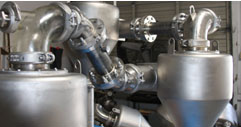 With their main office in Houston, Texas, Gulf Alternative Energy develops cellulosic ethanol pre-processing and production technologies for the ethanol producers in North America. The Company plans to use its patented, exclusive technology to retrofit existing corn-based ethanol plants for cellulosic ethanol production and also for use in the design and construction of its own cellulosic ethanol production facility.
  This edition of the “Ethanol Report” discusses the critical decisions being made regarding renewable fuels and indirect land use on both the federal and state level. Comments are from