 It’s named for the Greek phrase for wingless flight and practically slips through air nearly as effortlessly as Lance Armstrong bicycling through France (half the drag of a Toyota Prius). The beauty you see on the left is the battery-powered Aptera 2E… a three-wheeled, two-seater due out this fall.
Mother Nature News’ Jim Motavalli road along with Aptera CEO Paul Wilbur as they took the green car out for a spin in New York City:
 Wilbur didn’t let me drive the car—it was New York, I guess—but I rode shotgun for enough miles to form an opinion. Like most EVs, it was fairly quiet, though noisier than most, and the potholes and cobblestones set off some rattles. The car was comfortable and felt stable on its three wheels, but a few minutes behind the wheel would have allowed more of a diagnosis.
A transmission dial allows the choice of efficiency and sport modes, and a screen displays charging options: The Aptera is ready for the “smart grid,” with programmable late-night charging and the ability to sell battery power to the local utility.
Despite the undeniable strangeness—the Aptera could have been made for a 1960s science-fiction film featuring people of the future in jump suits—the company is serious about building a mainstream vehicle. “Tesla is the new Ferrari,” says Wilbur, gunning past a startled pretzel vendor. “We want to be the volume player in a radical new arena.”
The company is making three differently-powered models… the battery model, a gas-electric series hybrid and a conventional .7-liter gasoline car… all priced between $25,000 and $45,000. The one that runs on batteries is the one out this fall, while the other two models come out next year.
Aptera says the gas-powered model will get 100 mpg and cruise for a thousand miles. And the 2H, the hybrid, will trickle-charge the batteries on the way.
The Aptera plant in California can churn out 20,000 vehicles a year but expect just a few thousand in the first year. Company officials hope to make up to 100,000 annually.


 “The first event in 1985 had four tabletop exhibits and 36 people,” according to Mike Bryan, CEO of BBI International, which organizes the FEW. Last year, FEW 2008 featured over 4,000 attendees and nearly 1,000 exhibits. It is the world’s largest, longest-running ethanol conference.
 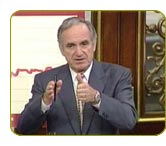 “We must seize control of our energy future and take major steps towards the use of clean, renewable home-grown sources of energy,” said Harkin. “Promoting the planning and development of projects that transport renewable fuels efficiently and inexpensively helps enlarge the market for biofuels like ethanol, reduces our dependence on foreign fuels and will provide good construction jobs.”
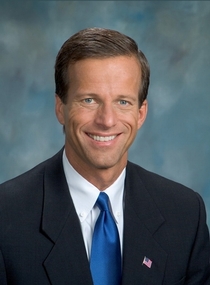 “Pipelines are the safest, most reliable, and cost effective way to move biofuels from the areas they are produced to the markets where they are consumed,” said Thune. “These pipelines will reduce energy costs across the country as well as create an estimated 25 jobs for every $1 million of construction. Access to ethanol-dedicated pipelines will benefit both consumers and the ethanol industry for years to come.”
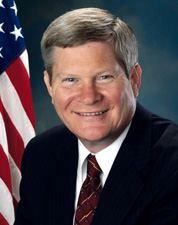 “Many experts believe that a pipeline network to transport biofuels is necessary to achieve the aggressive renewable fuel requirements. But limited transportation options of truck, rail and barge will only get us so far. Pipelines are necessary to get this fuel moving to where the people are. These loan guarantees will spur pipeline development and help create new jobs and lower our dependence on foreign sources of energy,” said Johnson.
 A senior agency official with the U.S. EPA says they may need another year to determine how blending ethanol in gasoline over the current 10 percent limit would affect vehicles and nonroad equipment.
  According to
  Virginia Governor Tim Kaine, along with his Cabinet and members of his staff will be visiting a biodiesel plant Thursday as part of the first “Cabinet Community Day” of 2009. The Governor holds four such events each year, visiting eight regions of the state twice over the course of the administration.
 The governor will visit
  This summer, General Motors (GM) will begin testing prototypes of their electric flexible fuel Chevrolet Volt. The company is in discussions on its outreach efforts for the 2011 vehicle on how it will be attractive to buyers.
 A new certification for commercial labs will help ensure the most reputable biodiesel quality program will be verifying the green fuel.
  Growing biodiesel oilseed feedstocks along the nation’s highways… capturing the power of the sun by growing algae for biodiesel production… finding multiple uses for the by-products of biodiesel refining… the U.S. is just scratching the surface of the potential biodiesel holds for this country. Those are just some of the findings of a new report.
 Margo Oge, the director of the Environmental Protection Agency’s office of transportation and air quality, submitted written testimony to the committee that said the agency is working with the Department of Energy (DOE) “to evaluate the impacts of the use of higher blends on the in-use fleet of highway vehicles and non-road equipment, and hope to complete the testing over the course of the next year.”