

 Meeting the challenge of providing the world’s food, feed, fiber and, especially, fuel is what’s facing the American farmer today, and it’s part of a competition the Farm Foundation is sponsoring.
Last December, the Farm Foundation put out a report entitled The 30-Year Challenge: Agriculture’s Strategic Role in Feeding and Fueling a Growing World, where the group outlined six challenge areas facing American farmers: global financial markets and recession; global food security; global energy security; climate change; competition for natural resources; and global economic development (see my posts on Domestic Fuel and AgWired.com). To help come up with solutions, earlier this spring the Farm Foundation came up with a competition, which will hand out cash prizes totaling $20,000 and has a looming deadline of June 1, 2009:
“Agriculture globally faces the challenge of how to provide food to a world that is expected to have 9 billion people by 2040,” says Farm Foundation President Neil Conklin. “This challenge exists at the same time that we are already seeing pressures on global resources, as well as increased demand for agriculture to provide not only food, but feed, fiber and fuel.
“It is not clear that today’s public policies-designed to deal with issues of the last century-provide appropriate tools and incentives to address the challenges of the next 30 years,” Conklin continues. “Farm Foundation is offering this competition as a catalyst for innovative ideas and approaches.”
For more information, check the Farm Foundation’s 30-Year Challenge Web site.
 Transportation Studies
 During a recent session of the U.S. Chamber of Commerce aviation forum,
  More than 30 organizations are requesting an extension of the Environmental Protection Agency (EPA) comment period for a petition that would increase the permitted amount of ethanol in gasoline from its current 10 percent level to 15 percent. The organizations signing on to the request range from livestock and meat associations to food processors, environmental groups and representatives of boats and small engine makers.
  “It’s a little known fact that we are growing five times as much corn as our grandfathers did in the 1930s on 20 percent less land,” says Mark Lambert, director of the
  Fourteen southern African nations are now members of the
  “Biofuels represent an enormous opportunity for developing countries particularly those reliant on crude imports,” Makenete explained. “A sustainable biofuels industry utilizing multiple feedstocks will attract investments in agriculture, reduce our reliance on imported energy and improve income levels. This is a win, win, win for developing countries.”
 “This project fits well into our focus on infrastructure as we’re working to stimulate economic development. This building is a great visual,” Culver said. “With the passing of this bill, we’re encouraging a project that illustrates what we’re also trying to do around the state with the public infrastructure. Projects like this are critically important during this economic downtime. This is how we will literally work our way to recovery.”
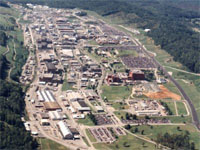 The Y-12 National Security Complex was a big winner in the Dept. of Energy’s program recognizing environmental sustainability. The complex, located in Oak Ridge, Tennessee, is a premier manufacturing facility dedicated to making our nation and the world a safer place.