

 The SeQuential Pacific Biodiesel plant… the largest biodiesel plant in Oregon… is opening back up for business a month after it had laid off some of its workforce.
This story in the Salem (OR) Statesman Journal says warmer weather is helping move more biodiesel in the state:
SeQuential Pacific Biodiesel in Salem was built to produce 5.8 million gallons of biodiesel per year.
Running at full capacity proved to be impossible after the company couldn’t sell enough biodiesel to continue running its plant. It had to store 250,000 gallons for weeks in early spring until it could find new customers and increase sales to existing customers.
But now, its customers are buying fuel blends that have a higher biodiesel content — blends that sometimes gel in cold weather. The city of Portland’s water bureau fleet, for example, moved from a 20 percent biodiesel blend to a 99 percent biodiesel blend April 15.
“That helped dig our inventory down,” said plant manager Tyson Keever, enough so that last week six people laid off at the end of March were hired back.
The article goes on to say that the closure of the Imperium Renewables biodiesel plant, in nearby Hoquiam, Washington has helped eliminate some of SeQuential’s competition. The Salem refinery will be running at about half capacity.
 Members of the American Soybean Association (ASA) were back on Capitol Hill… this time testifying before the House Small Business Subcommittee on Regulations, Healthcare and Trade that the new proposed Environmental Protection Agency rules are undermining investor confidence in the biodiesel industry.
 “The proposed rule as released contains unprecedented, untested and far-reaching indirect land use assumptions and projections which will adversely impact markets for U.S. farmers and impede our national efforts to reduce dependence on foreign oil and thus impede efforts to improve our environmental footprint,” said ASA Vice President Ray Gaesser, a soybean producer from Corning, Iowa. “We are concerned that EPA has attributed an undue degree of land use causation to U.S. biofuels production and that EPA’s assumptions do not adequately consider the other market factors (population growth, food and feed demand, timber prices, etc.) that have historically driven international land use decisions.”
 The nation’s first eco-sustainable city, which will use biodiesel, ethanol, solar and wind sources to power the community and its green industries (such as building solar panels), has been selected as one among 16 founding projects of the for former President Bill Clinton’s Climate Positive Development Program.
 The
The  event will focus on technology, feedstock management, market challenges, R&D activities, and near-term policy developments supporting advanced biofuels. In addition, the workshop will emphasize the provisions of the RFS and current efforts to commercialize, low-carbon, advanced biofuels technologies.
 Political insider publication
 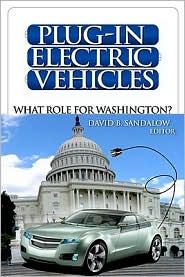 I was traveling last week and had the opportunity to rent a Toyota Prius. I jumped at the chance since I was reading, “Plug-In Electric Vehicles: What Roll for Washington,” a book authored by dozens of experts and published by
  Getting ready to take off on your summer vacation? Planning to drive 100… 200… 1,000 miles from home? How about 60,000 miles? That’s been Brian Brawdy’s 11-month long road trip fueled with biodiesel, solar and wind power… plus he captures rainwater when he can to drink.
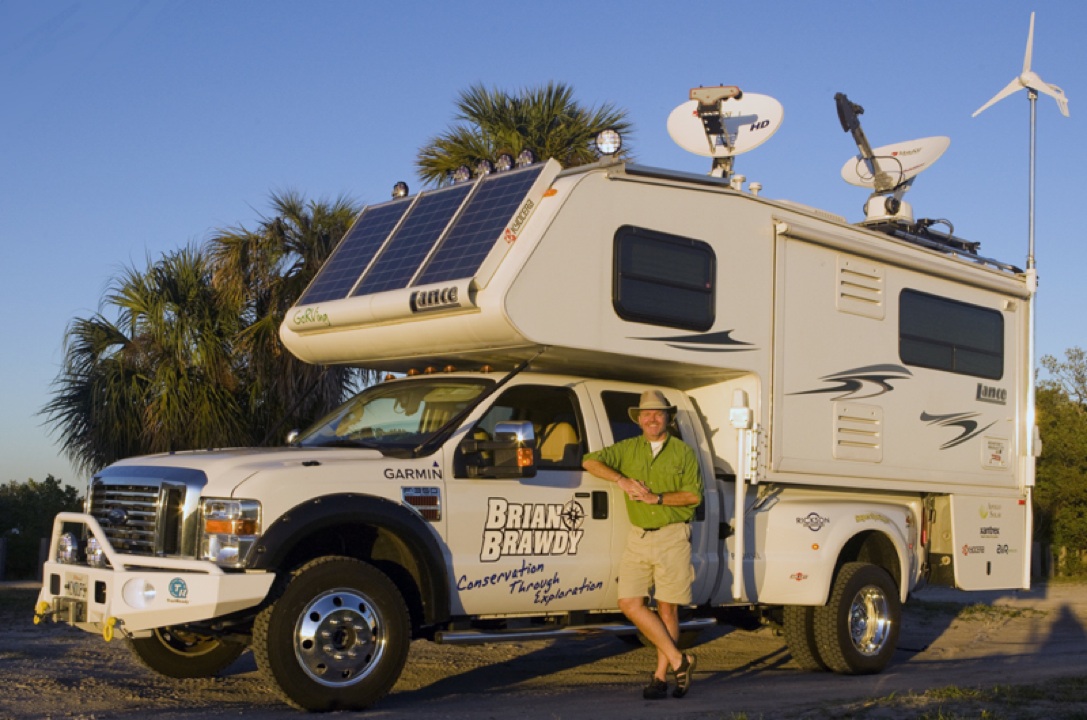 Brawdy has been using a Ford F-350 diesel pickup truck with a camper in the bed during his cross-country adventure he has dubbed “Conservation through Exploration.” In this latest edition of the Domestic Fuel Cast, he tells me that the solar panels and wind turbine have allowed him to get truly off the grid and see some places that most people can’t even get to.
 There are many opportunities and challenges facing the renewable energy industry. To achieve long-term success, one of the greatest hurdles the industry must overcome is garnering consumer support and product adoption. This has been tough for the corn-ethanol industry in part, due to media hostility and biased reporting.
 Duke Energy