

 The ethanol industry is looking forward to a public hearing and workshops this week in Washington, DC to address the Environmental Protection Agency’s proposed rulemaking for the Renewable Fuels Standard (RFS2).
Renewable Fuels Association President and CEO Bob Dinneen will be testifying at the public hearing on Tuesday. “While we generally applaud EPA’s efforts to get the rule out, we do have some very serious concerns with the proposal, which we will be laying out tomorrow during the hearing and in the workshops,” said Dinneen during a media conference call Monday morning.
Dinneen says their most serious concerns revolve around EPA’s lifecycle greenhouse gas analysis, especially the inclusion of international indirect land use changes. “We don’t believe that the statute requires it, we don’t believe that Congress believes the analysis should include international impacts, and we certainly don’t believe that the science supports evaluating international impacts of a farmer’s decision someplace else in the world related to biofuels production.”
The EPA public hearing will be held June 9 from 10 am to 5 pm and the workshop on details of EPA’s lifecycle GHG analysis will be June 10-11, both at the Dupont Hotel in Washington, DC. More information is available here on the EPA website.
 Two venture capitol companies have invested in an Israeli company with technology for converting cellulosic materials into fermentable sugars.
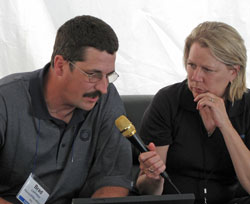 IDEA stands for “Immobilized Digestive Enzyme Assay” which Dr. Brad Lawrence with Novus says helps measure the digestibility of lysine and other amino acids in dried distillers grains (DDGS), the livestock feed by-product of ethanol production. “Distillers is one of the few ingredients that we have that does come from multiple manufacturing facilities with different methods that could impact amino acid digestibility,” said Dr. Lawrence. “We run this laboratory procedure that looks at all the digestibility of all the amino acids which gives us a tool to compare the economic value of distillers from different sources.”
 A new ethanol plant in Merrill, Iowa celebrated its grand opening last week.
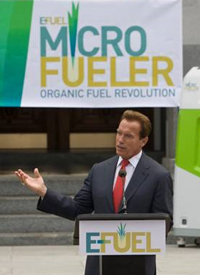 The
The  Electronic trading hours for CBOT grains, oilseeds and ethanol contracts will be expanded in the morning by one hour and fifteen minutes, until 7:15 a.m., starting July 1.
 Iowa Gov. Chet Culver joined industry representatives Thursday in meeting with House Speaker Nancy Pelosi and Senate Majority Leader Harry Reid, D-Nev., to urge them to enact higher mandates. “The number does matter,” Culver said later.
 Catching a cab at Phoenix’s Sky Harbor International Airport could soon be a greener proposition.
 Biodiesel is still having a tough go of it… just like many other businesses in today’s economy. The latest victim of the economic downturn is Sanimax Energy, which has had to temporarily close its DeForest, Wisconsin plant… the first biodiesel plant to open in the Badger State two years ago.
 The chair of the U.S. Senate’s Ag Committee says the Environmental Protection Agency’s proposed Indirect Land Use Rule, which would make biodiesel ineligible for mandates and federal subsidies, is not good science… and he believes there are enough votes in Congress to keep it from going into effect.
 Harkin has been joined in his criticism of the EPA by fellow Iowan Sen. Chuck Grassley (R-IA), who went to the floor of the Senate earlier this week to blast the EPA assumptions: