

 BBI International recently completed a county-wide biomass assessment and economic feasibility sponsored by The Agricultural Utilization Research Institute. The report is now available on the AURI website.
The report, authored by BBI in the fall of 2008 through spring of 2009, intended to define the amount of economically available biomass available in the county as well as explore the financial viability of several different conversion technologies.
Aitkin County is a unique geographical location in Minnesota. The 1,995-square- mile county is a transition zone that forms the northern border of the corn/soybean/wheat region of the state and the southern border of the heavily forested northern region of the state. The area is predominantly deciduous forests, wetlands and grasslands.
Ross Wagner, Aitkin County economic development & forest industry coordinator said, “We felt we had an economically viable biomass resource, but it was all based on anecdotal evidence. Until we could quantify what we actually had, any discussions of a project would be just talk.”
The report will now be used by the Aitkin County Economic Development agency as they work to leverage the abundant biomass supply in their county for economic growth and jobs.
 A biodiesel-powered hydroplane has been successfully tested at a Seattle-area boat race.
 Oregon has become the latest state to require diesel sold in the state… well, at least in nine counties in the northwest part of Oregon starting August 5th and the rest of the state by October 1… have a mix of biodiesel.
 The biodiesel industry and the soybean checkoff have teamed up to try to dispel some of the misinformation being used that would basically disqualify soybean-based biodiesel, the bulk of the nation’s biodiesel, from the proposed federal Renewable Fuel Standard (RFS-2).
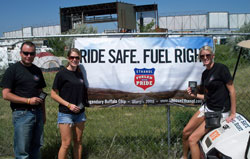 Bike riders at the Sturgis Motorcycle Rally are seriously appreciating their ethanol koozies. Here’s market development staff members from the
  Reps. Jay Inslee of Washington and Bill Delahunt of Massachusetts are preparing a bill that would require utilities to purchase small-scale renewable energy from developers at rates equal to the cost of production plus a premium. The so-called feed-in tariffs proposal would set European-style guarantees for investors that many credit for a recent boom in solar energy in Germany.
 “We have some brilliant Americans with brilliant business plans with brilliant technologies, but they don’t have financing,” Inslee said at a briefing last week on Capitol Hill. “The charm of the feed-in tariff is solid, take-it-to-the-bank security and confidence for the investing community.”


 Yesterday during the