

A new video launched by the Renewable Fuels Association makes the point that other fuels have indirect effects, not only biofuels.
The video, which shows images of burning oil wells, oil spill damage, oil contamination of natural habitat, and the destruction brought on by oil exploration and tar sands excavation, is meant to draw attention to the Environmental Protection Agency’s proposed rulemaking for the expanded Renewable Fuel Standard (RFS2) that would take into account indirect land use change effects for ethanol and biodiesel, but not for petroleum.
 “If EPA insists on counting the angels on the head of a pin, it needs to do so on every pin and that includes the indirect impacts of petroleum production and use,” said Renewable Fuels Association Bob Dinneen. “All energy choices come with trade-offs. By focusing solely on the impacts of biofuels, EPA has created shell game only petroleum can win. EPA must revisit its proposed rule, make its methodologies and calculations transparent, and redraft a program that is fair and workable for all parties. EPA’s current version fails on all counts.”
RFA is urging its members and others with an interest in the biofuels industry to make comments to the EPA about the RFS2 before the September 25 deadline.
 BP expects biofuels to displace 25 percent of fuel in the U.S. in the next two decades, the head of BP’s alternative energy unit said.
  Members of the
  According to a summary on the
 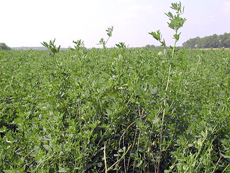 The lowly alfalfa crop could play a role in the future of cellulosic ethanol.
  Pioneer Director of Alfalfa Research Dave Miller says they believe cellulosic ethanol will need multiple feedstocks and alfalfa is a good fit for a number of reasons. “It’s great for crop rotation, its environmental benefits in terms of lack of soil erosion because it’s deep rooted and a perennial are well known, and it fixes nitrogen.”
 Clear your calendar for a
  Algae is all the rage as the next great feedstock for biodiesel… although the longtime champion for the green fuel, soybeans, might not be ready to give up its crown to the green pond scum.
 One the one hand, you have guys like Riggs Eckelberry, the CEO of
  Leonard Kosar, CEO of
  One of the most oil-rich countries in the world will be making ethanol from excess dates. Iraqi government has approved a plan to produce the clean burning alernative in attempt to boost their economy.
  Prior to the US-led invasion of Iraq, the country produced more than 900,000 ton of dates per year. The country only used about 150,000 ton so the remaining was exported. However, since 2003 the market for Iraqi dates has dried up to the point where only about 350,000 ton of them are produced annually.
 The Sundance award winning documentary,
  Snapping a photo of his daughter stopping to smell the flowers paid off for Rich Johnson of Omaha, Nebraska who has been named the winner of the
  As the winner, Johnson received a $1,000 fueling card, presented by RFA Director of Market Development Robert White. “Educating consumers is all about engaging them where they live and in ways that motivate them to act,” said White. “Based on this contest alone, tens of thousands of Americans were exposed to ethanol-related information, many for the first time.” White says Heather Litton of Westerville, Ohio, won the Most Voted Award and $100 in fuel for her photo entitled “Ethan.”