

The sun appears to be rising again for the ethanol industry.
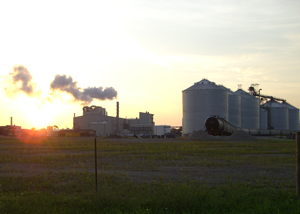 “Profitability has returned,” says Joe Victor, who is Vice President of commodity research advisory firm Allendale, Inc. “We know that over the past three months that there is profit returning, above and beyond all costs. Ethanol companies are turning a profit over the past three months.”
The main reason is lower corn prices compared to last year and prospects for a bumper corn crop this year. The Wall Street Journal is calling it “Christmas in October for Ethanol Producers.” Last week, ethanol processing margins nearly doubled to a dollar a bushel. Since early July, ethanol futures on the Chicago Board of Trade have increased more than 20%, while corn futures have only gone up about five percent.
A great sign of profitability is idle plants going back into production. According to Ethanol Producer Magazine, the number of plants idled has decreased from 36 in the spring to 24 this fall. The publication’s latest plant map shows total U.S. ethanol production capacity is nearly 12 billion gallons.
 “Growth Energy supports a Low Carbon Fuel Standard as long as it is done right, and the Low Carbon Fuel Standard proposed by the California Air Resources Board is not done right,” said Growth Energy CEO Tom Buis. “It relies on a flawed, unproven and unscientific concept that would punish biofuels, despite the opportunity biofuels like ethanol provide as cleaner, greener fuels that are an alternative to dirty foreign oil.”
 Greensburg, Kansas, literally destroyed by a tornado in May, 2007, is getting some help from the government to have a green energy source supply the power for the town as it continues to rebuild.
 Leading researchers and companies looking to turn algae into biofuels will meet in Hawaii next month to talk about progress and challenges with the green-slime-into-green-fuel process.
 Corn Plus was one of five Minnesota businesses recognized by
  “Conducting the trials locally gives local farmers a chance to see DDGS and CGF use firsthand in a trial that utilizes their own climatic conditions. It provides them a reliable source of data they can be more confident in,” said Lori Feltis, USGC Rest of the World Advisory Team member, who is currently in Egypt to assess the use of U.S. DDGS and CGF.
 According to the
  Grant applications submitted must be for projects that will be completed withing two years of grant award. Examples of past projects that have been supported by the ACRE grant program include wind turbines, solar panels, micro-hydro systems, biomass systems, and biodiesel plants. Funds will be distributed in three categories.
 The “
The “ It won’t be long before the snow starts to seriously fly in Vermont (if it isn’t already!), and the heating oil dealers in that state are encouraging those Green Mountain Boys… and Girls… to use a biodiesel blend to heat their homes when they come in from shoveling.