

Biodiesel production worldwide has risen by 10 times over the last eight years and could double again in just two more years, while global ethanol production has more than tripled over the same time period and could jump by another 50 percent by the year 2012.
Farmers Weekly Interactive reports a new report from the International Energy Agency says biodiesel went from about 1 billion liters (about 250 million gallons) in 2002 to 10.9 billion liters (about 2.75 billion gallons) in 2010 and is expected to double by the year 2012:
The review of 21 key biofuel producing countries by the International Energy Agency’s Bioenergy Task 39 also reveals bioethanol production has increased significantly, from less than 20bn litres per year in 2000 to 66bn litres per year by 2008.
Much of the growth in both fuel types is happening in just three countries; the United States, Brazil and Germany, which together account for over half of biodiesel and more than three-quarters of bioethanol production.
The IEA report suggests if recent trends continue, world production of biodiesel could top 20bn litres per year by 2012, while bioethanol production could exceed 90bn litres.
The report goes on to say that economic and ecological sustainability issues are now becoming the main drivers in biofuels production.
 A California company that makes biofuels out of several sources has received a state grant to work on turning the waste from grapes and almonds into biodiesel.
 A man who recycles restaurant grease into biodiesel while busting the myths the green fuel’s opponents have been spreading is being recognized by a network dedicated to sustainability issues.
 As a representative of the biodiesel industry, Baker said he has been involved in dispelling the “myths” created by certain lobbying groups meant to confuse the public about the benefits and characteristics of biodiesel. “It’s been particularly bad the past two years,” Baker said. “One is that biodiesel production and use is worse for the environment, and takes more energy, than petroleum—and that simply is not true,” he said. “The first 15 years I was involved in this business, I never heard that.” Baker feels his role in education and the promotion of biodiesel led to Tri-State’s selection as an SVN Innovator. “There’s been a lot of negative publicity and I’ve been educating legislators and others about the positives.”
 Texas fuel retailers are now selling 10 percent ethanol. Local gas stations have been updating filters, checking tanks and applying green ethanol-blend stickers to put on pumps, but such a change is not without its cost and problems for retailers. The ethanol mixture is the result of 2005 and 2007 federal energy acts requiring specific benchmarks for refineries to produce cleaner-burning fuel.

 “We are delighted to work with the Fagen team,” said Fibrowatt CEO Rupert Fraser, “their experience as EPC contractors is very impressive and we are certain that we are moving forward with a contractor that understands the unique characteristics of our technology. This agreement is another step for us in North Carolina – helping the State move forward towards its goal of being a leader in the implementation of home-grown renewable energy.”
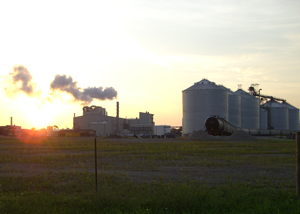 “Profitability has returned,” says Joe Victor, who is Vice President of commodity research advisory firm
  “Growth Energy supports a Low Carbon Fuel Standard as long as it is done right, and the Low Carbon Fuel Standard proposed by the California Air Resources Board is not done right,” said Growth Energy CEO Tom Buis. “It relies on a flawed, unproven and unscientific concept that would punish biofuels, despite the opportunity biofuels like ethanol provide as cleaner, greener fuels that are an alternative to dirty foreign oil.”
 Greensburg, Kansas, literally destroyed by a tornado in May, 2007, is getting some help from the government to have a green energy source supply the power for the town as it continues to rebuild.
 Leading researchers and companies looking to turn algae into biofuels will meet in Hawaii next month to talk about progress and challenges with the green-slime-into-green-fuel process.
 Corn Plus was one of five Minnesota businesses recognized by