ACE Conference 2026

MN Vikings Work with ALAMN to Promote E85

mn-vikingsThe Minnesota Vikings along with the American Lung Association of Minnesota (ALAMN) are working together to promote E85. Drivers of flex-fuel vehicles (FFVs) can receive a free parking space in the Gold Lot at 401 4th Street South in downtown Minneapolis during Viking’s home games. The free parking is open to the drivers of the first 25 FFVs in the lot during the eight home games this season — those arriving after the 25 free parking passes are gone will have to pay the usual $40 charge for the premium parking spot near the Dome.

ala-mnVolunteers from the ALAMN will be at the two Gold Lot entrances to identify FFVs and distribute the free passes. The ALAMN supports the use of cleaner-burning E85, and has partnered with the Minnesota Vikings to raise awareness and use of the ethanol-based fuel, sold at more than 350 stations in Minnesota. The first 25 FFV drvers in the Gold Lot will receive coupons for 10 cents off per gallon of E85 at the downtown station.

Also, a trip for two to Soldier Field in Chicago is being given away to watch the Vikings play the Bears on December 28th. Fans can register to win the “Vikings Road Trip, Fueled By E85” contest by clicking here.

E85, Ethanol, Ethanol News, Flex Fuel Vehicles, News

USDA Official Will Tour Iowa Biofuels Industry

Cindy Zimmerman

usdaUSDA Deputy Secretary Dr. Kathleen Merrigan will get some first hand knowledge of Iowa’s ethanol industry during a tour scheduled for October 20. During her visit, Dr. Merrigan will learn about ethanol production, utilization of co-products and biodiesel research.

Merrigan will first visit Lincolnway Energy, a 50-million gallon per year ethanol plant with a corn oil extraction process. Next, she will tour Couser Cattle Company’s 5,000 head operation which utilizes distillers grains as livestock feed. Finally, Deputy Secretary Merrigan will tour Renewable Energy Group’s Research Center which houses industry-leading biodiesel programs, including cutting-edge corn oil-to-biodiesel commercialization research.

Biodiesel, Distillers Grains, Ethanol, Ethanol News, USDA

Photos Win Ethanol Sturgis Contest

Cindy Zimmerman

rfaThe Renewable Fuels Association has announced the winners of its E85 Flex-Fuel Challenge Sturgis Photo Contest.

Tim Gillespie of Cameron Park, California was the Grand Prize winner of a $1,000 gift card to the motorcycle dealership of his choice after submitting his winning photo, “Sturgis Bikes 2009” pictured left. The photo contest was judged based on creativity as well as quality.

rfa“End of the Ride” photographer Ron Storrm of Wausaukee, Wisconsin was awarded a $100 gift card to the motorcycle dealership of his choice after receiving the Most Voted Award from daily votes submitted to the www.e85challenge.com website. Note the glass of “ethanol” in that photo!

“This contest was about passion for motorcycles, that American pride, and how the combination of an American fuel like ethanol just makes sense,” said Robert White, RFA Director of Market Development. “It was also about education and teaching fellow riders that motorcycles and other small engines can use up to 10% ethanol safely and effectively.”

The RFA Market Development team conducted promotional and advertising events throughout the Legendary Buffalo Chip Campground and town of Sturgis by handing out 10,000 take home palm cards to the rally-goers with information about ethanol, RFA’s consumer website ChooseEthanol.com and the E85 Challenge contest.

E85, Ethanol, Ethanol News, RFA

Coskata Unveils Semi- Commerical Cellulosic Plant

Joanna Schroeder

Coskata Inc., has finally unveiled it’s “semi-commercial flex ethanol facility” to the world today with the New York Times taking the lead. In the article author Matthew Wald writes, “The facility, built by a company called Coskata, is not quite proof that a new era is at hand for American transportation fuels. But with the company claiming it will be able to convert wood waste into biofuel for about $1 a gallon, the plant suggests that day may be drawing nearer.”

Project Lighthouse (the name for the plant) will be able to reduce greenhouse gasses by as much as 96% over gasoline while using half of the water per gallon as compared to producing a gallon of gas. The company also claims that its process is as much as 7 times as energy positive as the fossil fuel used in the process.

In a press statement, Bill Roe, Coskata’s President and CEO said, “We are proud that we have successfully scaled our technology to this significant level. This facility is demonstrating that our efficient, affordable and flexible conversion technology is ready for commercialization. The next step is to build full-scale facilities and begin licensing our technology to project developers, project financiers and strategic partners.” Long-term, Coskata will commercialize their plants between 50-100 million gallons per year.

The difference in Coskata’s flex ethanol facility is that it will be producing ethanol from numerous feedstocks, including wood biomass, agricultural waste, sustainable energy crops, and construction waste. The feedstock flexible nature of this approach, says the company, is that it allows for true geographic flexibility, meaning facilities can be built anywhere a feedstock can be sourced or delivered.

Multiple feedstock use has proven to be financially rewarding as last month, HERO BX’s CEO Leonard Kosar noted in a media call that their company will be using 15 different feedstocks to profitably produce biodiesel this year.

Roe concluded by saying, “Coskata leverages proprietary microorganisms and efficient bioreactor designs in a unique three-step conversion process that can turn virtually any carbon-based feedstock into ethanol, from anywhere in the world. Coskata’s biological fermentation technology is ethanol-specific and enzyme independent, contributing to high energy conversion rates and ethanol yields.”

Cellulosic, Ethanol, Ethanol News

DF Cast: Mixing Ethanol and (Bio) Diesel

John Davis

cleanflexYou can’t burn ethanol in a diesel engine. Nope. Just not done. Like mixing oil and water.

But what if you added more water to the ethanol? And came up with a way to mix the hydrated-ethanol blend with the diesel… or better yet, biodiesel… right at the point of ignition? Ahhh… then you’d have something that National Corn Growers Association chairman and Nebraska corn farmer Bob Dickey calls the CleanFlex Power System… a new venture he has formed with Ron Preston, president of CleanFlex. Together, they hope to get the 60 million diesel engines in the U.S. to burn some ethanol as well.

They don’t have a Web site, yet, but you can contact CleanFlex at 402-480-0346.

df-logoIn this edition of the Domestic Fuel Cast, listen to Bob and Ron as they discuss how this process works and how it will help renewable fuels meet the next round of emission requirements set to kick in in 2011.

Listen to the podcast here: [audio:http://www.zimmcomm.biz/domesticfuel/DFCast-10-16-09.mp3]

You can also subscribe to the DomesticFuel Cast here.

Audio, Biodiesel, Domestic Fuel Cast, Ethanol, Ethanol News, NCGA, News

Study: Cars Running Corn-Based E85 Outperform Telsa

Joanna Schroeder

The Biofuels Digest has reported that a new study found that cars running on corn-based E85 have 30 percent lower CO2 emissions over the car’s lifetime than the Tesla Roadster, an all electric vehicle running on coal-based electricity. These results are based on the new CAFE standards that were passed this summer. But maybe more interesting, the study found that the Tesla will actually create 21 percent more C02 emissions than a car running on conventional gas.

Tesla RoadsterThe full study, based on the GREET model for corn ethanol emissions, can be downloaded here. Additional criteria used included the e85 fuel economy figures as established in the most recent University of Nebraska study; Tesla’s reports on miles per KWh, Department of Transportation figures on auto lifespan, EIA data on electricity prices, E85 price data from e85prices.com, and EPA figures on emissions from coal-fired power generation.

Although the operating costs of driving a car vary from state to state, the Digest also found that, “based on current ethanol prices, the total increase in cost of ownership for running an E85 vehicle in the US is $19 per year, compared to a non-flex fuel vehicle running conventional gasoline (with up to 10 percent ethanol content). E85 saves an average of 6 tons of CO2 emissions over the average life of a vehicle, when utilizing corn ethanol, and up to 36 tons of CO2 when running on cellulosic ethanol derived from waste biomass.”

Cellulosic, corn, E85, Electric Vehicles, Ethanol, Ethanol News

Clemson Univ. Partners with Arborgen to Research Biomass

clemson_universityClemson University will be partnering with ArborGen LLC, a company who researches tree genetics, to form a cooperative focused on the growth of biomass for the biofuels industry. The two will develop woody biomass as feedstock for biofuel development.

According to Charleston Regional Business Journal, the research will focus on development and conversion of cellulose, such as switchgrass, wood chips and other fibrous plant matter, into ethanol.

arborgen“This kind of research has global implications for climate change, energy security and the long-term stability of our local and national economy, particularly as it can help develop the rural infrastructure and jobs we need,” said Barbara Wells, president and CEO of ArborGen.

Joint areas of research include exploration of possible sources of biofuel, such as sweetgum, loblolly pine and poplar trees; equipment engineering; field trials; and pretreatment of woody biomass.

“This relationship marks a big move for the collaborative into trees as a feedstock,” said Karl Kelly, director of corporate operations at the Clemson University Restoration Institute in North Charleston. “ArborGen is a key industry leader — based in South Carolina — that can develop our existing switchgrass-to-ethanol program into other forms of biomass.”

biomass, Ethanol, Ethanol News, News

Ethanol Report on Petroleum Impacts

Cindy Zimmerman

Ethanol Report PodcastThis edition of “The Ethanol Report” features comments from Geoff Cooper with the Renewable Fuels Association on his remarks to the annual meeting of the Society of Environmental Journalists on the issue of international indirect land use change and new reports about the environmental impacts of petroleum.
You can subscribe to this twice monthly podcast by following this link.

Listen to or download the podcast here:

Audio, Environment, Ethanol, Ethanol News, Indirect Land Use, RFA

POET Introduces New Ethanol Co-Product

Cindy Zimmerman

A new ethanol co-product could replace more petroleum products such plastics, film and coatings.

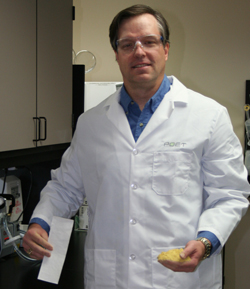
poetPOET has announced the new product, called “Inviz,” which the company says could be used to make a variety of petroleum-based ingredients in household products ranging from pill coatings to plastic packaging.

Inviz is POET’s brand of zein, a biodegradable, low-nutrient protein found in corn. It can be used as a gum base or in films, packaging, adhesives, coatings and glazes. Inviz zein is extracted using a patent-pending process developed by POET.

Inviz is derived from the less valuable protein in POET’s Dakota Gold HP® distiller’s grains. It differs from other zein products because POET’s production process fractionates the corn kernel and ferments ethanol without using heat. For that reason, Inviz is a more pure corn protein than other zein products, which are typically exposed to sulfur dioxide in the wet-milling process.

POET’s research into zein started in 2004 through collaboration with the National Center for Agricultural Utilization Research (NCAUR) in Peoria, Ill. Those efforts ramped up considerably 2.5 years ago with the hiring of Senior Scientist John Lawton, a leader in zein research, from the NCAUR. Lawton was intrigued by the potential for zein in POET’s no-cook ethanol production.

“Inviz can be used to make biodegradable plastics, time-release capsules for pills and other substances, varnish, there are just so many possibilities,” Lawton said. “It has been the focus of much of my research throughout my career, and I’m excited to see this product brought to market.”

Read more from POET here.

Ethanol, POET

Company Developing Algae Farm & Power Plant

John Davis

RWElogoRenewed World Energies Corp. is working on turning a 5 acre site into an algae biomass farm that will make biodiesel as well as producing electricity at Georgetown, South Carolina with hopes of being in production by late next year.

Biodiesel Magazine reports that 3 to 4 acres of photo-bioreactors are planned to produce algae-based fuels to generate electrical energy:

[Rick Armstrong and Tim Tompkins, co-founders of Renewed World Energies Corp.] applied their experience in automation and process control to develop what they believe will be a cost-effective photo-bioreactor. Armstrong said their projections show a 12.8 percent return on investment for a 1.6 megawatt (MW) unit, while a larger 5 MW system should provide a return on investment closer to 15 percent. An individual photo-bioreactor panel measures 4 feet wide by 6 feet high by 3 inches thick, with 550 panels contained in one cell and five to six cells covering an acre of land. The process utilizes automated harvesting, reducing the moisture content in a prescreening process to about 20 percent, before being pumped to a final screen and dried further if necessary prior to processing. The estimated yield per acre is between 95 and 125 tons of dried biomass per year, according to Armstrong.

Renewed World Energies plans to use the algae produced at its Georgetown facility to fuel a green diesel biomass refinery under order from Unified Fuels. The catalyzed gasification unit has four products— the greatest proportion being a liquid green diesel, a smaller proportion of green gasoline, non-condensable gases dominated by methane and ash. RWE’s facility will include two 800 kilowatt generators, one a natural gas generator modified to burn the methane and the other a reciprocating engine to burn the green diesel. The generator exhaust will be recycled through the system. Negotiations for a purchase power agreement are nearing completion with the regional utility, Santee-Cooper Electric, Armstrong added.

One of the hopes of the development of the system is that it can be adjusted to get the most out of any type of algae. Company officials say there had not been a lot of work done on automation and process control side of photo-bioreactors.

algae, Biodiesel