

Using landfill gas to produce energy is real! Waste Management, in conjunction with Linde North America, has begun to produce renewable vehicle fuel at its Altamont Landfill near Livermore, California. The facility is the world’s largest landfill gas (LFG) to liquefied natural gas (LNG) plant.
The plant which was built and is operated by Linde, purifies and liquefies landfill gas that Waste Management, the largest services waste company, collects from the natural decomposition of organic waste in the landfill. The plant was built to produce up to 13,000 gallons of LNG per day. This is enough to fuel 300 of Waste Management’s 485 LNG waste and recycling collection vehicles in twenty California communities. Since the plant went online in September, it has produced 200,000 gallons of LNG.
Duane Woods, senior vice president for Waste Management’s Western Group said in a company press statement, “The Altamont LFG-to-LNG facility enables us to recover and utilize a valuable source of clean energy in another practical way, reducing our dependence on fossil fuels. Conventional LNG is already a clean-burning and economically viable alternative fuel for our collection trucks. The ability to use recovered landfill gas to fuel our hauling fleet offers significant environmental benefits to the communities we serve in California and is a great example of how we are committed to recovering resources in waste.”
The Altamont LFG-to-LNG facility meets two of California Governor Schwarzenegger’s environmental directives: the Bioenergy Action Plan, which seeks to advance the use and market development of biomass as a transportation fuel, and Executive Order S-3-05, which aims to reduce the state’s greenhouse gas emissions by 25 percent by 2020.
“Linde is proud to create a clean and green energy solution for residents of California. Landfill-gas-derived LNG is a super ultra-low carbon fuel, as designated by the Air Resources Board and the Altamont project is expected to reduce carbon dioxide emissions by nearly 30,000 tons a year,” concluded Pat Murphy, president of Linde North America.


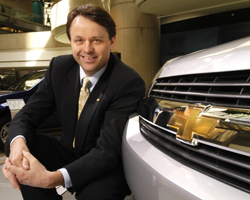 In the article, Dewar is asked if biofuels will have a role to play in the future, and he answers:
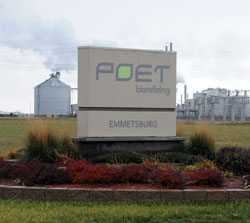 This is where I’ll be on Tuesday for the
  Future wind projects mean the region’s electrical grid must be expanded, which won’t be without controversy, said Brent Fenty, who heads the Oregon Natural Desert Association, which is tracking transmission proposals.
 Mark your calendar for Nov. 10th, as the Farm Foundation sponsors the latest in its free forums that discuss the food, agricultural and rural policy issues facing this country.
  Agribusiness giant
  Coming up in November, the Minnesota-based