

 Leading industries in the race to commercialize next generation biofuels told a House agriculture subcommittee hearing on Thursday that more funding and stable government policy are needed to do the job.
“The current financial crisis has prevented venture capitalists and bankers from investing in many worthwhile investments,” BP Biofuels North America president Susan Ellerbusch testified. “The industry and investors must see a secure market,” which she said, includes addressing the current 10 percent ethanol blend wall.
 In addition to addressing the blend wall, Coskata president William Roe, whose company is pioneering low-cost production of ethanol from a variety of feedstocks, stressed the need for a consistent and inclusive biomass definition, as well as new or extended tax incentives. “Extend the cellulosic producer tax credit,” he suggested. “This expires in January of 2012 and consequently would provide little or no impact to even the earliest industry movers.” He also recommended flexibility in the monetization of biofuels tax credits.
 Bruce Jamerson with Mascoma talked about shortcomings in the USDA loan guarantee program that should be addressed. “For example, as the project size increases, the loan guarantee amount reduces which discourages larger projects,” Jamerson said. His company found that the vast majority of commercial lenders are unwilling to work with the loan guarantee program because of its requirements.
 The president of Osage Bio Energy, Craig Shealy, told the panel that existing federal loan guarantee programs are “either too restrictive or too structured around specifically technologies, excluding commercial scale biorefineries from eligibility.” He recommended revising those programs, as well as taking other policy steps, such as increasing the ethanol blend level to 15 percent and simplifying the RFS2.
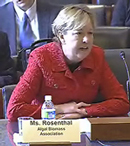 Also testifying on the panel was Mary Rosenthal with the Algal Biomass Association, who called for greater recognition of the potential for algae-based fuels. “Algae should receive the same tax incentives, subsidies and other financial benefits allowed to other renewable fuels such as cellulosic ethanol,” she said.
Opening statements from all panelists are available on the House Agriculture Committee website.
 As reported from the American Lung Association of Illinois, Governor Pat Quinn joined with corn growers, business leaders and representatives of the American Lung Association in Illinois to celebrate the state’s 200th E85 station at the Green Mount Motomart in Shiloh.
  Do you feel guilty when you buy drinking water bottled in plastic? If you don’t, you should and if you do then
  The House Agriculture Subcommittee on Conservation, Credit, Energy, and Research will
  Already a world beater in ethanol use, Brazil is getting aggressive in the amount of biodiesel it will burn.
 Algae-biodiesel maker PetroSun, Inc.
  You can’t beat free… unless you’re also getting renewable, clean-burning biodiesel. Well, the world’s first environmentally sustainable tour bus was able to get a free fillup of B100, pure biodiesel, at
  “The Permibus” – the world’s first environmentally sustainable tour bus complete with an interior garden perpetuated by worms, live chicken farm, multidimensional composting system, solar panels and wood burning stove – visited renewable fuels company Innovation Fuels’ New York harbor bio-refinery on Passaic Street in Newark, NJ on Thursday, October 22, 2009 and received a free tanks’ worth or 60 gallons of 100% pure biodiesel. The bus, which has traveled over 11,000 miles on renewable energy, stopped at Innovation Fuels as part of a national tour dedicated to showcasing sustainable living.
 The 2009 Bio eConference –
  Growth Energy was at the
  Olivia Cenex at 1208 West Lincoln in Olivia, Minnesota will be holding a Grand Opening celebration on Wednesday, November 4 from 11 a.m. until 1 p.m. E85 will sell for 85 cents off the original price per gallon and Biodiesel will sell for 20 cents off per gallon.