

 Researchers believe they have found a way to turn sugar beets into a low-cost biofuel, thanks to the development of an enzyme that speeds up the process.
A press release from Atlantic Biomass, a Frederick, Maryland, biotech-biofuel company focused on developing cutting-edge systems to produce advanced biofuels from sustainable, non-food biomass, says work with Hood College has produced a thermostable enzyme that opens the way to a new pathway for low-cost biofuel production using sugar beet pulp as feedstock. The researchers have put their findings in the latest issue of the American Society of Microbiology’s journal Applied and Environment Microbiology:
Thermostability, or the ability to perform at high temperatures, is needed in biofuel and other industrial applications so enzymes can survive in the higher temperatures of commercial production systems and use the higher temperatures to speed up conversion reactions. The pectinmethylesterase (pme) enzyme developed by the Hood College/Atlantic Biomass team was fashioned to function in the sugar beet production environment of 650C (approximately 1500F) which is at the top end for this class of enzymes.
“This development alone is important for opening up the use of beet pulp and similar agricultural residues for biofuel production,” said Atlantic Biomass president and founder Bob Kozak. “More important, the development of this enzyme led us to an understanding of how enzymes break down plant cell walls and overcome biomass recalcitrance.” Using this research, Atlantic Biomass is currently patenting that process in addition to the pme enzyme. “Overcoming biomass recalcitrance is the Holy Grail of economical biofuel production,” Kozak pointed out. “I think we’re finally on the right path.”
Kozak hopes the Obama Administration will be able to see the value in research like this and fund more of it.
 A 20,000 acre land lease is helping move forward a community wind project in Minnesota.



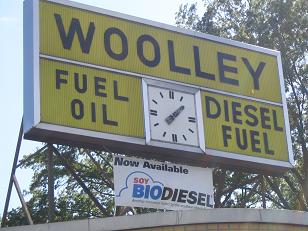 The first commercial service station in New Jersey that offered biodiesel is celebrating the first anniversary of that historic event.
 It could become the next great fuel source from the agricultural community. A Nebraska-based biomass supplier and manufacturer has debuted a product it touts as “Coal from the Farm.”
 Next Step COO Russ Zeeck explained that PowerPellets solve the logistical and operational problems that have thus far prevented wide-scale use of biomass to generate electricity. “Utilities have long been aware of the environmental benefits of burning biomass, but they’ve had a hard time adopting it,” said Zeeck.
 Representatives of the
  At the climate summit in Copenhagen, U.S. Agriculture Secretary Tom Vilsack
 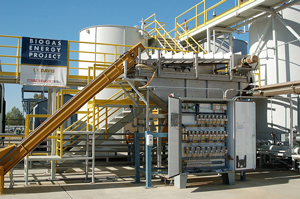 Under the agreement, USDA intends to increase the number of anaerobic digesters supported by USDA programs. Beyond promoting the digesters, the agreement will encourage research, and development of new technologies to help dairies reduce greenhouse gas emissions. Anaerobic digester technology is a proven method of converting waste products, such as manure, into electricity. The technology utilizes generators that are fueled by methane captured from the animal manure. Currently, only about 2 percent of U.S. dairies that are candidates for a profitable digester are utilizing the technology. Dairy operations with anaerobic digesters routinely generate enough electricity to power 200 homes.