

 Miscanthus appears to be the hot feedstock for December. Last week, Sunbelt Biofuels announced that it will be licensing Freedom Giant Miscanthus, and today, Speedling Incorporated and Mendel Biotechnology, Inc. announced an agreement to work together to research, develop and commercialize a “cost-effective propagation and production system for Mendel’s advanced Miscanthus product candidates.”
Neal Gutterson, Mendel’s president and CEO said, “Commercial-scale deployment of genetically diverse, high-yielding perennial grasses will be required for the country to meet its renewable energy and fuel targets in an economically and environmentally sustainable manner. Speedling has demonstrated best-in-class capabilities in vegetative plug production with superior customer service.”
Speedling will apply its proprietary propagation methods to optimize production that Mendel will use for testing in emerging  bioenergy markets. The two companies also plan to deploy several biomass power projects in target locations that are well suited to grow Mendel Mischanthus products.
Greg Davis, CEO of Speedling noted, “We believe that the surest path to success in the rapidly emerging bioenergy industry is partnerships that match complimentary skills and expertise. Speedling’s proven productions capacities and Mendel’s biogenetic expertise certainly meet that criterion.”
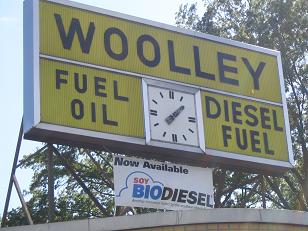 The first commercial service station in New Jersey that offered biodiesel is celebrating the first anniversary of that historic event.
 It could become the next great fuel source from the agricultural community. A Nebraska-based biomass supplier and manufacturer has debuted a product it touts as “Coal from the Farm.”
 Next Step COO Russ Zeeck explained that PowerPellets solve the logistical and operational problems that have thus far prevented wide-scale use of biomass to generate electricity. “Utilities have long been aware of the environmental benefits of burning biomass, but they’ve had a hard time adopting it,” said Zeeck.
 Representatives of the
  At the climate summit in Copenhagen, U.S. Agriculture Secretary Tom Vilsack
 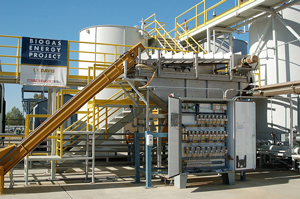 Under the agreement, USDA intends to increase the number of anaerobic digesters supported by USDA programs. Beyond promoting the digesters, the agreement will encourage research, and development of new technologies to help dairies reduce greenhouse gas emissions. Anaerobic digester technology is a proven method of converting waste products, such as manure, into electricity. The technology utilizes generators that are fueled by methane captured from the animal manure. Currently, only about 2 percent of U.S. dairies that are candidates for a profitable digester are utilizing the technology. Dairy operations with anaerobic digesters routinely generate enough electricity to power 200 homes.
  Fourteen major airlines from the United States, Mexico, Canada and Germany, led by the Air Transport Association (ATA), have agreed to buy up to 750 million gallons of renewable jet fuel and diesel derived from camelina and produced by Seattle-based
 Moscow Mills, Missouri is the site of the state’s first ethanol blender pump.
  According to the
  Canadian-based Wind Works Power Corp. has acquired half interest in six wind energy projects in Ontario with a total capacity of 80 megawatts.