

 American manufacturing giant General Electric is striking some big deals in the alternative energy field, especially wind power.
TransWorldNews.com reports deals in China and Oregon … with potentially more deals to come … are bolstering the company’s green energy sector:
General Electric announced they will provide 88 turbines for three projected wind projects in the Hebei and Shanxi Provinces of China. The new deal positions China to potentially surpass the U.S. as the global leader in wind energy by adding 132 megawatts of wind power capacity to the nation.
Thus far, GE has already arranged to provide 895 units of 1.5 megawatt wind turbines to the world’s most populated country. Over the next decade they plan to add an addition 150 gigawatts of winpower.
Just a month ago, GE inked a similar $1.4 billion contract with an Oregon wind farm and looks to capitalize on President Barack Obama’s $2.3 billion initiative to create 17,000 “green” jobs in U.S.
 Yesterday, I told you how electric vehicles were all the rage at this year’s
  Jurors stressed that the Fusion hybrid drove more like a “normal car” than many hybrids, but still had strong fuel efficiency.
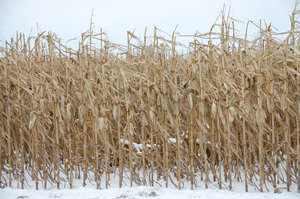
 As a guy who is from the Upper Midwest, I can tell you that the kind of cold that the Dakotas, Iowa, Wisconsin and Minnesota have experienced the last couple of weeks was a “special” kind of cold. Forty or 50 below zero is Jack-London-Call-of-the-Wild-spit-freezin’-in-mid-air kind of cold. So, it’s no wonder that the cold has put Minnesota’s 5 percent biodiesel mandate … the only cold weather state with a requirement that aggressive … on hold, at least until it warms up.
 In today’s
  One key for the giant exhibition, traditionally a showplace for production vehicles, is the addition of a 37,000-sq-ft display area called Electric Avenue. The new area will serve as an expo for 12 manufacturers of electric vehicles, ranging from traditional automakers, such as Nissan and Mitsubishi, to entrepreneurial firms, such as SSI Racing and Saba Motors. Electric Avenue will be sponsored by Dow Chemical Co., which is involved in the development of electric vehicle battery technology.
 Company investigators say they have found the cause of the explosion last month at the Imperium Renewables biodiesel plant near Grays Harbor, Washington state.

