ACE Conference 2026

Dyadic International’s Investors Win Big in ’09

Joanna Schroeder

According to an article in the Palm Beach Post, Dyadic International, based in Jupiter, Florida, made a huge comeback in 2009 when investors saw their stake increase by 1,253 percent during 2009. Dyadic was featured in the newspaper’s best and worst performers of 2009 for companies based in Palm Beach, Martin and St. Lucie counties Florida. In the biofuels space, Dyadic is best known for its enzymes that are used to convert biomass to glucose.

Last year, the company announced a licensing agreement with Abengoa Bioenergy to sell its patented C1 Technology Platform for the large-scale production of enzymes for use in manufacturing biofuels. They also announced a multi-million licensing agreement with Codexis, Inc in November.

Dyadic Founder and CEO Mark Emalfarb. Photo from TCPalm.com.

Dyadic Founder and CEO Mark Emalfarb. Photo from TCPalm.com.

However, these recent successes did not come without hardship. As reported by the news media, in 2007 company founder, chief executive and largest shareholder, Mark Emalfarb, was forced out. Emalfarb once again took the company helm in 2008, although the outlook was much starker. During his absence, the stock price nearly dissapated and the shares were dropped from the American Stock Exhange and relegated to the Pink Sheets. But akin to the American success story, Emalfarb turned his company around with several big deals in 2009 and now they are poised as a leader going into 2010.

“With all the clouds lifted, people are seeing the sky very clearly — and it’s blue,” Emalfarb said in the Palm Beach Post. “Shareholders recognize the incredible, miraculous recovery we’ve made, and they’re rewarding us. We obviously are drinking our Kool-Aid.”
biofuels, Biotech, Cellulosic, News

Record Ethanol Production in October

Cindy Zimmerman

According to the latest figures from the Energy Information Administration (EIA), U.S. ethanol production hit a record high in October 2009 of 740,000 barrels per day, up 93,000 barrels from October 2008.

Ethanol demand also reached an all time high in October, according to the Renewable Fuels Association. The organization calculates that demand totaled 767,000 barrels per day in October, an increase of 75,000 barrels over a year earlier.

Ethanol, Ethanol News

Bunge to Expand Sugar Business in Brazil

Joanna Schroeder

BrazilianSugarcane1There has been quite a bit of activity in Brazil during the last few months of 2009 and it looks like it will continue. Bunge Limited announced today that it will become the 100 percent owner of Usina Moema Participacoes S.A. Moema Par is a holding company that owns one sugarcane mill and has ownership in five others. Together the six mills, known as the Moema Group, have the capacity to crush 15.4 metric tons. This agreement, which is structured as a share exchange worth approximately $896 million, gives Bunge 60 percent effective share of the total capacity.

“This transaction fulfills Bunge’s strategic goal of building a large-scale, fully integrated business in sugar and bioenergy,” stated Alberto Weisser, Chairman and CEO of Bunge Limited. “It adds significant scale to our current milling operations and enables us to vary production among multiple sugar and ethanol products, according to market conditions. The Moema Group cluster is also strategically located near large domestic markets in Brazil and has excellent access to export logistics systems. All of these strengths make it a perfect fit with our global trading and marketing operations.”

The Moema Group cluster is located on the border of São Paulo and Minas Gerais states, the two largest domestic ethanol markets in Brazil. According to Bunge, the mills benefit from cost savings due to their cluster configuration, and have favorable road and rail access to three of Brazil’s largest export ports (Santos, Paranagua and Vitoria). The mills can produce both raw and crystal sugar, as well as hydrous and anhydrous ethanol. In addition, the mills have co-generation facilities, are self-sustaining in terms of energy requirements and sell excess power to the grid. The majority of the cluster’s sugarcane is harvested mechanically, which is now law in São Paulo.

According to Bunge, they may enter into agreements to secure some of all of the remaining interests in the mills that comprise the Moema Group in the next few weeks.

Ethanol, Ethanol News, International

AG CONNECT Expo to Highlight Renewable Energy

Cindy Zimmerman

Ag Connect ExpoThe new AG CONNECT Expo debuting next week in Orlando has something for everyone in every area of agriculture, including renewable energy, thanks to the sponsorship of 25x’25.

Breakout sessions on renewable energy scheduled for the expo next week include Renewable Fuels Revolutionizing Agriculture, The Role of Agriculture and Forestry in a Reduced Carbon Economy, Harvesting the Wind, and Bioenergy Feedstocks.

AG CONNECT Expo will be held January 13-15 at the Orange County Convention Center and on-line registration is still available.

conferences

Power Line to Convert to Wind Energy Carrier

John Davis

minnpowerA high voltage power line that runs from near Duluth, Minnesota to just outside of Bismarck, North Dakota will soon convert to carrying clean wind energy power.

This story from Minnesota Public Radio says Duluth-based Minnesota Power bought the 250-kilovolt power line from the Square Butte Electric Cooperative:

“We’ll be phasing out coal-based electricity that is currently carried via the D.C. line, and that will be replaced entirely by wind energy over the next several years,” [Minnesota Power Spokeswoman Amy Rutledge] said. “It will afford us access to some of the best wind resources in the country, and provide us with the means to deliver more renewable energy to our customers.”

Rutledge said the purchase will save Minnesota Power the cost of permitting and building a new power line. Minnesota Power is planning a 75-MW wind farm to generate power near New Salem, North Dakota.

The wind energy carried on the line is expected to help Minnesota Power meet a state mandate of 25 percent renewable energy by 2025.

Wind

Cellulosic Ethanol Demo Plant for Georgia

Cindy Zimmerman

valerorenewables_logoA Valero Energy Corporation subsidiary is joining forces with an Atlanta engineering firm to build a cellulosic ethanol demonstration plant in west central Georgia.

Sonny PerdueGeorgia Governor Sonny Perdue announced that the new plant is a partnership between Diamond Alternative Energy, a wholly-owned subsidiary of Valero Energy Corporation, and American Process, Inc..

“Georgia is striving to be a world leader in biofuels,” said Governor Perdue. “Our plentiful supply of raw materials to manufacture biofuels enables private industry to develop alternative energy technologies and create jobs. By opening their biorefinery plant, Diamond Alternative Energy and API will further cement Georgia’s leadership position in the alternative energy industry.”

The plant is expected to open in the first quarter of 2010.

Cellulosic, Ethanol News

New Year Brings Idling of Biodiesel Plants

John Davis

RBF_Port_Neches1The new year has brought some bad news for the biodiesel industry. As expected, the $1-per-gallon federal tax incentive expired at the end of December 2009. And, as expected, some biodiesel makers have had to idle their plants after losing the tax credit.

One of the biggest to “idle in the new year” is the 180-million gallon Renewable Biofuels plant in Port Neches, Texas, just a year after it had opened. The Houston Chronicle reports says it’s a trend that we could see more of:

The entire biodiesel industry is in a similar holding pattern, though it’s unclear how many companies idled plants Thursday. Producers still hope the credit will be renewed and applied retroactively when Congress reconvenes later this month.

But even a temporary loss of the credit could be enough to ruin some companies, many of them already weakened by a string of recent economic and policy setbacks.

“As a result of the tax credit lapse, we expect that industry-wide pay will be cut, jobs will be lost and infrastructure and plant investments will waste away,” said Daniel J. Oh, president of Ames, Iowa-based Renewable Energy Group, one of the nation’s largest biodiesel producers.

All of the company’s nine plants — including one in Seabrook on Galveston Bay — “are expected to be negatively affected” by the loss of the credit, he said in an e-mailed statement without elaborating.

The article goes on to say that 23,000 jobs in the biodiesel industry could be lost, coming on the heels of a 29,000-job loss in 2009. But there is a bright spot as some of those jobs could come back on line if Congress re-authorizes the tax credit.

Biodiesel

Tennessee Misses Biofuels Goal

A Tennessee state audit found that the state agencies missed their goal of reducing their use of petroleum products by 20 percent. Legislation enacted in 2007 gave state agencies, universities and community colleges until January 1, 2010 to meet this goal.

tdot“The 20 percent reduction was a challenging goal,” said Alan Jones, manager of the environmental policy office at TDOT. The problem, he noted, is that there aren’t enough E85 and biodiesel stations to serve all the state vehicles. According to TDOT, there are just 33 pumps across the state selling B20 and only 27 pumps provide E85.

About 9 million cars on the roads today are flexible fuel vehicles and nearly 139,000 located in the state of Tennessee. “A lot of those vehicle owners continue to use 100 percent unleaded and in fact, surveys have shown that a lot of those vehicle owners don’t even realize they can use E85,” he said.

Biodiesel, E85, Ethanol, Ethanol News, News

Rolling Ethanol Fireplace

Cindy Zimmerman

ethanolWith much of the United States experiencing record cold and snow right now, this decorative yet practical German-engineered ethanol fireplace could be just the ticket for a little extra warmth from room to room.
According to the Google English translation of the Conmoto Online Shop that offers the product, “ROLL FIRE balances its stainless steel tank at the ball rolls out confidently. Its glass panels mounted on both sides provide full insight. Held by magnets, the glass is removed for filling the tank with bioethanol summarily.”

The price is a mere 2.490,00 EUR – or about $3,570.00.

Ethanol, Miscellaneous

Ethanol By-Product Feeds Egyptian Water Buffalo

Cindy Zimmerman

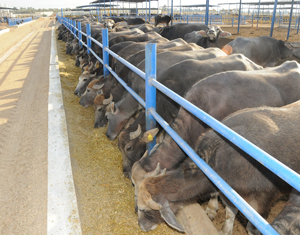
A by-product of ethanol production in the United States is feeding water buffalo in Egypt.

Corn MissionIn fact, corn growers on a recent U.S. Grains Council mission found that DDGS (dried distiller’s grains with solubles) have become quite popular as livestock rations in that part of the world. “We found several farms that have incorporated distillers grains into their rations and are making good use of them,” said Missouri corn grower and mission participant Jim Stuever.

USGC director for Egypt Dr. Hussein Soliman says they introduced DDGS to producers in 2006. “We introduced 6,000 metric tons in 2006 to start, now we’ve reached 80,000 metric tons, and in two years that will be 200,000 metric tons,” he said.

The corn grower mission met with Dr. Saad Alhayani, who owns and operates a very new open water buffalo feedlot and dairy near Cairo and is also chairman of the Egyptian Buffalo Producer’s Association. “We started two years ago putting five percent and now sometimes we put 25 percent (DDGS) in our diet and it brings very good results,” Alhayani said.

Watch a video clip of Dr. Alhayani’s water buffalo operation here:

USGC Corn Mission In Egypt Photo Album

Distillers Grains, Ethanol