ACE Conference 2026

Obama Visits Iowa Wind Turbine Plant, Off to Missouri Ethanol Plant

John Davis

President Barack Obama visited a wind turbine plant in Iowa today, part of his Midwest tour that will also take him to a northern Missouri ethanol plant (watch for Chuck’s coverage on this Web site and follow him on his Twitter account @AgriBlogger).

The Environment News Service reports
Obama got to see up close some of Siemens Energy’s expanded wind turbine blade factory at Fort Madison, Iowa, during his “Washington to Main Street” tour:

“So you’re manufacturing blades for some of the most advanced wind turbines in the world; each one as tall as Air Force One is long; each is capable of generating enough power for hundreds of homes, just by harnessing the wind,” Obama said. “So what’s going on here, what each of the employees of Siemens are involved with, is helping stake America’s claim on a clean-energy future.”

Siemens, a global company based in Germany, built the wind turbine factory three years ago on the site of a closed tractor-trailer manufacturing business.

Today, the turbine factory employs more than 600 workers, almost two-thirds of whom were previously unemployed, and supports more than 350 other jobs throughout Lee County.

The article goes on to say that the Siemens plant was able to use $3.5 million in Stimulus Bucks to expand the plant.

As I mentioned earlier, Chuck will be following the president tomorrow (Wednesday) as he visits the POET Biorefining ethanol plant in Macon, Missouri.


Ethanol, Ethanol News, Government, News, Wind

Biodiesel Board Launches Industry Search Engine

John Davis

Looking to cut through the clutter of the Internet, the National Biodiesel Board has launched an online search engine that is designed to quickly and easily connect industry leaders with the tools they need.

Biodiesel Magazine reports that the Biodiesel Industry Guide returns search results with industry-specific suppliers and service providers, not the numerous irrelevant results that can bog down a search:

“The Biodiesel Industry Guide will ultimately hold the answers and connections to address any biodiesel-related opportunity or challenge imaginable,” said Doug Whitehead, NBB director of operations.

There are two ways to search for a product or service within the site, either by using a keyword search, or an alphabetized category directory search. Either way, the result is a list of company names and contact information for the needed product. This feature is ultimately designed to save users time.

Available resources can be the key to success within the industry, and NBB wants to make it easier for biodiesel organizations to do business with each other. Whether companies are looking for supplies and services, or simply the essential tools and accessories needed to satisfy customers, the Biodiesel Industry Guide is designed to help.

Check it out through the NBB’s homepage or directly at http://thebiodieselindustryguide.com.

Biodiesel, NBB

Ethanol Leaders Take to the Hill

Cindy Zimmerman

Renewable Fuels Association capitolAmerica’s ethanol industry is taking its message to Capitol Hill this week with a variety of key issues to discuss. Extending key tax incentives for all forms of ethanol, expanding the market through higher ethanol blends, and increasing the production of flexible fuel vehicles are all topics of discussion during the visit. Members of the Renewable Fuels Association are scheduled to meet with Congressional office members from a dozen states including Ohio, Indiana, Kentucky, Wisconsin, Michigan, North Dakota, South Dakota, Minnesota, Kansas, Illinois, Nebraska, and Iowa.
“No one advocates better on behalf of American ethanol then the men and women directly responsible for its production,” said RFA President and CEO Bob Dinneen. “These industry leaders are at the forefront of creating jobs and economic opportunity in rural America while simultaneously providing part of the solution to our nation’s energy and environmental challenges.”

The meetings come as President Barack Obama is making stops in the Midwest this week, including a visit to a Missouri ethanol plant on Wednesday.

Ethanol, Ethanol News, Government, RFA

U.S. Gov’t Gives Tips to Making Biodiesel at Home

John Davis

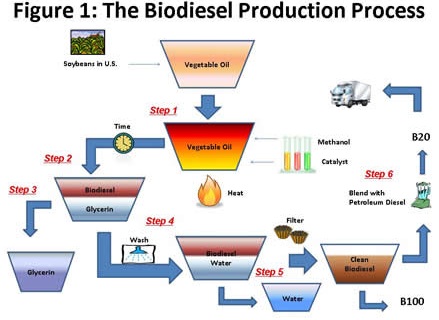
The latest version of the U.S. Energy Information Administration’s “This Week in Petroleum” newsletter has a decided non-petroleum feel to it, as it leads off with an article on how to make biodiesel.

The article breaks down the process in six basic steps:

Read More

Biodiesel

Navy Flies Truly Green Hornet on Biofuel

John Davis

UPDATE: Please note that it was brought to our attention that we misidentified the biomass-based biofuel being used in this test. This version of the story has been corrected. We apologize for any confusion.

It’s known as the Hornet, but a U.S. Navy F/A-18 can truly add the term green to its moniker after flying the war bird on a 50-50 mix of biofuel and conventional petroleum-based jet fuel.

The Navy made the test flight, the first of its kind with the camelina-based biofuel, at the Naval Air Warfare Center in Patuxent River, Maryland, flying at more than the speed of sound. Montana-based Sustainable Oils, the maker of the camelina biofuels, says the flight marks an important milestone in the use of biofuels in military aircraft:

“The success of the Navy’s Earth Day flight again demonstrates that camelina-based jet fuel meets the quality and performance requirements that these aircraft demand,” said Tom Todaro, CEO of Sustainable Oils. “We look forward to continuing to work with the U.S. military, as well as commercial airlines, to provide the next generation of domestically-produced aviation biofuels that create revenue and jobs in rural areas, decrease greenhouse gas emissions, and reduce our nation’s dependence on foreign energy sources.”

According to the U.S. Navy, the Green Hornet performed as engineers expected, successfully completing all aspects of the test flight. Yesterday’s flight won the praise of Secretary of the Navy Ray Mabus, who has provided ongoing leadership in the Navy’s focus on renewable energy and attended the test flight.

“The alternative fuels test program is a significant milestone in the certification and ultimate operational use of biofuels by the Navy and Marine Corps,” said Secretary of the Navy Mabus. “It’s important to emphasize, especially on Earth Day, the Navy’s commitment to reducing dependence on foreign oil as well as safeguarding our environment. Our Navy, alongside industry, the other services and federal agency partners, will continue to be an early adopter of alternative energy sources.”

As you might remember from my post on March 25, the U.S. Air Force flew an A-10 Warthog on a biofuel provided by Sustainable Oils last month.

biomass

Obama’s Ethanol Tour Prompts Biodiesel Board Plea

John Davis

As President Obama prepares to visit an ethanol plant in Northern Missouri (see Cindy’s post), the National Biodiesel Board (NBB) … headquartered less than 100 miles to the south … is making the plea for the White House to get behind the $1-a-gallon federal biodiesel tax incentive that expired at the end of 2009 and put thousands of industry employees out of work:

“We are pleased the President continues to demonstrate his support for the biofuels industry,” said Joe Jobe, National Biodiesel Board CEO, from the group’s headquarters in Jefferson City. “But we also need him to remind Congress that their inaction to reinstate the biodiesel tax incentive could cost the country tens of thousands of jobs. They must act now before America loses its only commercially available Advanced Biofuel.”

Congress failed to reinstate the biodiesel tax incentive for 2010 before it expired at the end of last year. As a result, domestic biodiesel production has plummeted, employees at biodiesel manufacturing plants have been laid off and in some cases, plants have ceased operations all together.

“All the industry needs is a little help from Washington to keep American made biodiesel competitive with foreign oil,” Jobe said. “Biodiesel dramatically reduces carbon pollution, lessens our dependence on foreign oil and employs thousands in green jobs across the country. But without reinstatement of the tax incentive, the industry is barely surviving.”

The visit to the ethanol plant, part of Obama’s “White House to Main Street Tour” through Missouri, Iowa and Illinois, is not open to the public, so my guess is no one from the NBB will get close to the president to make the case for their green fuel. Let’s see if he’s listening anyway.

Biodiesel, NBB

NYSERDA Extends Biofuels Program

The New York State Energy Research and Development Authority has extended their Biofuel Station Initiative that will allow for 50 percent of the costs, up to $50,000 per site, for new installations of biofuels dispensing equipment, storage tanks and associated piping equipment.

The New York State Biofuel Station Initiative was launched in May 2007 and the objective is to increase the number of retail E85 and biodiesel service stations in New York through a comprehensive approach of providing incentives to both mid-stream distribution terminals and retail stations.

“NYSERDA’s biofuel station initiative has been successful in building an alternative fuel infrastructure throughout New York with more than 130 retail gas stations participating and the first 45 currently open,” noted Jeffrey Gordon, Director of Communications, NYSERDA. “E85 is a domestically produced alternative fuel that affords consumers a choice at the gas pump over conventional gasoline, is more environmentally-friendly, will reduce our demand for imported oil, and will keep our energy dollars right here in New York. With continued support from our federal and State administrations, E85 ethanol will continue to play a role in NYSERDA’s efforts to help build a vibrant clean energy economy for the future.”

Approximately $4 million is still available for retail fueling stations. Growth Energy Market Development is supplying the stations with their pump imaging package that will allow for a consistent message across the state. Each kit will be reimbursed from the grant.

For more information regarding this program, click here.

E85, Ethanol, Facilities, News

One-Sided Article Blames Ethanol for Meat Price Hike

Cindy Zimmerman

The ethanol industry was quick to respond to a Bloomberg Business Week article Monday that places the blame for the current hike in meat prices solely on using corn for ethanol.

The story quotes several meat industry representatives who state that current higher meat prices are “ethanol-induced” – the result of hog and cattle herds that were reduced in 2008 due because demand for more ethanol drove up the cost of feed.

Growth EnergyJumping to the defense of corn ethanol, Growth Energy CEO Tom Buis said the story “accepts as fact a disproven myth that ethanol somehow drives up food prices — the goal of a carefully coordinated propaganda campaign that is not based on truth.”

In fact, the Congressional Budget Office report released in April 2009 and a recent report from the UK found that it was mainly higher oil prices that drove prices for both food and feed higher in 2008. That was proven true last year when the amount of corn used for ethanol increased from 2008, but feed and food prices went down.

The completely one-sided article belatedly added a short paragraph with a response from the ethanol industry. Ethanol producers say their industry is unfairly blamed for the record feed costs of 2008. The surge reflected “wild speculation in the markets and the surge of index funds” rather than the jump in corn use for fuel, said Chris Thorne, a spokesman for Growth Energy, a Washington-based ethanol trade group. “Grain producers in this country will more than meet all expected demand for export, for food, for livestock feed and certainly for fuel.” That was added as an update in paragraph 22 some time after the original story was released on line.

Ethanol, Food prices, Growth Energy

New E85 Stations Open in North Florida

Cindy Zimmerman

Renewable Fuels Association LogoThanks to the efforts of the Renewable Fuels Association (RFA) and Protec Fuel there are now two new E85 fueling stations near I-10 just west of Jacksonville, Florida.

R H Davis Oil Exxon in Macclenny and Citgo in Glen St. Mary will provide more fueling options to drivers of flex-fuel vehicles (FFVs) on the interstate as well as commuters traveling to Jacksonville. R H Davis Oil Company utilized Protec Fuel’s turnkey E85 program that included station design, conversion, fuel supply and financial assistance.

“This is an exciting opportunity for the towns of Macclenny and St. Mary,” said R H Davis Oil President, Max Davis. “With the Chevy Dealership down the road ordering more flex-fuel trucks and cars, we have an increasing amount of Flex-Fuel Vehicle drivers, but we never had the fuel option of E85 to offer them. With these new stations, we are able to offer all of our customers a fuel they desire.”
“We are thrilled for the opening of two new E85 fueling locations in northern Florida,” said Protec Fuel CEO Todd Garner. “With more fuel option developments like this, we will be able improve and increase the use of ethanol throughout the country. We look forward to providing fuel for these new locations.”

“These stations are part of an overall strategic plan to increase the number of E85 stations throughout the Southeast in an area full of FFVs,” said RFA’s Director of Market Development, Robert White. To help find E85 stations while on the road, the RFA has developed a fuel locater application for Garmin and TomTom GPS systems. This application will map out fueling stations closest to the user’s location and their chosen destination.

E85, Ethanol, Ethanol News, RFA

CME Launches Ethanol Co-Product Contract

Cindy Zimmerman

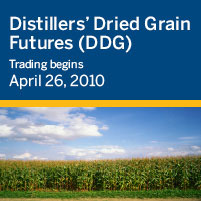
The trading of futures contracts for the ethanol co-product that is used as livestock feed officially began today on the CME Group electronic trading platform, Globex.

Distillers’ Dried Grain (DDG) futures are a physically delivered contract designed to bring price discovery and transparency to the corn crush market allowing customers to better manage their price risk in the feed, livestock, dairy, biofuels, grains and oilseed industries. In addition, DDG futures can be combined with corn and ethanol futures to establish the Corn-for-Ethanol-Crush margin.

The contract will allow ethanol producers to create a complete risk management profile through hedging both inputs (corn, natural gas) and outputs (ethanol and DDGs); otherwise known as the “corn crush”.

More information is available here.

Distillers Grains, Ethanol, Ethanol News