

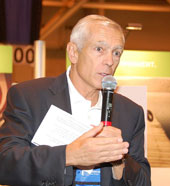
 The Brazilian Sugarcane Industry Association (UNICA) is refuting a claim made by Growth Energy co-chairman Gen. Wesley Clark that they have agreed to sell ethanol to Iran. Clark made that statement in an address at the 2010 Fuel Ethanol Workshop this week and in an interview with Domestic Fuel.
In that interview Clark said, “Brazilian ethanol comes with a lot of, let’s call them, external costs – like child labor and environmental problems down there and we don’t need to be contributing to those. But beyond that, I think Brazil just kind of stepped over the line when they agreed to sell to Iran.”
 “Brazilian producers have no interest in exporting ethanol to Iran. Gen. Clark’s suggestion to the contrary is far from reality and rather surprising,” said UNICA’s Joel Velasco in a comment on the post about Clark’s address. “Brazil has never sent a drop of ethanol to Iran and there is nothing to indicate that any Brazilian ethanol will be sent to Iran in the future. History here is a good indicator, as confirmed by government trade statistics.”
Velasco says that UNICA recognizes “the promise of building a global market for renewable fuels. We’ve chosen to focus our efforts on the largest transportation markets like the United States and Europe, which together consume about two-thirds of the world’s gasoline output.”
UNICA is a private, non-governmental group, representing about two-thirds of all ethanol produced in Brazil.







 This edition of “The Ethanol Report” comes from the 26th annual Fuel Ethanol Workshop in St. Louis where
 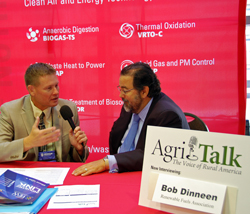 In this interview, Dinneen discusses those issues, including increasing the blend rate and renewing ethanol tax incentives, with a message to the industry of the critical need to work together. He also talks about the Global Rebound Effect theory that is being used to challenge EPA on the Renewable Fuels Standard, and he responds to an Environmental Working Group report out this week opposing incentives for ethanol.
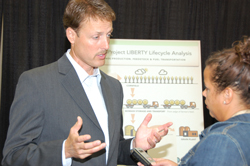 POET CEO Jeff Broin presented the results of the analysis at the 2010 Fuel Ethanol Workshop in St. Louis on Tuesday. The analysis specifically studied ethanol produced by Project LIBERTY, POET’s first planned commercial cellulosic ethanol plant, and shows that it actually has negative emissions by offsetting more greenhouse gas emissions than it produces.