

 An alliance of heating oil marketers, biodiesel makers and soybean growers could help put more Bioheat … a mix of biodiesel and conventional home heating oil … in homes and could dramatically increase the amount of biodiesel used in this country, especially on the East Coast, while keeping homes in that area warm with green heat.
During a press conference this morning from the Massachusetts Bioheat Conference in Boston, Michael Ferrante, President, Massachusetts Oilheat Council; Joel Thorsrud, United Soybean Board leader and a farmer from North Dakota; and Paul Nazzaro, the National Biodiesel Board’s petroleum liaison, announced their partnership to get all heating oil to have a 5 percent blend of soy biodiesel.
“The United States uses close to 8 billion gallons of heating oil annually. Even if we only have a B5 blend, this could utilize nearly 450 million gallons of biodiesel annually,” says Thorsrud.
Nazzaro says, eventually, they would like to get the blend up to B20. And he doesn’t believe there’ll be any issues getting the soy biodiesel from the Midwest to the East.
“It’s been done for years. At this point, we’re talking rail and truck, and there’s a high level of confidence that that demand could be met throughout the seasons.” Nazzaro adds there are some pipeline problems, especially since the aviation industry does not want ethanol or biodiesel in those lines. But he believes those issues will be resolved.
When asked about criticisms regarding mandating the use of biodiesel in heating oil, Ferrante says his association would endorse Bioheat, regardless of any requirements.
“We will take either a mandate or voluntary approach to embracing biofuels.” He admits that a mandate might not be a good fit in other states, but he thinks heating fuel marketers will embrace the biodiesel-based fuel.
The group also believes that Bioheat will be cost-competitive to the 100 percent petroleum heating oils.
You can hear more of the press conference in the player below.
 This edition of “The Ethanol Report” comes from the 26th annual Fuel Ethanol Workshop in St. Louis where
  In this interview, Dinneen discusses those issues, including increasing the blend rate and renewing ethanol tax incentives, with a message to the industry of the critical need to work together. He also talks about the Global Rebound Effect theory that is being used to challenge EPA on the Renewable Fuels Standard, and he responds to an Environmental Working Group report out this week opposing incentives for ethanol.
 POET CEO Jeff Broin presented the results of the analysis at the 2010 Fuel Ethanol Workshop in St. Louis on Tuesday. The analysis specifically studied ethanol produced by Project LIBERTY, POET’s first planned commercial cellulosic ethanol plant, and shows that it actually has negative emissions by offsetting more greenhouse gas emissions than it produces.

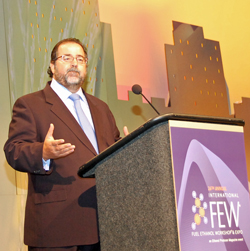 As he has done for many years,
  The 26th Annual
  “The industry has been through a couple of very difficult years,” said Mike Bryan, Chairman of BBI International, which sponsors the event. “So, we’re really glad to see the industry coming back, getting revitalized. We’re kind of sticking our heads out of the foxhole again and looking around on the horizon and so that’s very encouraging.”
 One person not here this year who is sorely missed is Mike’s wife, Kathy Bryan, who passed away in July of last year after a valiant battle with cancer. “She actually started the Fuel Ethanol Workshop 26 years ago, this was her baby right from the beginning,” Bryan says proudly. To honor her memory, they are selling commemorative beer mugs to fund ethanol industry scholarships. “She started the scholarship a number of years ago and it was very dear to her heart to provide an opportunity for young people to get into the ethanol industry,” said Bryan. Already they have sold enough of the mugs to fund two $2,000 scholarships!
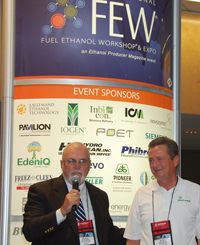 Ethanol producer group
  After the expo opened, Growth Energy co-chairman Gen. Wesley Clark gave a rouse the troops speech to the ethanol producers on the trade show floor, stressing the importance of domestically produced ethanol for our energy security. “There’s no point for America in getting hooked on somebody else’s liquid fuel when we can grow it right here ourselves,” said Clark. He noted that Brazil has agreed to sell ethanol to Iran, which he says is crossing the line. “I am just so proud of America’s agricultural community and what we’re doing here at home. How could we as a nation not want to maximize what we can do with our own land? Why would we want to outsource that to someone else?”