Biodiesel producers could be utilized to help clean up oil the coastline after the disaster in the Gulf of Mexico.
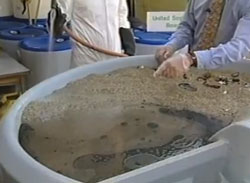 According to the National Biodiesel Board, methyl esters – a chemical yielded in biodiesel production – can be formulated into a biobased solvent that is federally listed as a shoreline washing agent for oil spill clean-up. An effort is underway to encourage the use of this product to remediate oiled shorelines, particularly the more sensitive marsh habitats.
“The chemical dispersants used in the Gulf have been criticized because all they do is dissolve the oil back into the water, which actually makes it more toxic to sea life,” said Randall Von Wedel, founder and principal biochemist of CytoCulture International, a company that pioneered the method in the 1990s. “A biobased solvent does the opposite of a dispersant. It removes the oil from impacted vegetation and shoreline and floats it into the water for easy recovery.”
The process involves crews spraying the methyl esters from shallow draft boats onto oil-covered marsh vegetation or small beaches normally unreachable by land. After the biobased solvent is applied, a gentle “rain” of seawater rinses the dissolved petroleum mixture off the plants and shoreline for recovery, using small mechanical skimmers. The mixture can be recycled.
Von Wedel recently visited the Gulf of Mexico, where his team submitted documentation on his product, branded “CytoSol Biosolvent.” He says a BP contractor and the U.S. Coast Guard have submitted a proposal to use the process to enhance a mechanical beach cleaning technology. The methyl ester product was licensed by the State of California in 1997 and used to clean oiled ships and response vessels during the San Francisco Bay oil spill of 2007.
See a demonstration of how it works here:


 Under the agreement, Fluor will provide engineering consulting services and a broad range of EPCM services for Cobalt’s demonstration and commercial-scale butanol production plants.



 Denver-based chemical and