

There are several barriers to the success of converting biomass to biofuels including harvesting, transportation and storage. But of these three challenges, one of utmost importance is not only how to store the biomass but how long can it be stored without compromising the feedstock?
The most advanced commercial scale corn stover to ethanol project in the U.S. is Project Liberty, a biomass project funding by POET. Ultimately, the plant will produce 25 million gallons per year of cellulosic ethanol, but how much biomass will that take? According to POET, the plant will need 770 dry tons of biomass (corn cobs, some leaves and husks) for each day of operation. Yet how do you store that much material?
This is the very question that the Project Liberty team is working on with researchers at Idaho National Laboratory (INL). They are studying factors at POET plants in Hurley, SD and Emmestburg, IA, like the heat and moisture content of the biomass bale to determine how different types of piles and configurations will affect the quality of the bale. The answer to this question will aid farmers in storing the biomass in their fields until it is needed at the plant.
INL currently has 800 different bale configurations under study and they are attempting to discover the best balance of heat and moisture in the biomass bale. Kevin Kenney, and INL researcher, notes that they are looking at two areas in their research. First, the risk of biomass storage to farmers. Second, how the biomass degrades over time. After this year’s study is complete, the research team will discard the least effective methods and move forward with refining those configurations that hold the most promise.
You can lean more about the project in this video featuring INL researcher, Kevin Kenney.
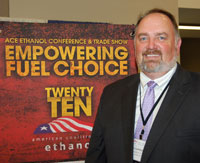
 NCGA President Darrin Ihnen, a grower from Hurley, S.D., addressed the conference on the organization’s efforts to promote ethanol and their work with ACE and other ethanol organizations to ensure ethanol supporters speak with a unified voice in Washington on issues important to the industry.





 One year ago at the
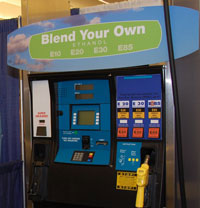
  “They’re something we just have to have if we’re ever going to get to the point where customers can choose to use gasoline or ethanol in whatever blends they want,” Lamberty said. He adds that blender pumps could become very important for marketers, if EPA approves some mixed level of blending ethanol for gasoline, such as 15 percent only for certain vehicles. “If they have a blender pump, they can use any combination,” he said.
 The president of the