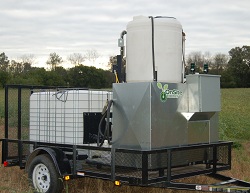
 It’s not very pretty … but it’s a thing of beauty to farmers, school administrators and even some businesses that want to brew their own biodiesel.
A couple of weeks ago, I posted a story from the Flint (MI) Journal about Onsite Energy LLC‘s new Genesee Biodiesel Processor, a first-of-its-kind, automatic machine that can make cooking oil into biodiesel with only 20 minutes of work. Well, based on the response, you wanted to know more. So I called Onsite’s Operational Manager Jeff Woolman to find out more about these automatic biodiesel brewers, that come in 80 gallon, 150 gallon and 230 gallon sizes.
 “We did a three-year research study with USDA and the Michigan Corn Growers Association, so we’ve got a lot of farmers’ inputs,” Woolman says.
So what makes this biodiesel maker any different than some of the other kits out there or someone’s homemade concoction they have in their garage? Woolman says it’s fully automatic, so a farmer … or anybody using the machine … only has to spend a few minutes with the rig and come back a few hours later to have a batch of biodiesel ready to use.
“We went into it knowing there were other ones on the market with turn valves, and we wanted to have something that was fully automatic where could walk up, push a button and walk away from it.”
While it works well and is rugged, Woolman admits it’s not the prettiest thing out there with only a face a mother … or a farmer or a school administrator or a trucking company owner … could love. He says the lowest priced unit in the line costs about $12,000, but it comes with a trailer so multiple users could share it, making it easier to recover their investment.
Woolman says they’re currently able to produce about 500 of these biodiesel makers a year, and Onsite could ramp that up with plenty of workers in the Flint, Michigan area looking for a job. He hopes they’ll be able to provide plenty of jobs for a long time to come.
You can find out more about the company at the Onsite Energy LLC website.
Listen to my interview with Jeff here: Jeff Woolman, Onsite Energy
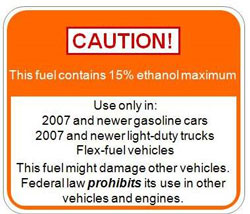 The Environmental Protection Agency has
 Meanwhile, Dinneen says the industry is working together on the technical issues to make this limited introduction of the ethanol blend as smooth as possible. “First, working with
 Heavy rains, nearly 60 percent higher than average for the month, hampered cane crushing for second consecutive two-week period, but reportedly favored ethanol production in the South-Central Brazil region. UNICA Technical Director Antonio de Padua Rodrigues says they are experiencing “another exceptional year” in terms of weather conditions. “From April to early September, the amount of rain was well below the historic average, reducing the availability of cane. Already in September, especially at the end of the month, rainfall returned with greater intensity than expected, hampering the harvest and, more importantly, reducing the quality of cane that will be crushed in October,” he said, adding that these factors should impact the overall production of sugar and ethanol at the end of the harvest.
 According to a
 The commercial potential of cellulosic ethanol in Brazil is substantial due to the great amount of sugarcane bagasse, a fibrous residue of sugarcane production, available in the country. Brazil is the world’s largest sugarcane producer with an extraction capacity of approximately 600 million tons per year, currently yielding 27 billion liters (7 billion gallons) of ethanol. It is estimated that bagasse-to-ethanol technology can increase the country’s ethanol production by some 40% without having to increase the crop area.
 Perdue BioEnergy has partnered with Bionol Clearfield, a subsidiary of

 The fuel will be provided to NASCAR by