

 A new report, “Projected Outlook for Next Generation and Alternative Transportation Fuels in California 2010-2030,” has been released. The report concludes that with current investments and advances in alternative fuels over the past several years should lead to a significant displacement of petroleum-based fuels like diesel and gasoline. The report was released by Fueling California and Orange County Business Council and was authored by research experts at University of California, Irvine, the Automotive Club of Southern California and Tiax, LLC.
“Historically, California has been a trend-setter for the rest of the world in the transportation and fuel sectors,” said Mr. Sturtz. “California represents one of the largest fuel markets in the world and also houses some of the most technically innovative people, research institutions, and businesses to create an environment that incubates innovative and next-generation technologies. “These market factors coupled with a unique set of state government regulations that are creating a push for alternative fuels points to a large market that could potentially provide commercial benefits to all components of the fuel supply chain.”
While the report suggests a reduction of fossil-fuel based transportation fuels, because it takes between 10-15 years to change a fleet, by 2030 at least 75 percent of the fuels used will still remain petroleum-based. The report discusses three principal drivers for development of alternative fuels worldwide: reducing greenhouse gases, energy security, and urban air pollution. The report also discusses state policies, socio-economic factors, market forces, and business environment in California.Read More
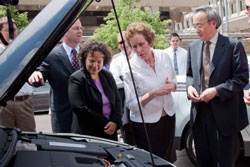 U.S. Department of Energy Secretary Steven Chu, U.S. General Services Administrator Martha Johnson and White House Council on Environmental Quality Chair Nancy Sutley came together to make the announcement on Tuesday and to look over alternative fuel options like the new Chevrolet VOLT electric vehicle.
 According to the
  The on-line event drew more than 100 participants, including government regulators, military personnel, scientists and students. The event was promoted among college students as part of the


 Agriculture Secretary Tom