RFA E-15 Ad

Trident Inceni Sports Car Fueled With B100

Joanna Schroeder

In the market for a sexy sports car? Than look no further than the new British-born Trident Inceni, a biodiesel powered “supercar”. The car will be officially unveiled during the Cholmondeley Pageant of Power in Cheshire, England being held July 15-17, 2011. The event is a showcase of performance and power that includes car racing, power boat racing, aerobatics, and military action.

The two-seater super car can travel up to 100 miles on a single gallon of fuel and up to 2,000 miles on a full tank. The company credits its phenomenal gas mileage on its patented technology called torque multiplication. The Trident Inceni can reach speeds of up to 200 mph. It sports a 6.6 liter V8 turbodiesel giving it enough power to go from 0-60 mph in 4 seconds. According to the company, this “flex-fuel” sports car can run on any blend of biodiesel including B100. What might this beauty set you back? A mere $150,000 – but think about all the money you’ll save in fuel.

During the Cholmondeley Pageant of Power, the Trident Inceni will show off its wares during several on-track performances scheduled to take place throughout the event.

Biodiesel

Maryland Home to Two New Solar Systems

Joanna Schroeder

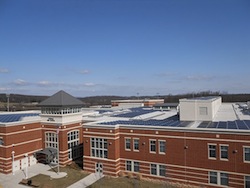
Maryland is the home of two new commercial solar projects. The systems are located in Talbot and Frederick Counties. One system is comprised of a 550kW ground mount solar array for the Talbot County Community Center in Easton, MD. The other system is a 499kW rooftop system for Oakdale High School in ljamsville, MD. The two systems were developed and installed via a partnership between Mercury Solar Systems and Nautilus Solar.

“Maryland has accelerated its adoption of solar energy over the past twelve months and we believe projects like Talbot County’s will spur additional activity in this sector in the months ahead,” said Frank Alfano, CEO, Mercury Solar Systems. “We are committed to extending our leadership position into the Maryland market and are pleased to have partnered with Nautilus Solar on these two initial projects.”

Talbot County’s solar system is the largest funded to date by The Maryland Energy Administration’s Project Sunburst Program.

Rick Towle, Director of the Talbot County Department of Parks & Recreation added, “Talbot County Council support allowed this forward thinking arrangement to take shape as part of a process to help County owned facilities model environmentally responsible operations. We thank Mercury Solar Systems and Nautilus Solar for making this solar project a reality — it will produce a significant amount of clean energy for our community and reduce our electricity costs by 50 percent.”

Electricity, Energy, Solar

First Zero-Waste Biochemical Refinery In Production

Joanna Schroeder

The country’s first zero-waste biochemical refinery is now up and running in Missoula, Montana. The facility is owned and operated by Blue Marble Biomaterials and uses a combination of clean technologies to produce specialty biochemicals that can be used in the food, cosmetics and personal care markets. Each year the biorefinery will produce 72 tons of biochemicals, and its only “waste” is purified water and pellet fuel for wood boilers.

“This biorefinery is an excellent example of how the U.S. can ensure global leadership in advanced manufacturing: we have developed cutting edge technology which combine the fields of biology, chemistry, and industrial manufacturing to produce petroleum replacing chemicals,” said Blue Marble CEO Kelly Ogilvie. “These products will reinvigorate the meaning of Made in America: more lean, more clean and sourced from our abundant renewable natural resources.”

Last week, President Obama announced intentions to invest $500 million in U.S.-based advanced manufacturing technologies via an Advanced Manufacturing Program. The Blue Marble co-founders, Ogilvie and James Stephens, served on the council that worked with the president in forming the program.

The system uses a range of plant feedstocks to produce the biochemicals. The facility uses a photo-bioreactor containing algae to purify wastewater and waste gas from the fermentation system. In addition, the solid waste generated during the production process is pelletized for use in wood-burning furnaces and stoves. In the future, the company intends to power its facility with the waste gas and pellets created during the process in onsite gasifiers.

“Natural systems are the inspiration for our processes. Just as in nature, we see waste as nutritional; in this case, wastewater, waste gas and waste solids are industrial nutrients for both our system and the surrounding economy,” added Stephens. “We believe this principal is key to reducing not only environmental impact but also operational cost.”

biochemicals, bioenergy, biogas

Ethanol Report on Energy Independence for Boaters

Cindy Zimmerman

The Independence Day holiday is one of the biggest boating days of the year so it’s a good time to remind boaters that ethanol is helping to make our nation more energy independent.

This edition of “The Ethanol Report” is about how ethanol producers and boat racers have teamed up to show that 10 percent ethanol runs perfectly well in marine engines. The Renewable Fuels Association (RFA) became a sponsor for the National Boat Racing Association this year and worked with them on the championship race held in Kansas June 25-26.

Ethanol Report PodcastThis report features comments from RFA board member Steve Gardner with East Kansas Agri-Energy, NBRA president Dan Crummett, and race organizer Vernon Barfield.

Listen to or download the latest Ethanol Report here: Ethanol Report on Boating with Ethanol

See photos from the race here: NBRA Ethanol Boat Race

Audio, Ethanol, Ethanol News, Ethanol Report, RFA

Pioneer DPP Goes Mobile

Chuck Zimmerman

Pioneer was demonstrating the new mobile app for their Dynamic Pricing Platform during the just concluded 2011 International Fuel Ethanol Workshop. I spoke with Steve Crowe, Pioneer Business Manager, Biofuels about the new method of interacting with your DPP account. That’s his iPhone in the photo in front of the monitor showing the desktop version.

Steve says that smartphones have become so prevalent that they created both iPhone and Android versions of the app. You’ll need a DPP account to use the app but the app is free. He says producer feedback has been great. It allows ethanol plants a way to reach out directly to local farmers to purchase grain. No seed purchase is necessary btw. Steve Crowe Interview

2011 FEW Photo Album

Our coverage of the 2011 Fuel Ethanol Workshop is made possible by the Renewable Fuels Association.

Audio, corn, Ethanol, Ethanol News, FEW

IRL Moving To E85 In 2012

Chuck Zimmerman

The CEO of the Indy Racing League is Randy Bernard, seen shaking hands with Iowa Corn Growers CEO, Craig Floss, during last weekend’s Iowa Corn Indy 250 activities. I spoke with Randy who says that the League has been working to create a lot more buzz and excitement this year. Judging by the sell out crowd for the Iowa race, things must be working.

I asked him to comment on the relationship with Pioneer and the Iowa Corn Growers. He said, “The fact that we’ve got a great title sponsor here with Iowa Corn Growers and that we run ethanol . . . this is the type of sponsor that we love to be working with because ethanol is a very important part of our business and next year we’re going to E85 to show pump relevancy.”

You can listen to my interview with Randy here: Randy Bernard Interview

2011 Iowa Corn Indy 250 Photo Album

Audio, corn, Ethanol, Ethanol News, IA Corn Indy

Pilot Scale Waste-to-Energy Plant Operational

Joanna Schroeder

A pilot scale waste-to-energy facility is now up and running in Edmonton, Canada. The $12.5 million Advanced Energy Research Facility is comprised of both the plant and a full-scale lab. The project is a partnership between Alberta Innovates – Energy and Environment Solutions (AI-EES), the City of Edmonton and Enerkem. The province of Alberta is well known as an oil producing region and now the city hopes this project will begin to establish the region as a leader in generating renewable fuels.

“Alberta may be known for our oil and gas, but projects like this one prove we are leaders in green energy development too,” said the Honourable Greg Weadick, Minister of Advanced Education and Technology. “Countries worldwide want greener energy and there’s no other place with our combination of research talent, one-of-a-kind infrastructure, and background in energy development to bring this kind of technology to the world.”

The waste-to-energy plant, being built by Enerkem Alberta Biofuels, will be able to produce biofuels and biochemicals from various waste products include non-hazardous waste from the oil and gas industry, ag and forestry waste and organic waste from the municipal sector. This project is just one part of a $132.5 million waste-to-energy project that also includes a municipal waste processing facility being built by the City of Edmonton.

Edmonton Mayor Stephen Mandel said of the project, “Edmonton is a pioneer in waste management and this research centre helps us enter the next phase of our strategy, which is to recover value from waste that can’t be recycled or composted.This is a major component of the City’s plan to manage our waste in an efficient and environmentally responsible manner.”

The Advanced Energy Research Facility was supported in part by the Government of Alberta though a $29 million AI-EES grant as well as $3.35 million from Alberta Energy. In addition, the City of Edmonton contributed $43.5 million to the project.

Vincent Chornet, President and CEO of Enerkem added, “Enerkem is proud to take part in this innovative project, by providing its leading technology and expertise in the conversion of waste into biochemicals and clean fuels. This state-of-the-art facility will attract high calibre researchers from around the world, and will lead to the production of more sustainable products.”


biofuels, Waste-to-Energy

How Do Farmers Choose Bioenergy Crops?

Joanna Schroeder

Carolyn Hoagland was recently awarded the Volkswagen Distinguished Scholar for her work in learning about how farmers choose to grow bioenergy crops. Hoagland, an adult student, is an environmental science major at the University of Tennessee at Chattanooga (UTC). She conducted her research while working as an intern at the Oak Ridge National Laboratory. Hoagland found that many aspects of farmers’ choices as well as U.S. farm policy are complex. However, she determined that high quality farm ground is unlikely to be converted to cellulosic energy crops if farmers are concerned about making a profit.

“Most ethanol produced in the U.S. is currently made from corn grain, and the government would like to limit that process and encourage ethanol to be produced instead from non-food crops like switchgrass or hybrid poplar,” said Hoagland. “These poor quality acres can sometimes be profitably converted to switchgrass or other energy crops, but only if a biorefinery is nearby to buy the biomass energy crop.”

The USDA has programs in place to encourage farmers to grow bioenergy crops including the Biomass Crop Assistance Program (BCAP). However, this program is in jeopardy when at the beginning of June, the Senate voted to discontinue any funding for the program in 2012. The bill still needs to go to the House for vote but the industry is confident that it will look much different than the Senate version.

Hoagland presented her research during the Annual Meeting and International Research Conference of Sigma Xi, the Scientific Research Society in Raleigh, North Carolina. She has been studying energy for more than a decade.

“Getting the internship changed my life. In class, it helped me see the big picture. When you’re taking a 300 or 400-level class, it’s hard to put the information into context, but if you’ve completed an internship, when the information is presented, you can understand it UTC had been very welcoming place for adult students,” Hoagland concluded.

biofuels, biomass, Cellulosic, Research

Iowa 15% Ethanol Incentive Takes Effect

Cindy Zimmerman

Iowa could become the first state in the nation with fuel pumps sporting the new 15% ethanol (E15) labels approved this week by the Environmental Protection Agency along with final rules allowing E15 to be used in all 2001 and newer passenger vehicles later this summer.
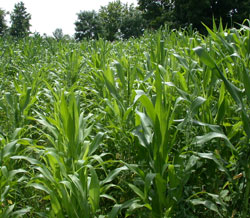
Effective July 1, Iowa retailers are eligible for a three cent per gallon tax credit for every gallon of E15 sold. “With the EPA in the process of clearing the final hurdles, now is the time for all retailers to evaluate how E15 could fit into their business model,” said Monte Shaw, Iowa Renewable Fuels Association (IRFA) Executive Director. He notes that retailers with blender pumps will be able to take advantage of the new state incentive immediately since E15 can be already be sold to flex-fuel vehicle owners.

Shaw says that IRFA members are happy to see the EPA issue a final ruling for E15 use but still dissatisfied with the label design, even though it is an improvement over the initial proposal. “The Halloween pumpkin orange ‘draft’ label was apparently left to fade in the sun for a couple of months. That is a ‘peachy’ improvement,” said Shaw. “However, IRFA is very disappointed the EPA left in the ‘may cause damage’ warning for vehicles 2000 and older. The EPA admitted that they have ‘insufficient’ data to conclude that damage would occur, so I guess ethanol is guilty until proven innocent. Under the EPA’s rationale, E0 (gasoline only) pumps should have a similar warning, because running a car on gasoline certainly degrades the emissions control system over time.”

The new E15 incentive was part of a package of renewable fuels initiatives passed by the Iowa legislature this year and signed into law by Governor Terry Branstad which also includes a tax credit for E85 of 10 cents per gallon; a biodiesel tax credit of 3 cents per gallon for blends of B2 and higher; and infrastructure grants of up to $50,000 to install biodiesel, E85 and blender pumps.

Biodiesel, biofuels, blends, Ethanol, Ethanol News

USDA Finds More Corn Acres Than Expected

Cindy Zimmerman

The new planted acreage report from USDA shows more corn than most anyone expected, given the wet spring weather that delayed planting in many areas. According to USDA, corn planted area for this year is now estimated at 92.3 million acres, up 5 percent from last year. That’s more than growers expected to plant back in March and the second highest planted acreage in the United States since 1944.

“In light of the weather, many people seemed to be thinking that less corn would be planted,” said Lance Honig with USDA’s National Agricultural Statistics Service. “In reality, what we saw was especially in some of those areas not impacted by weather, they really planted a lot more corn than they thought they might.”

Renewable Fuels Association VP of Research and Analysis Geoff Cooper said that, based on USDA’s latest projections of average corn yield (158.7 bushels/acre) and harvested acres (84.9 million), it would mean a 2011 harvest of 13.47 billion bushels – nearly 300 million more bushels of corn than USDA was projecting in its most recent supply/demand estimates. “The takeaway from this report is that U.S. farmers continue to apply the most efficient and effective technologies to produce record or near-record crops year in and year out,” he said.

Of course, it is still early in the season, and American Farm Bureau Federation crops economist Todd Davis says a lot can happen to the corn crop from now until harvest. “We have a lot of hurdles to jump to reach a harvest of 13.47 billion bushels of corn this year,” Davis said. “The weather throughout the Corn Belt will have to cooperate in July and August for farmers to get strong yields and we would have to harvest the 84.8 million acres projected in the June 30 acreage survey.”

USDA also released the June 1 corn stocks estimate today, which was also higher than expectations but still down 15% from last year at 3.67 billion bushels.

corn, Ethanol, Ethanol News, RFA, USDA