Soccer teams in Maryland will now be playing games with the help of the sun. Solar Energy World has been contracted to install a solar energy system in Soccer Dome II in Harmans, Maryland. The system will include the installation of 546 solar panels paired with a 126 kWh photovoltaic grid-interactive system over 13,067 square feet of roof space. When the two solar technologies are pared together, they are estimated to generate 130,000 kWh of electricity. The projected is expected to be completed by the end of June.
 “We’re installing the system because we’re confident it will yield double bottom-line benefits by reducing our carbon footprint and our utility bill,” said Soccer Dome President Clif Everett.
The solar energy will be hooked into the city’s grid and produce enough energy to offset nearly 85 percent of the Soccer Dome’s energy needs as averaged over a total year. In summer months when the system is anticipated to generate more electricity than the stadium needs, the excess will be sold to BGE. Many sports complexes across the country are adding solar energy to their green mix.
 Solar Energy World Vice President Geoff Mirkin said of the project, “Forward-thinking organizations, like Soccer Dome, that increase our region’s energy production by installing solar panel systems have a vital impact on their surrounding communities. More businesses and organizations are looking to cut costs and resources needed to build and operate sports venues. When they find ways to do so while reducing their environmental impact, they enhance the return on investment tenfold. It’s a real win-win situation.”


 President Obama made up a “to-do list” for Congress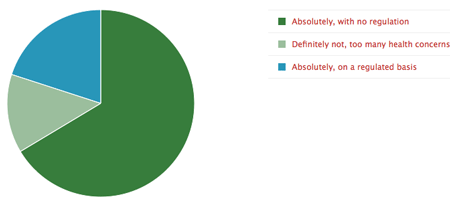

 The 2012 CUTC agenda features cutting-edge technologies and new uses that are positioned change the corn industry. Among the session topics is Advance Biofuels, which will highlight some of the most recent research on advanced biofuels. Speakers will cover thermochemical and biochemical and biomimetic routes to the pretreatment and hydrolysis of lignocellulosics (such as corn fiber hulls, corn stover, etc.) to produce sugar and phenolic monomers that can be further upgraded to synthetic fuels, bioethanol, and/or chemicals.
 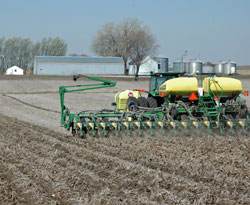 “In spite of the wettest weather of the spring, producers in the Midwest still managed to plant a significant acreage of corn and soybeans” last week, says USDA Meteorologist Brad Rippey. “Corn emergence was greatly benefited by the rain and continuing warm weather.” Nearly a third of the crop is emerged nationwide, compared to the average of 13%. Last year, just six percent was emerged by this time.
  While the industry is moving steadily toward the 15 billion gallon corn ethanol cap under the Renewable Fuel Standard (RFS2), Glauber says right now the market is steady at about 10 percent of ethanol blended fuel and getting E15 in the marketplace is moving slowly toward reality. “But you still have the underlying economics of whether or not a gas station is going to change over equipment to be able to sell E15,” he said. “The likely thing would be so-called blender pumps, which are expensive propositions.”