According to the Center for Agriculture and Rural Development (CARD) located at Iowa State, calls to reduce, revise or repeal the Renewable Fuel Standard (RFS) would not achieve the goals of the industries who are demanding the action.
 “The desire by livestock groups to see additional flexibility in ethanol mandates may not result in as large a drop in feed costs as hoped,” said Iowa State Professor Bruce Babcock, author a new research brief, “Preliminary Assessment of the Drought’s Impacts on Crop Prices and Biofuel Production.”
As part of the research, Babcock analyzed 500 different scenarios using various levels of corn yield for the 2012 crop. He then determined that a total waiver of the RFS would reduce corn prices less than 5 percent and cause less than a 5 percent reduction in ethanol production.
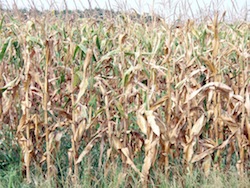
At first glance this seems like a mistake. But Babcock says the lower than expected results are due to the flexibility in complying with the RFS in 2012 and 2013. For example, during this timeframe, an estimated 2.4 billion excess Renewable Identification Numbers (RINs) can be used in place of purchasing actual gallons of a renewable fuel to demonstrate compliance. This allows obligated parties to carry over RINs and lowers the economic impact of a short crop such as what we are expecting this year due to excessive drought conditions affecting nearly 75 percent of crops across the country.


 The U.S. Departments of Agriculture (USDA) and Energy Wednesday