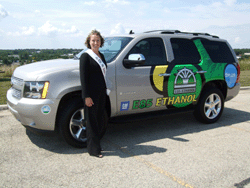
In a time when many biodiesel makers are having a tough time because of the high costs of their feedstocks, one is looking to expand its operations.
 The CEO of Houston, Texas-based Nova Biosource Fuels, which has biodiesel refineries in Iowa, Mississippi and Illinois, Kenneth Hern say the key to his company’s success has been expanding its range of feedstocks to cheaper sources. In this article with the Houston Chronicle, Hern does some Q & A with reporter Brett Clanton, Hern says Nova is even looking to open another biodiesel refinery in the heart of petroleum country… right in Houston:
Q: We’re hearing a lot about how high crop and vegetable oil prices are pinching biofuels producers, even forcing some to close. What’s different about your business model?
A: Nova has a patented, proprietary process that lets us use any material that’s got a triglyceride or a fairly high amount of free fatty acids in it. If you take soy, it has almost no free fatty acid in it. It’s a pure triglyceride. Anyone can make biodiesel from it. It’s a very simple reaction. But when you want to use the feedstocks that are cheaper, almost every time those cheap feedstocks have some amount of free fatty acids.Read More

 Construction on what is expected to be the nation’s first commercial cellulosic ethanol plant in southeast Georgia is making good progress, according to plant officials.
 In addition to using woody biomass as a feedstock, they are experimenting with energy crops that can be grown in the region. “We have test plots we have established with Ceres on our Soperton site,” he said. “We intend for the site to be a showcase for some of the technologies we see in the future feeding this industry.”
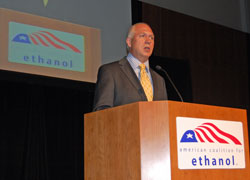
 The Founding Conference of the
  In this edition of “Fill Up, Feel Good,” EPIC executive director Toni Nuernberg talks about how the RFS is helping to keep gasoline prices lower than they would be otherwise and ethanol production continues to help America become more energy independent. The EPA’s decision also allows EPIC to continue with its mission of consumer education about ethanol.
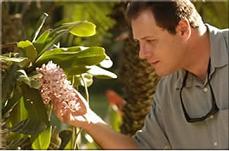 A University of Florida professor has been recognized with the highest honor the Florida State Horticultural Society bestows for his work that includes research to get more oil from plants to produce biodiesel.
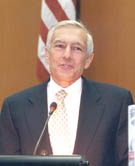 General Wesley Clark, the former Supreme Allied Commander of military forces in Europe and former presidential candidate, will be leading the opening day’s session at the HUSUM WindEnergy trade show and congress in Husum, Germany Sept. 9-13, 2008.
 A new fuel station in Colwich, Kansas could be the poster child for ethanol branding.
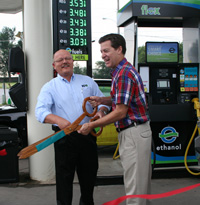 Senator Sam Brownback (R-KS) helped ICM president Dave Vander Griend cut the ribbon during a pump promotion held Monday to celebrate the opening of the new station and to kick off a new initiative in Kansas that will help fuel station retailers obtain funding and the equipment needed to sell higher blends of ethanol.