ACE Conference 2026

Get Your Sustainable Energy in America Factbook

Joanna Schroeder

Bloomberg New Energy Finance has released the 2014 installment of the Sustainable Energy in America Factbook. The resource was developed for The Business Council for Sustainable Energy, and found that renewable energy, natural gas and energy efficiency advancements are leading a transformation of America’s energy.

The 2014 Factbook documents the upward trajectory of energy efficiency, natural gas and renewable energy, using the latest data from 2013. The report finds renewable energy provided 13 percent of U.S. electricity generation in 2013, up from 12 percent in 2012 and just 8 percent in 2007. At the same time, renewable energy costs reached all-time 2014 Sustainable Energy in America Factbooklows, allowing clean energy, with the aid of incentives, to be cheaper than fossil fuel electricity in some parts of the country. Small, distributed generators and off-grid installations, meanwhile, began to emerge as a transformative force in the power industry. Financiers who back small-scale solar systems have raised nearly $6.7 billion since 2008.

“The U.S. energy transformation that began in the mid-2000s gained additional momentum in 2013,” said Lisa Jacobson, president of The Business Council for Sustainable Energy. “The Factbook plays a vital role in chronicling this fast-moving transformation, which is creating whole new industries and thousands of new jobs in the energy efficiency, natural gas and renewable energy sectors.”

The factbook also found that energy efficiency financing is on an upward trend. Spending by energy service companies and by electric and gas utilities totaled more than $12 billion in 2012. Today 31 states and the District of Columbia, representing 77 percent of the U.S. population, have legislation in place to enable the financing of energy efficiency via property-assessed clean energy programs (PACE). Technology for smart grid and for smart homes is making its way into the market and has potential to be pervasive in the future, driving even further efficiency gains in the years ahead.

“The changes unfolding in the U.S. energy industry have been profound and, by the typical time scale of the industry, abrupt,” said Michel Di Capua, Head of North American Analysis for Bloomberg New Energy Finance. “The effects of these changes will be felt in seemingly every nook and cranny of the American economy, from military bases to manufacturing plants, from homes to highways. 2013 saw some detours from the long-term trends, but overall, it is clear that the long-term transformation of how the U.S. produces and consumes energy continues.”Read More

biofuels, Natural Gas, Renewable Energy, Wind

What do You Like in New Farm Bill

Chuck Zimmerman

New Holland ZimmPollBefore we get to our new ZimmPoll let’s look at our latest one which asked the question, “Could drones (UAV’s) serve a purpose on your operation?”

Well over half of the voters this week said that drones could in fact serve a purpose on their operation. Price is still a factor and may be the reason that some operations would not use them yet. We’re going to see a lot more about this new technology since predictions have been made that eighty percent of the multi-million dollar market will be for agricultural use. I’m sure you can think of a number of applications these devices will have in the production of renewable fuels.

Our poll results:

  • Yes, if affordable – 50%
  • No – 18%
  • Yes, at any price – 14%
  • No, worried about privacy – 14%
  • What are they? – 5%

Our new ZimmPoll is now live and asks the question, “What’s best in the new farm bill?”

The Senate finally passed its version of a conference bill Jan. 29, and now the farm bill goes to President Obama’s desk. As you can read on Senator Debbie Stabenow’s website: “This isn’t your father’s Farm Bill. It is a bill for our future that grows our agriculture economy, helps provide greater access to healthy Michigan-grown foods, preserves our land and water, and cuts unnecessary spending. The Farm Bill is a rare example of a major bipartisan jobs bill and a bipartisan deficit reduction bill,” Chairwoman Stabenow said. Have you had the chance to review the new bill? Let us know what you think is the best part.

farm bill, Farming, ZimmPoll

Q&A on EPA 2014 RFS Proposal

Joanna Schroeder

The Environmental Protection Agency (EPA) has received more than 15,000 comments on its 2014 proposed rules for the Renewable Fuel Standard (RFS). According to the thousands of Third Way logocomments, should the renewable fuel volumes go forth as proposed, not only would the first generation biofuel industry be harmed, but significant harm would bestow advanced biofuel development including cellulosic ethanol and efforts to develop drop-in biofuels just as biojet fuels and algal-based biofuels.

In response to the many questions surround the proposed rule, with a big one being is it legal or does it go against statue, the online think tank, Third Way, has released a Q&A on EPA’s proposed rule to lower the 2014 renewable fuel volumes.

The document addresses questions on the importance of biofuels, Renewable Identification Numbers (RINS), the status of cellulosic ethanol and more.

biofuels, EPA, RFS

Aemetis Upgrades Biodiesel Plant in India

John Davis

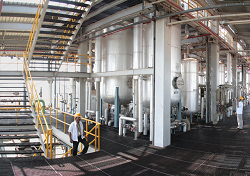
aemetisindia1A California advanced fuels and renewable chemicals company is now producing high-quality biodiesel in India. Aemetis, Inc. says its 50 million gallon per year capacity biodiesel and refined glycerin production facility in Kakinada, India will use advanced technology to produce the green fuel and glycerin by-product.

“The new distillation production unit is fully commissioned and the India facility now produces biodiesel meeting or exceeding the highest standards for biodiesel quality worldwide,” according to Sanjeev Gupta, Managing Director of Aemetis’ subsidiary in India, Universal Biofuels Private Ltd.

The Aemetis plant is the only distilled biodiesel producer in India and is one of the only plants in Asia capable of producing large supplies of biodiesel that meet the rigorous European Union (ISCC) standards. During 2013, approximately $20 million of biodiesel was produced by the Aemetis plant in India and delivered to customers in Europe.

“The completion of this biodiesel distillation unit allows Aemetis to significantly expand our production levels in order to supply European and India biodiesel customers,” stated Eric McAfee, Chairman and CEO of Aemetis.

Aemetis officials say they plan to take advantage of the European Union’s imposition of anti-dumping tariffs against Argentine and Indonesian biodiesel to offer a low-cost source of biodiesel and glycerin to Europe.

Biodiesel, International

Idle Nebraska Biodiesel Plant Looks to Start in 2015

John Davis

BenefuelA Nebraska biodiesel plant originally completed in 2007 but never opened could see new life next year. According to this story from the Beatrice (NE) Daily Sun, the new owners, Duonix Beatrice, a joint venture between Flint Hills Resources, which is a subsidiary of Koch Industries, Inc., and Benefuel, Inc., have spent the last couple of years renovating the 50-million-gallons-per-year refinery.

The company hopes to begin operation in 2015 with a full-time staff of 44 workers producing 50 million gallons of biodiesel a year.

Michael Harris, Flint Hills Resources venture manager, said the company has been fixing and replacing equipment that was already out of date and is retrofitting the plant to be feedstock flexible and utilize ENSEL technology.

According to the company’s website, the ENSEL process streamlines production, eliminates waste and by-products and expands product capabilities to produce a biodiesel with enhanced cold weather properties and a high-grade glycerin that can sell for more than the biodiesel itself.

The renovations will allow the refinery to use cheaper feedstocks, such as corn oil from ethanol production, waste-vegetable oils, animal fats and unrefined oils to make biodiesel.

Biodiesel

Smithfield’s Renewable Energy Commitment Tangible

Joanna Schroeder

Smithfield Foods commitment to renewable energy is showing tangible results according to the company. During the past several years, the company has been monitoring scientific advancements that have removed barriers to efficiently and sustainably create renewable energy from agricultural waste, in particular the use of anaerobic digestion processes that covert decomposing organic matter, such as hog manure, into renewable energy.

“The bottom line is that our company’s commitment to creating renewable energy is about to produce some very tangible and beneficial results,” said C. Larry Pope, president and chief executive officer of Smithfield Foods.

cute pigsPope noted that two Smithfield Foods strategic partnerships at Murphy-Brown LLC facilities in northern Missouri and Milford, Utah, involving anaerobic digestion technology are seeing results and the projects will soon deliver electricity to neighboring communities.

“Our Missouri and Utah projects are a classic win-win. We will considerably reduce the greenhouse effects on the Earth’s atmosphere by recycling agricultural waste, help to protect our natural resources and provide a more environmentally friendly energy source,” Pope said.

In northern Missouri, Murphy-Brown of Missouri, LLC (MBM) and Roeslein Alternative Energy, LLC, have announced joint plans to develop a $100 million renewable biogas project. Biogas produces energy when organic matter decomposes without oxygen present. The biogas will be harvested from MGM finishing farms in northern Missouri and construction is set to begin this spring.

In addition, the company’s project Milford, Utah, is ramping up. Murphy-Brown’s
Circle 4 Farms will be producing electricity via two methane digesters. In this project, manure will be converted to energy and as a result, the manure, or solid waste, will no longer be stored in lagoons.

Pope added, “Our manure-to-energy projects are just another step in our sustainability
journey.”

Alternative energy, biodigester, biogas, Electricity, Waste-to-Energy

Sustainable Poplar Plantation Provides Biofuels Biomass

Joanna Schroeder

The GreenWood Tree Farm Fund, LP (GTFF), managed by GreenWood Resources, has become the first short rotation forest plantation worldwide to earn certification under the Roundtable on Sustainable Biomaterials (RSB). The RSB certification covers GTFF’s cultivation, management and harvesting of coppiced poplar trees, used as biomass feedstock for the cellulosic ethanol industry or pelletized for direct combustion in biomass electric plants. The certification was conducted by SCS Global Services (SCS), a world leader in third-party sustainability certification.

“Biomass from trees is an ideal solution for generating renewable fuels and chemicals while reducing reliance on fossil fuels,” said Jeff Nuss, President & CEO of GreenWood Resources (GWR). “GWR’s high-yield, short-rotation tree farms need less fertilizer and less energy to produce than traditional row crops, and they produce greater energy output per unit of production. We take our sustainability mission very seriously and are proud to have received the RSB designation.”

Poplar_GreenWoodResources_AutumnWebSCS audited the Boardman, Oregon tree farm to RSB standards jointly with GWR’s annual Forest Stewardship Council (FSC) certification renewal. Combined, these two certifications recognize GreenWood’s efforts to maintain biodiversity, protect water resources, account for greenhouse gas emissions, treat workers fairly, and benefit the community.

“While biofuels for both transportation and energy production offer promise as an alternative to fossil fuels, production of its raw material can have a major impact on land, air, and water resources,” said Neil Mendenhall, Manager of Supply Chain Services at SCS. “GreenWood Resources is demonstrating a sustainable approach to the production of biomaterials that has a greatly reduced environmental impact.”

Rolf Hogan, Executive Director of RSB added, “RSB is pleased that GWR has demonstrated the sustainability of its biomass feedstock production sufficient to earn certification. GreenWood is a great example of a short-rotation tree farm that can reach the highest level of sustainability.”

advanced biofuels, biomass, Cellulosic, Electricity, Ethanol

Elevance Moves Forward with Natchez Biorefinery

Joanna Schroeder

Elevance Renewable Sciences is moving forward with the development of its biorefinery in Natchez, Mississippi and has selected URS Corporation to provide engineering, procurement and construction (EPC) services. The company says it is on track to meet customer forecasts for its Inherent renewable building blocks in 2016.

Elevance Renewable Sciences logo“URS is a natural partner for us, and we’re looking forward to working together to advance our second biorefinery,” said Elevance CEO K’Lynne Johnson. “Just as our Inherent renewable building blocks are a breakthrough category of novel products that provide innovative solutions to multiple industries, URS brings an innovative approach to getting the job done.”

Under the contract, URS’ scope of work involves converting Elevance’s existing biodiesel plant into a new biorefinery.

“With our presence in Baton Rouge, near the site of the new biorefinery, URS is able to provide an EPC solution to Elevance that features a local, experienced team and proven construction delivery,” said Ken Martinez, URS Vice President and General Manager, Process Engineering. “URS’ expertise supporting clients worldwide with a variety of systems and processes makes us an ideal partner for Elevance’s latest biorefinery project.”

Elevance is a specialty chemicals company that will have two world-scale biorefineries in operation by 2016. The Natchez project will be the second biorefinery based on Elevance’s proprietary metathesis technology. Commercial production is already underway at the company’s first biorefinery, a 180,000 MT joint venture with Wilmar International Limited located in Gresik, Indonesia.

The commercial-scale manufacturing facility in Natchez will produce novel specialty chemicals, including multifunctional esters such as 9-decenoic methyl ester; a unique distribution of bio-based alpha and internal olefins including decene; and a premium mixture of oleochemicals. It will have a capacity of 280,000 MT (approximately 617 million pounds).

The high-value performance specialty chemicals, olefins and oleochemicals produced at the company’s biorefineries will be used in personal care products, detergents and cleaners, lubricants and additives, engineered polymers, and other specialty chemicals markets.

advanced biofuels, biochemicals

BioEnergy Bytes

Joanna Schroeder

  • BioEnergyBytesDFRMD has become a gold sponsor of the Wind Energy Summit South Africa taking place April 9-10, 2014 in Cape Town. During this industry meeting, RMB will share their experience of successful financing during the round one development at Hopefield wind farm. The summit brings together the key decision makers of South African wind, including the National Treasury and the Department of Environmental Affairs, NERSA, Eskom, Nedbank Capital, Gestamp Wind, Siemens and Suzlon.
  • Lignol Energy Corporation has announced that it has closed the transaction previously announced to acquire all of the current outstanding and issued ordinary shares of Territory Biofuels Limited increasing its ownership of TBF from 55% to 100%. TBF owns the largest biodiesel plant in Australia with an annual capacity of 140 million litres with plans to re-start operations in the latter half of 2014.
  • National Cooperative Bank provided $82 million in financing for solar projects during 2013. The Bank worked with Strata Solar of Chapel Hill, North Carolina on 15 solar projects around the state that provided 94 MW of power. The projects the Bank financed resulted in 94 MW of power, which equates to powering 11,250 homes.
  • Submissions and nominations for the 2015 Zayed Future Energy Prize are open. The prize, an annual US$4 million award, recognises individuals, organisations and schools who have made significant strides to advance the fields of renewable energy and sustainability. Submissions will open globally across five categories: Large Corporation, Small and Medium Enterprise (SME), Non-Governmental Organisations (NGO), Lifetime Achievement and Global High Schools. In the Lifetime Achievement category, nominations are also being be accepted.
Bioenergy Bytes

Georgia Biodiesel Maker Installs Shockwave Reactor

John Davis

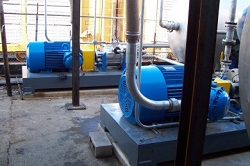
shockwavereactor2aA Georgia biodiesel maker has installed a reactor that the system’s builder says will transesterify vegetable or animal fats in just seconds. This article from Biodiesel Magazine says World Energy in Rome, Ga., has put in the Hydro Dynamics Inc. ShockWave Power Reactor (SPR) BD 50 at the 50 million gallon a year refinery.

“Harnessing the power of cavitation, the ShockWave Power Biodiesel Reactor drives the transesterification reaction to completion in seconds,” stated Hydro Dynamics. “In true continuous or batch systems, the SPR gives biodiesel producers greater feedstock flexibility and the power to achieve consistently superior quality. The SPR can improve processes to reduce monoglycerides and reduce catalyst utilization.”

Hydro Dynamics says the ShockWave Power technology, now in its 8th year, is used widely throughout the biodiesel industry with 500 million gallons of annual reactor capacity now sold.

Miscellaneous