
 Blue Bird Corporation recently announced its 2013 Supplier Award winners. Revealed at Blue Bird’s Supplier Conference, select industry suppliers were awarded for their commitment to quality, innovation, service and cost management. Blue Bird presented the 2013 Supplier of the Year award to ROUSH CleanTech, manufacturer of propane autogas fuel systems and tanks. Click here to view all the winners.
- Beginning February 19, ReneSola will launch a series of free North American Board of Certified Energy Practitioners (NABCEP) accredited training events in 18 cities across North America. Attendees will learn about ReneSola’s latest inverter and module product lines, while earning three NABCEP credits. Lunch, happy hour, giveaways, and door prizes will be provided by ReneSola.
- Duke Energy has issued a request for proposals (RFP) for 300 megawatts (MW) of new solar energy capacity in its Duke Energy Carolinas and Duke Energy Progress territories. The new capacity would be in service by the end of 2015.
- The U.S. Interior Department and U.S. Geological Survey have teamed up to develop the first national wind turbine map and database, and is available to the public. The interactive map and geo-dataset shows more than 47,000 onshore wind turbine locations and related information across the entire United States.

CASE Calls US ITC SolarWorld Decision Damaging
The U.S. International Trade Commission (ITC) has ruled that its investigation into anti-dumping and countervailing duties for solar cell products from China and Taiwan will move forward. The announcement was made public following a preliminary phase vote in Washington, DC.
The anti-dumping and countervailing duty on solar cells issue stems from a compliant initiated by Frank Asbeck and his company SolarWorld back in 2013. This was the second complaint brought against Taiwan and China by SolarWorld accusing solar manufacturing  companies of anti-dumping practices with the first complaint focused on solar cells produced in China that Asbeck argued was negatively affecting PV cell competition of U.S. manufacturers. The second complaint centered on the alleged practices of companies getting around the duties attached to PV cells produced in China by circumventing the system through the production of PV cells in Taiwan.
In response to the ruling, Jigar Shah, president of the Coalition for Affordable Solar Energy (CASE), said, “With the ITC’s preliminary ruling in favor of SolarWorld’s petition to impose tariffs on imported solar products, it is now official: a German company is one step closer to manipulating U.S. trade procedure in order to prop up its own failing business and inflict harm on a job-creating industry. By raising the cost of solar for American homeowners, SolarWorld is poised to inflict critical damage on an industry which last year added more than 20,000 solar installation, sales, and distribution jobs to the U.S. economy.”
“These hard-working Americans now look to President Obama to broker a common sense solution which will avoid damage to the economy and allow the deployment of clean renewable energy to continue into the 21st Century,” continued Shah.
He concluded, “Just this past week, the U.S. Trade Representative publicly condemned the protectionist solar policies of India because, in his words, protectionist policies would ‘actually impede India’s deployment of solar energy by raising its cost.’ CASE implores the U.S. government to adopt the same perspective before a burgeoning U.S. industry is harmed for the benefit of one German company.”
Advancements in Algal Biofuels: Year in Review
The U.S. Department of Energy’s (DOE’s) Bioenergy Technologies Office (BETO) has released its Advancements in Algal Biofuels: Year in Review. The goal of BETO is to support advanced in the production of algal biofuel – especially those that lower the cost of production.
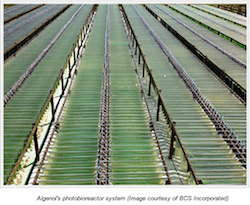 The report highlights several notable R&D breakthrough including:
- Fast algae-to-bio-crude oil process reduces production costs – DOE’s Pacific Northwest National Laboratory (PNNL) is receiving national recognition for developing a process to turn algae into bio-crude oil in just minutes. PNNL’s technology eliminates the lipid extraction step and subjects whole algae to very hot water under high pressure to convert the algae biomass into bio-crude oil (a process called hydrothermal liquefaction). PNNL successfully treated wet algae biomass in a commercially relevant, continuous process that doesn’t require drying steps or solvents to make the bio-crude oil.
- Discovery in algae cell biology overcomes key challenge to algal biofuels – Researchers at the Scripps Institute of Oceanography (SIO) made a significant breakthrough in the metabolic engineering of algae to improve yield of lipids (the energy-storing fat molecules that can be used in biofuel production). Algae typically only accumulate lots of lipids when they are starved for nutrients, but the drawback to starvation is that it limits organism growth. The SIO research team genetically engineered a disruption in the synthesis of the enzymes that breakdown the storage lipids that are produced during normal growth, allowing for lots of lipid accumulation without starving the algae. The resulting algae both grow fast and accumulate lipid at the same time. The high lipid yields that result from utilizing this method can potentially improve the economics of algal biofuel production.
- Collaborative outdoor algae production testing facilities come online – Two national algae R&D testbed programs kicked off their project work in 2013. The Arizona State University-led Algae Testbed Public-Private Partnership (ATP3) and the University of Arizona Regional Algae Feedstock Testbed Partnership manage algal biofuel R&D facilities across the United States and serve as engines for algal technology innovation and validation, job training and workforce development, and long-term cultivation data.
In response to the report, the National Algae Association’s (NAA) Barry Cohen said that while the advancements might be news in Washington, none of them are newsworthy to the algae production industry.
For example, Cohen said the work being done at the Pacific Northwest National Laboratory is not news. “Hydrothermal liquefaction is another name for a process that has been used in petroleum refining for more than 100 years.”
He also noted in regards to the two national algae testbeds that NAA has not been able to independently verify the status of any of the facilities. “NAA has, however, created its own online Algae Production Certification Course and its second algae production incubator facility is operational,” said Cohen.
Read NAA’s full remarks regarding the report here.
Canadian Biodiesel Maker Gets BQ-9000 Designation
 Canada’s largest biodiesel producer has gained an important quality status. This news release from Great Lakes Biodiesel Inc. says the company received BQ-9000 Producer status, the highest level of industry recognized quality assurance, from the National Biodiesel Accreditation Commission (NBAC).
“Achieving BQ-9000 Producer status is just one of many goals we achieved in an effort to continuously provide our customers with the highest quality product and services” said Thomas J. Guzek, Chief Marketing Officer of Great Lakes Biodiesel. “ Our Great Lakes Team is a highly experienced and dedicated group that worked very diligently to achieve this outstanding accreditation. “We are proud to be a part of the BQ-9000 process. Most importantly, we know BQ-9000 accreditation means consistent, efficient production and supply of high quality fuel to help address the growing renewable energy demands both in Canada and US”
BQ-9000 is a cooperative and voluntary quality-assurance program administered by the National Biodiesel Board (NBB) for the accreditation of producers and marketers of biodiesel fuel. This unique program addresses requirements of the ASTM standard for biodiesel, ASTM D6751, within a structured quality system that controls storage, sampling, testing, blending, shipping, distribution, and fuel management practices. Certification is awarded following a successful formal review and audit of the applicants Quality System documentation, followed by a formal audit of the applicants conformance to its System.
Great Lakes Biodiesel Inc.’s Welland, Ontario facility is the largest biodiesel plant in Canada producing 45 million gallons per year of ASTM 6751 quality biodiesel.
Caribbean Islands Swapping Diesel for Renewables
 The British Virgin Islands, Columbia, Dominica, Saint Kitts & Nevis, Saint Lucia and Turks and Caicos have joined the Carbon War Room and Rocky Mountain Institute’s ‘Ten Island Renewable Challenge‘. The campaign is designed to help get the islands off fossil fuels as well as move forward with projects for schools and hospitals. The commitments were complemented by news that Virgin Limited Edition and Sir Richard Branson, who had committed Necker to the ‘Ten Island Renewable Challenge’ as a ‘demo’ island, awarded the contract to transition it on to renewables to U.S. energy firm NRG.
“What we hope to do is use Necker as a test island to show how it can be done,” said Sir Richard Branson, Founder of Virgin Group and Carbon War Room. “The only way we’re going to win this war is by creative entrepreneurship, to make the price of clean energy cheaper than that of energy from fossil fuels.”
Caribbean nations lack access to low-cost power because of the small size of their national market and an absence of standardized contracts and regional regulatory systems. In some cases, local energy suppliers, locked in for many years, currently enjoy a virtual monopoly over the system and creditworthiness is also a challenge for many nations. As a result, banks have been reticent to lend money for energy projects.
“Islands are a microcosm of larger energy systems around the world and offer an excellent test bed to demonstrate and scale innovative, clean energy solutions,” said Amory Lovins, co-founder and chief scientist of Rocky Mountain Institute. “We’re pleased to bring our decades of experience helping businesses and communities cost-effectively shift to efficiency and renewables to help island nations move beyond clean energy roadmaps to tangible, on-the-ground results.”
Support for the RFS- Personal, Powerful
With the time period over for comments regarding the Environmental Protection Agency’s (EPA) 2014 Renewable Fuel Standard proposal, many people are asking: What’s next? The EPA is now tasked with reviewing all the comments and this will prove to be quite an undertaking as more than 40,000 comments were submitted. It is anticipated that it will take several months before the EPA publishes their final proposal.
 In the meantime, the Renewable Fuels Association (RFA) is highlighting all the positive comments that were sent to the EPA from citizens representing all walks of life. This despite, said RFA, the attempts of the American Petroleum Institute’s (API) automated robo-call campaign. A review of EPA’s docket by RFA revealed that tens of thousands of Americans from across the country used unique stories and anecdotes to express their opposition to EPA’s proposal to reduce the 2014 RFS volumes. In contrast, API’s robo-call initiative resulted in tens of thousands of identical comments, replete with false statements and trite myths.
According to RFA, API’s robo-calls used a “salacious automated message to tell listeners that more ethanol would cause ‘higher food prices and damaged car engines'”. The robo-calls described American farmers as “extremists” and said “[w]e need the EPA to stand up for American families.” The automated call concluded by directing recipients to “press 1 now” to send a pre-written message to EPA supporting the proposed rule. Unfortunately, said RFA, thousands of Americans were duped by API’s underhanded tactics.
“Unlike the cold, impersonal, fear-induced robo-calls used by Big Oil to the level of absurdity, a diverse group of ethanol supporters often took the time to personally write to the EPA in opposition to the blending cuts,” said Bob Dinneen, RFA president and CEO. “Farmers, ethanol producers, and other renewable fuels supporters explained in great, vivid personal detail how the reductions would hurt their businesses, families, and local communities. I hope the EPA will distinguish the difference between the mass robo-call responses and the in-depth individual comments written by those most knowledgeable on the impact of the proposed reduction of the RFS. The decision the EPA and White House are about to make will have a lasting effect for years to come.”
API’s antics are overshadowed, said RFA, by the genuine and heartfelt comments from a wide array of stakeholders about the real impacts of EPA’s decision. Bankers, high school and college students, equipment dealers, county commissioners, university presidents, mayors, auto repair shop owners, military veterans, auto dealers, construction workers, engineers, port authority executives, clean air advocates, workers in the automobile, aircraft and farm equipment manufacturing industries, gas station equipment suppliers, seed companies, and college professors joined thousands of farmers and biofuel producers in urging EPA to reverse its proposal.
BioEnergy Bytes
- The U.S. Deputy Secretary of Energy Daniel Poneman has announced the 20 collegiate teams selected to compete in the U.S. Department of Energy Solar Decathlon 2015 to take place in the Orange County Great Park. The 20 worldwide teams will now begin the nearly two-year process of building solar-powered houses that are affordable, innovative and highly energy-efficient.
- The Commercial Algae Cultivation, Harvesting, Extraction Technologies and Networking Workshop is taking place February 28, 2014 at Kessil Lighting located at 1689 Regatta Blvd in Richmond, CA 94804. Speakers include Barry Cohen, executive director of the National Algae Association; Will Thurmond, CEO of Emerging Markets Online; Robert Henrikson, CEO, Smart MicroFarms; Jose Sanchez, VP Quality Control and Assurance, OriginOil; and more. Registration is still open.
- Juhl Energy, a provider of Clean Energy Solutions and a Leader in Community Wind Power, today announced that they have acquired PV Power, Inc., a leading online distributor of solar power systems and solar components to industry professionals, contractors and consumers across the country.
- EnerNOC, Inc., a provider of energy intelligence software (EIS), has announced that it has acquired Entelios AG, a leading provider of demand response in Europe. This acquisition accelerates EnerNOC’s entry into continental Europe with Entelios’ strong team and existing relationships with leading grid operators, utilities, retailers, and commercial, institutional, and industrial customers.
Growth Energy is Taking it to the Streets
Growth Energy is holding its fifth annual executive leadership conference at the JW Marriott Desert Ridge in Phoenix, Arizona, from February 27, 2014 through March 2, 2014.
The conference will open on Thursday at 7:00 am and will showcase a number of speakers, including Agriculture Secretary Tom Vilsack.
 During the opening day of the conference, there will be key addresses, including a “Chairman’s Report” from Growth Energy Board of Directors Co-Chair and Executive Chairman of POET, Jeff Broin and a “State of the Industry” address from Growth Energy CEO, Tom Buis.
The theme of this year’s conference is “Taking it to the Streets,” and a major focus will be on building out the necessary infrastructure so higher blends of renewables, such as E15, will be available to retailers and consumers. Another important topic will be the Renewable Fuel Standard (RFS), its future and how this policy has successfully helped drive innovation, investment and growth within the biofuels industry.
Guests will also hear unique global perspectives on the future of agriculture, the future of energy, NASCAR and the political landscape from speakers including: Harry Stine of the Stine Seed Company; Richard Childress and Austin Dillon from Richard Childress Racing; noted political analyst, Charlie Cook; and several others.
To cap off the conference, all attendees are invited to join Growth Energy at the Phoenix International Raceway during the Sprint Cup race on Sunday to cheer on American Ethanol, one of NASCAR’s official sponsors.
Growth Energy will be live streaming much of the conference at for those unable to attend.
Biodiesel Maker BIOX Posts Strong 1st Quarter
 The owner of Canada’s largest biodiesel refinery had an encouraging first quarter of the fiscal year. The Wall Street Journal reports that BIOX nearly doubled sales of the green fuel from October to December of 2013 compared with the same period a year earlier, thanks to improving fundamentals in the biodiesel market north of the border and a Canadian province’s own biodiesel mandate about to kick in.
“The fundamentals of the Canadian biodiesel market are becoming a key component of our addressable market. The inter-terminal pipeline together with the supply agreement with Shell Canada Limited and the proposed 2 percent greener diesel mandate in Ontario provide a greater level of market certainty than the U.S. market,” said Kevin Norton, Chief Executive Officer of BIOX. “With the proposed Ontario mandate expected to take effect April 1, 2014 and our established supply agreement with Shell we are in a strong position to take advantage of growing demand in our local market.”
Financial Highlights
Sales were $17.3 million for the three-month period ended December 31, 2013, compared with $9.5 million for the corresponding period last year. The 82 percent increase in sales was primarily the result of the 175 percent increase in litres of biodiesel sold due to the temporary shutdown of the Hamilton facility during the same period last year, partially offset by lower sales of separated RINs during the quarter.
And while U.S. biodiesel producers are worrying about the government’s proposal to slash the amount of biodiesel to be blended into the country’s fuel supply and the expiration of the $1-a-gallon federal biodiesel tax credit, BIOX officials believe the changing regulations in Canada will prompt them to sell more of their biodiesel at home (in the past, they have sold a majority of their biodiesel to the U.S.) and avoid some of the pitfalls their American cousins are now facing.
London Coffee Shops to be Next Biodiesel Source
 Not too long ago, we told you how researchers at the University of Cincinnati had figured out how to get oil from coffee grounds to make into biodiesel. It looks like that good idea has caught on overseas, as this article from the UK’s Guardian tells how a London entrepreneur is going great guns with the same idea in a venture that’s being called Bio-bean.
“After working on this for a couple of weeks I entered the Mayor’s Low Carbon Prize and was lucky enough to be among the winners”, says [Arthur] Kay. This gave him the impetus to take it forward and team up with business partner Benjamin Harrison. They have since attracted over £100,000 in grants and funding. The idea is not to start small and grow bigger; it’s to start big.
“People think of us in a tiny little van or bicycle going round and collecting 10 kilos from each coffee shop,” says Kay. “We are instead focusing on the [waste streams] of large-scale coffee producing factories in or around London. We’re currently in conversation with a couple of major coffee shop chains too, who are really interested. Our processing plant isn’t operational yet but we’re looking at a six to eight-month timeframe to set up a large-scale waste-processing site in Edmonton, North London, capable of processing 30,000 tonnes a year.”
The technology Bio-bean is using to do this is a mixture of old and new. “Imagine you have a pile of coffee grounds,” says Kay. “You dry them, then we have the patent for the bit in the middle that allows us to extract oil from it. It’s a biochemical process, a solvent that you evaporate through what’s called ‘hexane extraction’. By weight it is about 15-20% oil. The remaining 80-85% is then turned into bio-mass pellets used to be burned in boilers.” The solvent is also 99.9% recyclable, meaning it can be used over and over.
The article goes on to say that the developers see London’s public transport system as a natural customer for the coffee-based biodiesel, maybe even a Bio-bean bus, as many buses in the city are already running on biodiesel. They hope to have a large refinery going soon.