
 According to a recent report from Navigant Research, 59 percent of light-duty vehicles purchased in 2025 are expected to feature turbochargers. “Automotive Fuel Efficiency Technologies,” analyzes the emerging global market for technologies that improve fuel economy. It examines the consumer demand and regulatory background related to engine technology and lightweight materials for increasing fuel efficiency in vehicles. Global market forecasts for LDV sales, segmented by powertrain, region, and number of cylinders, extend through 2025.
- Coronal Group LLC, an alternative energy firm that finances and operates solar photovoltaic (PV) projects, has announced that Jonathan D. Jaffrey will step into the role of chairman and CEO and that Edwin Feo will assume the position of president. In addition, the company added two executives, Joseph M. Teltser, deputy general counsel, and Dan Barahona, controller.
- Solar Power, Inc. has announced that SPI, together with its wholly owned subsidiary, SPI China (HK) Limited, has completed its previously announced acquisition of 4.3 MW of photovoltaic projects in Italy from CECEP Solar Energy Hong Kong Co., Limited.
- There is still time to register for the 10th Annual Emerging Issues Forum taking place April 16-17, 2015 in Omaha, Nebraska. Hear the latest confirmed speaker, Paul Argyropoulos with the U.S. Environmental Protection Agency (EPA) speaking about “Getting the Renewable Fuel Standard Back on Track” as well as others on various ethanol topics. Register here.

Celebrate National Biodiesel Day
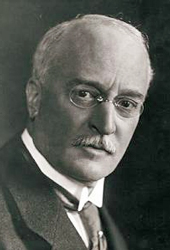 National Biodiesel Day is March 18, and the Iowa Biodiesel Board is suggesting that farmers ask for and use biodiesel as they head into spring planting.
“We’re challenging every farmer in Iowa to request that their fuel distributor offer biodiesel blends this spring,” said Grant Kimberley, IBB executive director and a soybean farmer who uses biodiesel on his farm. “A thriving biodiesel market helps everyone in the ag sector.”
March 18 is National Biodiesel Day because it is the birthday of Rudolf Diesel, the man who invented the engine that bears his name. He ran early models on peanut oil, and was a visionary for renewable fuel.
“I urge farmers to recognize the importance that renewable energy has in a strong and vibrant farming future,” said Ron Heck, an Iowa soybean farmer and IBB officer. “Those of us in the farming community must walk-the-walk by supporting clean energy solutions on the farm.”
Heck noted he has used biodiesel on his own farm for many years. But a poll of more than 360 Iowa farmers conducted this winter by the Iowa Soybean Association finds room for increased biodiesel use. About 41 percent said they use biodiesel in their farming operations. “Not readily available” was the primary reason cited for not using the fuel. However, availability has improved the last several years due to favorable state legislation.
Biodiesel can be used in any diesel engine in blends of up to 20 percent (B20). All of the major Original Equipment Manufacturers producing engines and equipment for the U.S. agricultural market support B20 or higher in their warranty position statements.
Collaboration to Scale-Up Sweet Sorghum for Ethanol
 Ceres, Inc., an agricultural biotechnology company, and Brazilian energy company Raízen S.A., today announced the signing of a multi-year collaboration agreement to develop and produce sweet sorghum on an industrial scale.
Under the collaboration, the companies will each contribute in-kind services and resources and share in the revenue from the ethanol produced from Ceres’ sweet sorghum above certain levels. This season, Raízen has planted Ceres’ sweet sorghum evaluation in a single location and plans to expand to multiple mills in the seasons to come.
Sweet sorghum can be grown to complement existing feedstock supplies and extend the operating season of Brazilian sugarcane-to-ethanol mills. In addition to sweet sorghum, Ceres markets high biomass sorghum to mills and other agri-industrial facilities for use in generating electricity, heat and steam in Brazil. In the U.S., Ceres is marketing improved forage sorghum hybrids to dairies and livestock producers.
Urban Air Initiative Challenges EPA Ethanol Models
 The Urban Air Initiative is challenging the federal government’s models on ethanol emissions from automobiles. This news release from the group says it has filed a new petition with the Environmental Protection Agency challenging the EPA’s Motor Fuel Emission Simulator model, which it says “wrongly blames ethanol for creating harmful tailpipe emissions.”
One of the biggest factors currently holding domestically produced ethanol back from reaching its full potential is bad information. This includes focused misinformation campaigns like the tactics used by big oil for years and bad computer modeling basing assessments on erroneous or inaccurate information.
“Many Americans are not aware of the very real and dangerous consequences of our dependence on foreign oil,” said Michigan farmer Jeff Sandborn, who is chairman of the NCGA Ethanol Committee. “Much of the time the focus has been on jobs and ethanol’s economic contributions, but increasingly the urban public is looking at the dangers related to the pollutants in gasoline. Ethanol reduces carbon and these toxic compounds while providing the higher octane modern engines need.”
The EPA’s study and resulting model obscures the fact that “blending ethanol into ordinary gasoline reduces harmful emissions produced when gasoline combusts in an engine,” according to the group’s petition.
EPA’s study, in an effort to look at optimal temperatures and a variety of blends, results in findings that increasing ethanol can be associated with increasing emissions, the petition said. “This conclusion is misleading at best,” the group said, arguing that it ignores real-world factors in burning fuel. Other studies have found that increasing the amount of ethanol in fuels reduces emissions.
The group says this model in question underlies a number of key issues regarding EPA and states’ treatment of ethanol, including state implementation plans to meet a variety of air quality standards.
EPA Chief and Ag Secretary on RFS at NFU
The heads of both the U.S. Department of Agriculture and the Environmental Protection Agency spoke to the National Farmers Union (NFU) convention in Wichita Monday and talked about the Renewable Fuel Standard (RFS).
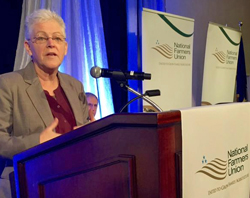 EPA Administrator Gina McCarthy admitted that her agency was “in the hot seat” over the RFS after failing to set standards for the industry last year.
“The RFS is a complicated program, and we weren’t able to accomplish what we needed to do last year,” she said. “Implementing the RFS as Congress intended has been challenging.”
“We need to set levels that send a longer-term message,” McCarthy continued, explaining the agency’s intention to set Renewable Volume Obligations (RVOs) for 2014, 2015, and 2016 before summer of this year.
Listen to McCarthy’s speech here, courtesy of Ken Rahjes, AgView.net. EPA Chief Gina McCarthy at 2015 NFU Convention
 Agriculture Secretary Tom Vilsack stressed his continued support for the RFS. “I love the RFS – I’m for RFS,” he said. “We need to make sure Congress doesn’t do anything to damage it or repeal it or make it difficult to use. We need to be advocates, spokespeople for this industry. We need to go out and tell folks this is the right thing to do,” he said.
Vilsack urged the crowd to continue to educate the public about the potential of weaning the nation from foreign oil imports and highlighting the potential of renewable fuels. He pointed to areas of the economy, like the military, that were converting to home grown fuels. “Navy is starting to look at renewable fuels. I am optimistic about this. We need to be advocates for this industry. We don’t want to lose this amazing marketing opportunity.”
Iowa Biodiesel Plant Latest Victim of Govt Inaction
 An Iowa biodiesel plant is the latest victim of the government’s inaction on measures that are aimed to help the biofuels industry. This article from the Dubuque (IA) Telegraph Herald says the 30-million gallon nameplate Western Dubuque Biodiesel has had to stop production completely – just another of the too many biodiesel refiners that have had to shut down due to the federal government’s failure to give clear direction on the Renewable Fuel Standard (RFS) and the expiration of the $1-a-gallon federal biodiesel tax credit.
“All the tanks are full and no one is buying,” General Manager Tom Brooks said. “How do you sell product to a buyer who doesn’t know what he has to blend against? That’s the frustration.”
Across the U.S., biodiesel production fell from a high of 1.8 billion gallons in 2013 to 1.75 billion last year. In Iowa, production fell slightly, but it remains the nation’s leading producer, accounting for 16 percent of biodiesel output in 2014, according to the Iowa Renewable Fuels Association.
Uncertainty sent prices falling nearly 25 percent for all of 2014 and led to a 73 percent decline in industry profitability, Brooks said. The result: Dozens of biodiesel plants have stopped production or laid off workers in recent months.
“It creates doubt and uncertainty for investors and lenders, because they don’t know whether the industry is stable. Is the business growing or stagnating?” he said. “And when you’re running the plant at half capacity, your costs increase.”
The article goes on to say that state biodiesel tax credits have helped a little, but industry officials worry the same uncertainty in federal policy will continue to plague biodiesel in 2015.
Lallemand Announces TransFerm Yield Patent
Lallemand Biofuels & Distilled Spirits (LBDS) along with Mascoma, LLC have been awarded a patent for the technology used in TransFerm Yield+ in the US (US 8,956,851 B2). As explained in Lallemand company materials, this yeast product provides for novel metabolic pathways that reduce or  eliminate glycerol production subsequently increase ethanol yield by yeast or other microorganisms.
“We are extremely proud to have introduced these products into the marketplace. This drop-in, game-changing technology is one example of how our Mascoma business unit has produced real results,” said Angus Ballard, president, LBDS. “To be able to increase yields and thus increase the profitability of ethanol plants, at a time where margins are tight, is huge. This is just the beginning of a long line of Mascoma developed products that will be brought into the market by our team.”
During the past three years, LBDS and Mascoma introduced TransFerm and TransFerm Yield+ yeasts into the ethanol industry citing that the products help reduce the amount of glucoamylase needed in fermentation and also provide a substantial yield increase through the introduction of the glycerol reduction pathway. Today more than 50 ethanol plants have utilized the TransFerm platform producing over 4 billion gallons of ethanol.
Kevin Wenger, executive vice president of Mascoma, added, “Development of this technology is the result of years of dedicated R&D effort by Mascoma. We are quite pleased that the U.S. Patent Office has allowed the patent; we believe it shows how innovative and significant this new approach really is. TransFerm Yield+ is truly the first product of its kind to offer this type of step change technology in ethanol production.”
U of Iowa Selects REPREVE Renewables
The University of Iowa has selected REPREVE RENEWABLES to provide agricultural and business development services for their Biomass Fuel Project. The goal of the project it to assess and improve environmental aspects of new and existing biomass crops and subsequent fuels. In addition, REPREVE RENEWABLES’ perennial grass, giant miscanthus, will be used to power the U of I’s power plant, whose has a goal of using 40 percent renewable energy by 2020.
REPREVE RENEWABLES will employ its Accu Yield System – a proprietary, precision agricultural system, to plant and establish giant miscanthus.  According to the company, use of the Accu Yield System reduces the cost of establishment and increases yields, two factors that will make this project economically feasible.
REPREVE RENEWABLES will move forward by securing land commitments for 2,500 acres in the Iowa City area, including the Eastern Iowa Airport where giant miscanthus will be grown to improve soil and water quality by reducing soil erosion.
“The University of Iowa is a leader in sustainability, just as REPREVE RENEWABLES is a trailblazer in biomass production and logistics,” said Jeff Wheeler, CEO of REPREVE RENEWABLES. “The Biomass Fuel Project provides the opportunity to achieve breakthrough renewable energy solutions. Working as a team with the local community, we can create new revenue sources for farmers and landowners, improve the soil, mitigate erosion and runoff, and increase the use of renewable energy to reduce the carbon footprint. We are honored to be a part of the University’s 2020 Vision.”
Orlando Home to Clean Energy Fuels CNG Station
A new compressed natural gas fuel (CNG) station has opened in Orlando, Florida installed by Clean Energy Fuels. The station is located at Orlando International Airport and open to the public and will serve a range of vehicles including passenger cars to airport support vehicles to heavy-duty trucks.
“With over 57 million tourists annually, Orlando is one of the most important tourist destinations in the United States.  There is a tremendous opportunity to utilize natural gas in transportation to cut emissions, improving air quality throughout the region,” said Mark Riley, vice president, Clean Energy Fuels.
The CNG station is under a 20-year lease agreement with the Greater Orlando Aviation Authority. The station joins Clean Energy’s public-access CNG station located at Tampa International Airport. Clean Energy Fuels cites natural gas can cost up to $1.00 less per gallon than gas or diesel. They also cite that CNG reduces greenhouse gas emissions up to 30 percent in light-duty vehicles and 23 percent in medium to heavy-duty vehicles.
“Orlando International Airport is committed to pursuing and promoting green initiatives that reinforce our reputation as a conscientious community partner,” said Phil Brown, executive director of the Greater Orlando Aviation Authority. “This station is an important component of our sustainability effort and is an environmentally responsible way to ensure the natural beauty of Central Florida is protected for future generations.”
BioEnergy Bytes
- Ecotech Institute is hosting a “Competitive Landscape of the Green Revolution” seminar on Tuesday, March 24, 2015 from 12-12:30 pm MDT. The event will be held at Ecotech Institute in Aurora, Colo. and will also be simulcast live, for those who cannot attend in person. The free forum, which will be led by Craig Mataczynski, the CEO of Gradient Resources, will offer students and guests, interested in a green energy career, an employer’s perspective on what it takes to succeed.
- Solar Power, Inc. has announced that Yue Dong has joined SPI as Chief Technology Officer (CTO). Mr. Dong joins SPI from lvmama.com, one of China’s largest B2C online travel agencies, where he served as CTO. Dong will focus on overseeing the technical operations and ongoing optimization of SPI’s online investment platform, Solarbao.com, and providing technology support for SPI’s solar power plant operations and maintenance system. He will also lead SPI’s initiatives in big data analysis for power efficiency optimization management.
- Ceres, Inc. and Brazilian energy company Raízen S.A., have announced that they have signed a multi-year collaboration agreement to develop and produce sweet sorghum on an industrial scale. Sweet sorghum can be grown to complement existing feedstock supplies and extend the operating season of Brazilian sugarcane-to-ethanol mills. Under the collaboration, the companies will each contribute in-kind services and resources and share in the revenue from the ethanol produced from Ceres’ sweet sorghum above certain levels. This season, Raízen has planted Ceres’ sweet sorghum evaluation in a single location and plans to expand to multiple mills in the seasons to come.
- SolarCity and DIRECTV have announced a first-of-its-kind program. Under the new service relationship, DIRECTV technicians visiting customers’ homes will be able to offer those homeowners the opportunity to use solar electricity from SolarCity, making it possible for them to pay less than their current utility rates. To celebrate the new relationship, qualified SolarCity customers who sign up to go solar between March 11 and March 18, 2015 are eligible for a special $400 rebate to be paid upon installation.