Gravity Renewables + St. Lawrence U Ink Hydro Deal

Joanna Schroeder

Gravity Renewables is going to connect St. Lawrence University, located in Canton, New York, to around 4.3 kilowatt hours (kWh) of clean hydropower per year with a new agreement. The renewable, clean energy source will provide St. Lawrence University with reliably prices clean power that will help them get nearly 100 percent of their electricity from renewable sources.

“Several years ago, the University made a commitment to strengthening its environmental stewardship,” said President William L. Fox ’75. “The hydro power we have committed to is one more step by St. Lawrence on that important journey.”
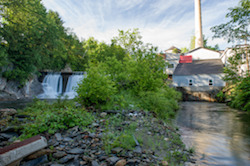
Gravity Renewables' Dog River Hydroelectric Facility, also known as Nantanna Mill hydro, is located in Northfield, VT. The plant was originally commissioned in 1983 and now generates approximately 650,000 kilowatt-hours of clean energy each year — enough to power nearly 100 average Vermont homes.

Gravity Renewables’ Dog River Hydroelectric Facility, also known as Nantanna Mill hydro, is located in Northfield, VT. The plant was originally commissioned in 1983 and now generates approximately 650,000 kilowatt-hours of clean energy each year — enough to power nearly 100 average Vermont homes.

The power will come from the King Falls small hydro facility in Lewis County. The dam and its power generation unit were damaged during Hurricane Irene and have been offline since 2011. This agreement will allow for the refurbishment and repair of the dam.

“St. Lawrence University is moving towards the clean energy future and utilizing one of upstate New York’s great natural resources,” said Ted Rose, CEO of Gravity Renewables. “New York is rich in sustainable small and micro hydro facilities—and agreements like this support their continued health. Hydropower’s reliability makes it a perfect fit for institutions looking to move to full carbon neutrality. ”

St. Lawrence University is fast becoming a national leader in clean energy and sustainability. In addition to clean hydropower, the university is using solar and wind energy, and implementing conservation, green building and energy efficiency in an effort to have all 100 percent of its power needs met by renewable sources.
Hydro, Renewable Energy

Will Steger Wilderness Center Renewable Showcase

Joanna Schroeder

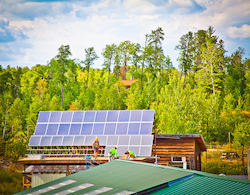
Will Steger, a globally renowned climate expert, has announced a major milestone toward the completion of the Will Steger Wilderness Center, that will be used as a leadership retreat center. The facility now features a stand-alone, carbon free power system that will provide electricity to buildings and workshops throughout the site located outside of Ely, Minnesota near the protected Boundary Waters Canoe Area Wilderness (BWCAW). The renewable power system is an extension of the Center’s focus on clean energy and the use of renewable materials and sustainable processes throughout its operation.

Photo Credit: John Ratzloff

Photo Credit: John Ratzloff

The island-mode power grid will also serve as a demonstration project intended to be a model for other off-grid power systems in remote locations.  With the completion of Phase I of this power grid, the system is now capable of providing up to 20 kilowatts of power from a combination of solar and battery sources with solar providing more than half of the energy. The system includes automated demand management capability to provide power for mission-critical functions along with a backup diesel genset for emergencies. It is designed to provide power for multiple buildings on the site and power for the construction finalization of the main retreat center building. The first pilot leadership team is expected to use the center by the fall of 2016.

A launch event will take place October 7, 2015 at the Will Steger Wilderness Center and will include a ceremonial flip of the switch to ‘power-on’ the system by key participants who have provided both technical and material resources. Cummins Power Generation provided the genset and helped in the technical design and feasibility study in the early stages of the project. Other partners include Jon Kramer, CEO of Sundial Solar; Dr. Greg Mowry, associate professor in the School of Engineering at the University of St. Thomas; tenKsolar; and BAE Batteries. Participants in the demonstration project have donated the vast majority of the material and labor for the system.

“This is an exciting time for all those who have worked to demonstrate that it is possible to have a community working with modern technology in a remote wilderness area using only self-contained and renewable energy sources,” said Will Steger, executive director of the Will Steger Wilderness Center. “The completion of the power grid is also a leap forward toward our goal of bringing leaders to a fully functioning wilderness retreat center to work on complex issues such as climate change and sustainability. We’re grateful to all of the contributors to this project who are demonstrating that it is possible to live and work on real-world problems using sustainable practices that will not deplete scarce resources.”

In addition to its future purpose as a leadership retreat center, the Will Steger Wilderness Center has been the base for more than a dozen significant expeditions including the 3,471 mile International Trans-Antarctic expedition, the first unsupported dogsled expedition to the North Pole and many other expeditions that have brought back some of the earliest eyewitness accounts of climate change in remote arctic regions.

Climate Change, Electricity, Energy, Environment, Renewable Energy, Solar

BNEF: Wind, Solar Competing with Fossil Fuels

Joanna Schroeder

According to a new analysis by Bloomberg New Energy Finance (BNEF), this year has seen a shift in the generating cost comparison between renewable energy and fossil fuels. The report, “Levelised Cost of Electricity Update,” for the second half of 2015 based on extensive data and global projects shows that onshore wind and crystalline silicon photovoltaics – the two most widespread technologies- have both seen significantly reduced costs while costs have gone up for gas-fired and coal-fired generation.

The BNEF study shows finds that the global average levelised cost of electricity, or LCOE, for onshore wind nudged downwards from $85 per megawatt-hour (MWh) in the first half of the year, to $83 in the second half of the year, while that for crystalline silicon PV solar fell from $129 to $122.

Bloomberg New Energy Finance logoIn the same period, the LCOE for coal-fired generation increased from $66 per MWh to $75 in the Americas, from $68 to $73 in Asia-Pacific, and from $82 to $105 in Europe. The LCOE for combined-cycle gas turbine generation rose from $76 to $82 in the Americas, from $85 to $93 in Asia-Pacific and from $103 to $118 in EMEA.

“Our report shows wind and solar power continuing to get cheaper in 2015, helped by cheaper technology but also by lower finance costs,” said Seb Henbest, head of Europe, Middle East and Africa at Bloomberg New Energy Finance. “Meanwhile, coal and gas have got more expensive on the back of lower utilisation rates, and in Europe, higher carbon price assumptions following passage of the Market Stability Reserve reform.”

Levelised costs take into account not just the cost of generating a marginal MWh of electricity, but also the upfront capital and development expense, the cost of equity and debt finance, and operating and maintenance fees.

Among other low-carbon energy technologies, offshore wind reduced its global average LCOE from $176 per MWh, to $174, but still remains significantly more expensive than wind, solar PV, coal or gas, while biomass incineration saw its levelised cost stay steady at $134 per MWh. Nuclear, like coal and gas, has very different LCOE levels from one region of the world to another, but both the Americas and the Europe, Middle East and Africa region saw increases in levelised costs, to $261 and $158 per MWh respectively.

Electricity, Energy, Renewable Energy, Solar, Wind

BioEnergy Bytes

Joanna Schroeder

  • BioEnergyBytesDF1Renewable Energy Group (REG) has announced that one of its subsidiaries has received approval from a Mississippi court to purchase certain equipment at the KiOR Columbus, LLC production facility. Under the approved asset purchase agreement, REG Synthetic Fuels, LLC paid $1.5 million, plus certain expenses related to equipment preparation, to acquire various physical assets at the Columbus, MS plant, including a 12-million gallon hydrotreating unit, distillation column and tankage.
  • Hydrite Chemical Co. has become the Minnesota Bio-Fuels Association’s latest vendor member. Hydrite Chemical, based in Milwaukee, Wis., works with ethanol producers to enable efficient and effective corn oil extraction.
  • DEINOVE has announced that Marie Bézenger has joined the Executive Committee as Director of Operations. She will manage the downstream development of the fermentation processes and their scale-up to foster their commercialization.
  • Alliant Energy is seeking to expand its renewable energy generation with solar power. Alliant Energy’s Iowa utility is issuing a request for proposals for new solar projects that could increase its system-wide solar generation by 50 percent. The request is to build solar projects between one and 10 megawatts within Alliant Energy’s Iowa service territory. The RFP seeks a variety of options and configurations for new solar generation in Iowa, and the company hopes that developers will bring innovation to their proposals.
Bioenergy Bytes

Nebraska Firefighters Train on Safety with Biodiesel

John Davis

beatriceFD1Firefighters across the country have been getting special training to work with renewable fuels, such as biodiesel and ethanol. One example is in Beatrice, Nebraska, where local firefighters are working with the Duonix Biodiesel plant. This article from the Beatrice Daily Sun says they want to make sure they are ready when the plant goes into production later this year.

“These drills are a part of our normal practice to get ready for our plant to be in operation,” Flint Hills Resources venture manager Michael Harris said…

As Duonix looks to open the biodiesel plant by the end of the year, the Beatrice Fire and Rescue team wants to stay prepared in case of any emergencies.

Fire Chief Brian Daake said he has been working with Duonix and they have provided information packets, lessons, videos and plans to help assist in emergency situations.

The tabletop exercise was the fourth time members of the Fire Department have met in person with the plant staff.

“These are good and help improve the readiness of everyone and gives the Fire Department knowledge and awareness of the surroundings,” Harris said.

Biodiesel

Biodiesel Helps Keep Heating Oil Prices Down

John Davis

noraGood news going into the fall and winter chill: heating oil prices are expected to stay lower throughout the winter. And part of the reason for that is biodiesel. The National Oilheat Research Alliance says increases in production and the addition of biodiesel into the supply chain is helping keep the price of home heating oil down to levels not seen in years.

Prices have dropped across the entire heating oil marketing footprint. Heating oil closed on the NYMEX this past Friday, October 2 approximately 15% lower than the same time last year and almost half the price at the close of October 4, 2013-just two years ago.

According to the New York State Energy Research and Development Authority (NYSERDA), heating oil prices state-wide on September 14, 2015 are lower by $1.20 per gallon than the same time last year, a 31.9% reduction. New York is the largest heating oil consuming state.

John Huber, President of the National Oilheat Research Alliance, stated:
“It is a really exciting time for oil heating customers. Prices are low and the oilheating industry is transitioning to a superior fuel product. By adding biodiesl, a renewable, carbon neutral fuel to low-sulfur heating oil, heating oil retailers are actually delivering a better product at a significantly lower price. What could be better?”

NORA says homeowner’s savings could approach $1,000 for the year.

Biodiesel, Bioheat

New York Most Energy Efficient State

Joanna Schroeder

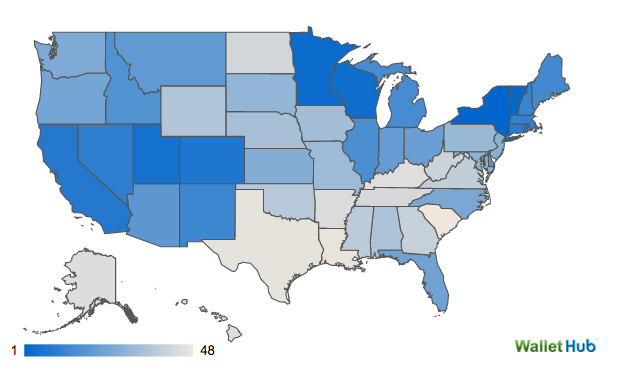
Screen Shot 2015-10-05 at 12.14.57 PMOctober is National Energy Awareness Month and a great time for families and businesses to find ways to reduce their energy use. On average, a household spend nearly $2,000 a year on energy bills. To bring awareness of the impact of energy on American’s wallets, WalletHub conducted an in-depth analysis of the 2015’s Most and Least Energy Efficient States with the exception of Alaska and Hawaii.

WalletHub compared the efficiency of car and home energy consumption and hopes that the results will encourage consumers to conserve more.

Most Energy-Efficient States Least Energy-Efficient States
1 New York 39 Virginia
2 Vermont 40 Georgia
3 Minnesota 41 West Virginia
4 Wisconsin 42 North Dakota
5 Utah 43 Tennessee
6 Rhode Island 44 Arkansas
7 Colorado 45 Kentucky
8 California 46 Texas
9 Connecticut 47 Louisiana
10 Nevada 48 South Carolina

Some other interesting findings included: Utah’s weather-adjusted home-energy consumption is twice as efficient as Louisiana’s; and Florida’s car-energy consumption is twice as efficient as North Dakota’s. You can read the full report here as well as see how your state fairs.

Clean Energy, Electricity, energy efficiency

Aemetis Harvests Record Sorghum Crop in Cali

Joanna Schroeder

Aemetis has announced the harvest of sorghum grown in Central California that grew between 12-15 feet tall. The 20 acre demonstration crop was grown using proprietary Nexsteppe seed genetics and harvested in 90 days by Aemetis. The water supply for the sorghum was lower quality pump water containing salts that typically damage crops in western San Joaquin Valley, an area with little water allocation for ag crops. The sorghum will be used to produce advance biofuels.

Aemetis California biomass plant“Nexsteppe’s sorghum is uniquely capable of growing a large amount of biomass in a short period of time using land that lacks quality water and where other plants may not grow,” said Eric McAfee, Chairman and CEO of Aemetis. “Biomass sorghum can be converted to cellulosic ethanol or a variety of other renewable fuels through various available technologies. Aemetis has already processed about 80 million pounds of grain sorghum at its Keyes biorefinery, producing lower-carbon fuel ethanol.”

The company is also a participant of the California In-State Sorghum program (CISS) through a $3 million grant awarded by the California Energy Commission. The CISS program combines research and market development to support the in-state growth of grain sorghum as a reliable low-carbon feedstock for California’s ethanol producers. The CISS program has just completed the first harvest of grain sorghum at the CSU Fresno International Center for Water Technology.

Aemetis’ 60 million gallon per year ethanol plant in California converts sugars to biofuels. The company has a multi-year strategy to transition its biofuel production from traditional starch-based feedstocks to renewable biomass feedstocks that can produce low-carbon, advanced biofuels. The transition is expected to evolve from corn to grain sorghum and ultimately to biomass sorghum and agricultural wastes available in California.

Anna Rath, CEO of NexSteppe, added, “Growing high-yield biomass sorghum in California is a milestone in the production of low-carbon feedstocks for biofuels. NexSteppe is focused on designing industrial sorghum feedstock solutions to support the growing biobased economy.”

advanced biofuels, biomass, Cellulosic, Ethanol, sorghum

BCSE Calls for Passage of Clean Energy Programs

Joanna Schroeder

More than 580 companies including the Business Council for Sustainable Energy (BCSE) are calling for the passage of legislation that provides the extension of expired and expiring tax incentives designed to promote the growth of clean energy and clean energy technologies. The groups submitted a letter to Congress stressing to the federal lawmakers that,”Businesses and investors need stable, predictable federal tax policy to create jobs, invest capital, and deploy pollution-reducing energy technologies.”

“Businesses and investors need stable, predictable federal tax policy to create jobs, invest capital, and deploy pollution-reducing energy technologies. Allowing the lapsed clean energy tax provisions to languish undermines investor confidence and jeopardizes continued economic and environmental benefits,” said Lisa Jacobson, BCSE President.

2015FB_1According to the Sustainable Energy in America Factbook published by Bloomberg New Energy Finance and BCSE, the use of lower and zero carbon energy sources has grown rapidly over the past seven years. BCSE says the clean energy tax provisions have a proven track record of helping scale up production and drive down the cost of clean energy technologies, thereby ensuring that market-ready technologies are deployed to their full potential.

Tom Kiernan, CEO of the American Wind Energy Association (AWEA) whose organization was also a signer of the letter, said of the need for these programs to have multi-year extenders, “American wind power is building momentum right now, but Congress has yet to pass these critical tax incentives, and the clock is ticking. The U.S. wind energy industry has rebounded from the loss of 23,000 jobs in 2013 due to policy uncertainty, and we can grow to support 380,000 jobs by 2030 with stable policy. That’s why we join hundreds of other voices in the business community to call on Congress to take action now.”

Kelly Speakes-Backman, Senior Vice President of Policy and Research at the Alliance to Save Energy and also a letter signer added, “Extension of the clean energy tax incentives is a bipartisan issue. This extension will bring stability to a growing private industry, while reducing pollution from the energy sector. The Alliance endorses this business-oriented approach to strengthen our economy and encourage energy efficiency and clean technology investments.”

Clean Energy, Electricity, Solar, Wind

BioEnergy Bytes

Joanna Schroeder

  • BioEnergyBytesDF1SkyPower has signed a landmark agreement with the Republic of Djibouti for the development of 200 MW of world-class solar projects to be built in four phases in Djibouti over the next four years. The company also announced alongside Prime Minister Hasina, its plans to build 2 GW of utility-scale solar energy over the next five years in Bangladesh, representing an investment of US $4.3 billion.
  • The American Wind Energy Association is hosting the Wind Energy Finance and Investment Seminar in New York October 14-15, 2015. Some of the wind’s most prominent CEOS will share their triumphs and challenges including: Mike Garland, President and CEO, Pattern Energy Group LP, and AWEA Board Chair; Michael Skelly, Founder and President, Clean Line Energy Partners; Chris Brown, President, Vestas Americas; Jacob Susman, CEO, Own Energy and VP, Head of Origination, EDF RE and Doug Frederickson, Vice President, Blattner Energy.
  • The African continent could generate nearly a quarter of its energy needs through the use of indigenous, clean, renewable energy by 2030, according to a new report by the International Renewable Energy Agency (IRENA). Africa 2030 – a comprehensive roadmap for Africa’s energy transition – finds that a combination of modern renewable technology could realistically meet 22 per cent of Africa’s energy needs by 2030, a more than a four-fold increase from just five per cent in 2013. The report also finds that scaling up modern renewables in Africa is an affordable means to help meet fast-growing energy demand while increasing energy access, improving health and achieving sustainability goals.
  • Lignetics Inc. has announced the acquisition of the assets of GF Funding LLC (whose facility was formerly known as Geneva Wood Fuels), expanding its footprint into Maine and upper New England. Lignetics is the largest residential wood pellet manufacturing company in the U.S. which now has a production capacity of approximately 550,000 tons of wood pellets per year.
Bioenergy Bytes