ACE Conference 2026

NFU Highlights RFS Success

Joanna Schroeder

Organizations are still reacting to the letter sent by 184 Congressman, including some for top corn producing states, calling on the Environmental Protection Agency (EPA) to reduce the volumes of corn-based ethanol blended into America’s fuel supply as part of the Renewable Fuel Standard (RFS). The EPA has sent their final rule drafts to the Office of Budget and Management (OMB) and the rules are expected to be released by November 30, 2015.

National Farmers Union logo“The RFS has been an unqualified success since its passage in 2005,” said Roger Johnson, president of the National Farmers Union (NFU), in a letter to President Obama. “Wavering from our commitment to the RFS would be a grave mistake for both America’s family farmers and this nation as a whole. We urge you to reject Big Oil’s talking points and stay the course on the RFS.”

Last week NFU released the results of a poll that showed that released a poll that showed popularity and support for political candidates that support the Renewable Fuel Standard within a majority of rural congressional districts in which the poll was conducted.

Johnson stressed in the letter that the RFS has boosted incomes for family farmers while making strides in mitigating climate change through the use of biofuels. He noted that climate change is a threat to both farmers’ operatons and, in turn, the nation’s food security.

“The RFS has helped family farmers and the nation make tangible steps toward mitigating our impact on climate change by driving the U.S. to make real reductions in greenhouse gas (GHG) emissions,” Johnson wrote in the letter. “Corn ethanol reduces GHG emissions by 34 percent, and more substantial gains can be made through new types of biofuels.”

Johnson noted that, unfortunately, most popular public policies face a small but vocal group of critics, and the RFS is no different.Read More

biofuels, corn, EPA, Ethanol, NFU, RFS

Cornell, McGill U Win Chem-E-Car Competition

Joanna Schroeder

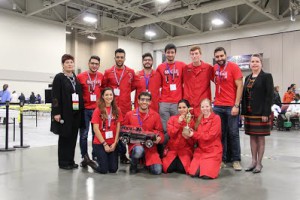
Cornell University and McGill University tied for first place in the 17th Annual Chem-E-Car competition. The collegiate event features cars ranging in size from shoeboxes to fire hydrants powered by alternative fuels. The competition is sponsored by the American Institute of Chemical Engineers (AIChE) and its goal is to teach chemical engineering students to think creatively about alternative fuels. Cornell’s winning car Drifter was powered by a zinc alkaline battery, while McGill’s Navona Car was powered by a lead flow battery.

First place winner (tie) in the Chem-E-Car Competition Cornell University.

First place winner (tie) in the Chem-E-Car Competition Cornell University.

“The Chem-E-Car competition is a great avenue for students to apply chemical engineering principles in a creative way and in a group setting, they are critically important skills for these young professionals to have as they begin their journeys in the industry,” said Cheryl Teich, AIChE President.

For the competition, the teams create a car using a variety of materials and fueling methods, showcasing their innovation and creativity. For the first time ever, three teams used 3D printing to make parts of their cars while other teams used beef liver and hydrogen peroxide, Vitamin C, and dyes to produce a chemical reaction to power their car.

First place winner (tie) in the Chem-E-Car Competition McGill University.

First place winner (tie) in the Chem-E-Car Competition McGill University.

An hour before the competition, the students are told the load of water their car must carry and the distance it must travel. The students then must calculate the appropriate chemical reaction that will propel the car as close as possible to the distance goal. This year, the cars had to carry 230 milliliters of water for 20.3 meters, and the winning teams were 5 centimeters from the finish line, both taking $2,000 first place prizes.

McGill has only participated in Chem-E-Car for the past two years and is now national champions. This is Cornell’s fourth national championship, having won Chem-E-Car in 2008, 2010, and 2012. The third place award went to the University of California, Davis. Their vehicle, Leadfoot, was powered by a lead acid battery. Chem-E-Car Competition prizes are sponsored by Chevron.

Alternative energy, Alternative Vehicles

BioEnergy Bytes

Joanna Schroeder

  • BioEnergyBytesDF1According to a new report released by the International Renewable Energy Agency (IRENA), Germany is on track to realising its 2030 renewable energy targets. To meet even higher shares of renewables, the deployment of renewable heating and transport technologies needs to be accelerated. Renewable Energy Prospects Germany finds Germany has the potential to further increase the amount of renewable power sourced from solar photovoltaics and wind and achieve significantly higher shares of renewables in the end-use sectors.
  • JA Solar announced that it completed a 92.5 MW shipment of modules in mid-October to be used in the largest solar photovoltaic (PV) power project ever built in the Philippines. Located in Cadiz City of the Negros Occidental province, the facility is designed for a total capacity of 132.5MW, 92.5MW of which will be equipped with JA Solar’s JAP6-72 310W modules, including an initial on-site installment of over 30MW.
  • Innergex Renewable Energy Inc. has begun commercial operation of the 21.2 MW Tretheway Creek run-of-river hydroelectric facility located in British Columbia, Canada.
  • Renovate America, the leading provider of residential Property Assessed Clean Energy (PACE) financing in the U.S., has topped the $1 billion mark in energy and water conservation home improvements financed since the inception of its Home Energy Renovation Opportunity (HERO) Program in 2011. Renovate America will expand into new states in 2016, but the $1 billion of projects are all in California, spread across about 44,000 households.
Bioenergy Bytes

Court Upholds Massachusetts Biomass Plant

John Davis

massflagThe state Supreme Judicial Court in Massachusetts has upheld the legality of a proposed biomass plant. This article from MassLive.com said the decision is the third one in favor of the $150 million project in East Springfield, but opponents swear they’ll continue the fight.

Palmer Renewable Energy, which has been pursuing the wood-to-energy plant at Cadwell Drive and Page Boulevard for the past seven years amidst legal challenges, said it looks forward to “bringing the project to fruition.”

One of the plaintiffs, Michaelann Bewsee, said the court fight appears to be over, but there are additional options available to challenge the project.

“We were disappointed but not surprised,” Bewsee said. “However we still have a few other cards to play.”

The Springfield Public Health Council is considering if it should conduct a site assignment hearing for the biomass project.

Thomas A. Mackie, a Boston lawyer representing Palmer Renewable Energy did not comment on the company’s next steps. The company had two building permits issued for the project that had been on hold during the legal challenges.

“This ruling closes an important chapter in our effort to bring a $150 million green energy project to the City of Springfield,” Mackie said, “The SJC’s decision clearly and emphatically reaffirms that Palmer Renewable Energy has complied with every legal requirement and met every environmental standard needed to move forward.”

biomass

ARF Releases 2016 Prez Candidate Midterm Report

Joanna Schroeder

America’s Renewable Future (ARF) released a 2016 Presidential Candidate midterm report card today during a press call putting candidates into three categories: good, needs work and bad. Scores were based on the candidates’ support of the Renewable Fuel Standard (RFS) and ethanol in particular. Candidates who received good grades included Hillary Clinton, Donald Trump (who is visiting an ethanol plant in Gowrie, Iowa this week), Bernie Sanders, Mike Huckabee, Rick Santorum, Chris Christie, Lindsay Graham, George Pataki, and Martin O’Malley.

The midterm report was published to serve as a guide for voters come February 1, 2016 to understand where candidates stand on biofuels.

Photo Credit: Joanna Schroeder

Photo Credit: Joanna Schroeder

“Ethanol and the RFS are top concerns for Iowa caucus-goers and Americans everywhere, because renewable fuel like ethanol is making America cleaner, stronger, and more secure,” said ARF Co-Chair Rep. Annette Sweeney in a press release following the press call. “We will make sure Iowans know where candidates stand, and ensure all of our supporters see this report card.” The RFS enjoys broad support from Iowa’s Democrat and Republican caucus-goers, with 76% and 61% respectively saying in a recent poll that they would be more likely to support a candidate who is pro-RFS.

For a candidate to receive a “good” score, he or she must have demonstrated consistent support for the RFS and Iowa farmers. A “needs work” candidate is one is has given inconsistent and undefiend positions on the RFS. These include: Marcio Rubio, Jeb Bush, Carly Fiorina and John Kasich. A “bad” candidate is one who has stood against Iowa Farmers and the RFS and includes Ben Carson, Ted Cruz, Rand Paul and Bobby Jindal.

“The midterm report card is not the final word, but it puts everyone on notice that Iowans can see whether candidates are preparing to stand with them or against them,” added Sweeney. “We will be releasing a final report card in January, when the middle category will be gone and candidates will either be designated as with us or against us.”

ARF State Director Eric Brandstad said during the press call that ARF plans to notify their list of 45,000 supporters and other allies about these results at ethanol plant caucus trainings, phone calls from field staff, and other one-on-one grassroots efforts. In addition, ARF will utilize a mix of paid media tactics including direct mail, digital, and radio advertisements and Brandstad said they also plan to release caucus instructional videos.

Listen to the press conference audio here: ARF Midterm Candidate Report Score Card Press Conference

Audio, biofuels, Ethanol, Renewable Energy, RFS

DuPont to Buy Dyadic Enzyme Business

Joanna Schroeder

DuPont’s Industrial Biosciences is purchasing Dyadic International’s Industrial Technology business. The two companies have entered into a definitive agreement that will sell Dyadic’s enzyme business to DuPont for $75 million in cash. Once the transaction is complete, Dyadic plans to focus solely on its biopharmaceutical business. The deal is expected to close by the end of 2015 pending approval by a majority of Dyadic’s stockholders and customary closing conditions.

Dyadic logoMark Emalfarb, Dyadic’s founder and CEO, said, “This transaction is an exceptional opportunity to unlock value and provide Dyadic operational flexibility to further develop our pharmaceutical business. We will now focus our C1 technology exclusively on the pharmaceutical sector where we believe it has the potential to help develop and manufacture drugs and vaccines faster and more efficiently than existing production systems.”

Dyadic will sell to DuPont substantially all of its enzyme and technology assets, including its C1 platform, a technology for producing enzyme products used in a broad range of industries. As part of the transaction, DuPont has granted back to Dyadic co-exclusive rights to the C1 technology for use in human and animal pharmaceutical applications, with exclusive ability to enter into sub-license agreements in that field. However, DuPont will retain certain rights to utilize the C1 technology for development and production of pharmaceutical products, for which it will make royalty payments to Dyadic upon commercialization.

“We are very proud of the C1 platform and our team responsible for its development over the past decade,” added Michael Tarnok, Dyadic’s Chairman. “We are pleased to be able to provide liquidity and increased value to our stockholders and look forward to building our pharmaceutical business.”

biofuels, Company Announcement, enzymes

BioEnergy Bytes

Joanna Schroeder

  • BioEnergyBytesDF1Ahead of tonight’s Republican presidential debate, NextGen Climate launched an ad campaign calling on the Republican presidential candidates to make clean energy central to their economic growth strategy and lay out a plan to achieve more than 50 percent clean energy by 2030. The TV ad, “Who We Are,” will air on Fox Business as part of a six-figure national ad buy and full-page print ads.
  • Save the Date for the International Geothermal Showcase taking place March 17, 2016 at the Ronald Reagan International Trade Center in Washington, DC. The Showcase is expected to draw presenters and participants from over 30 countries focusing on the ingredients for success of geothermal projects.
  • Blue Bird will begin production of its first Type C Vision bus fueled by compressed natural gas (CNG) in 2016. According to Blue bird, the Blue Bird Vision CNG will reduce fuel and maintenance costs, while meeting stringent emissions standards. The CNG-powered school buses will utilize Blue Bird’s exclusive and established partnership with Ford and ROUSH CleanTech, deploying Ford’s 6.8L V10 engine and 6R140 transmission with ROUSH CleanTech’s fuel system.
  • Genscape and Lee Enterprises Consulting is hosting a webinar, “Maintaining a Competitive Edge in Today’s Ethanol Market,” on Wednesday, November 18, 2015 at 2:00 pm ET. Topics that will be covered include: Import/export update; QAP overview for corn ethanol; Trends and technology in ethanol; Capitalizing on RINs and other revenue streams; and Financing ethanol ventures. Register here.
Bioenergy Bytes

Ethanol Industry Takes Clean Energy Mission to India

Joanna Schroeder

A team from the U.S. including the U.S. Department of Agriculture (USDA), Growth Energy, U.S. Grains Council (USGC) and the Renewable Fuels Association (RFA) recently returned from a clean energy mission to India. Led by USDA Undersecretary for Farm and Foreign Agricultural Services Micheal Scuse, the group met to discuss opportunities for developing clean energy solutions, technologies and policies. An additional goal of the mission was to strengthen the level of cooperation and coordination between the ethanol industries of the two countries.

logosDuring a series of meetings that involved ethanol producers, oil companies and government officials, the U.S. participant group of seven received an in-depth look at the local industry’s situation and outlook. There were extensive discussions on India’s economy, political environment, energy sector, and the role of government policy as a driver of the ethanol industry’s growth.

“Macroeconomic factors like population growth, continuing urbanization and increases in disposable income mean India is poised to use more gasoline and diesel fuels,” said USGC Past Chairman Ron Gray, who was part of the group representing the U.S. industry. “Given the negative effect that petroleum-based gasoline has on air quality, we feel that the expanded use of ethanol as an oxygenate can help India reduce smog and carbon emissions in this rapidly growing developing country, particularly in its cities.”

Ed Hubbard, general counsel for RFA said of the trip, “America’s commitment to using ethanol in our fuel has made it possible for our nation’s busiest cities to dramatically reduce levels of smog and other harmful tail-pipe emissions. By sharing our experiences with our friends here in India, we believe we can help them significantly improve the country’s air quality.”

In 2014, India imported $86 million of industrial ethanol mostly from the U.S. and Brazil and USGC expects imports to rise potentially researching $150-200 million in 2015. Even accounting for this level of growth, the U.S. ethanol industry believes there is still room for growth, especially in the transportation market. According to a press release sent out from the U.S. delegation, this view was echoed by India’s sugar and ethanol sector during last week’s meetings, with the country seeking ways to increase their blend rates from current low levels as a means to improving air quality while supporting India’s sugar producers.

Read More

biofuels, Ethanol, Growth Energy, International, RFA, USGC

Genera Partners with Drone Company for Biomass

John Davis

generaBiomass energy company Genera has teamed up with a drone company to improve the efficiency and quality of sustainable biomass crop production and distribution. This news release from the company says it is working with PrecisionHawk to develop algorithms to assess crop health and productivity using aerial farm imagery collected by satellites and drones.

“Working with PrecisionHawk to develop advanced data collection and analysis tools elevates commercial-scale biomass supply chains to the forefront of technological innovation for crop management, risk reduction, and efficiency” said Dr. Sam Jackson, Vice President of Business Development at Genera. “PrecisionHawk is the leading company in remote sensing in a variety of industries, including agriculture. Partnering our agronomic knowledge and skills with their outstanding technology platform is a win not only for us, but for the entire biomass industry.”

Since 2008, Genera Energy has grown to be the industry leader in biomass supply and supply chain services. Its expertise in dedicated energy crops allows it to provide unique services and solutions to its customers. The first group of research tools to be developed under the new partnership will focus on lignocellulosic crops, core to Genera’s expertise.

“This partnership is a great opportunity to develop decision support tools that provide a more sustainable and efficient path for energy production,” said Dr. Allison Ferguson, Director of Education and Research Partnerships at PrecisionHawk. “Genera Energy has built an impressive reputation in agriculture and energy, and we look forward to offering this suite of useful solutions for the betterment of the industry.”

The technology uses the DataMapper software platform.

biomass

Renewable Diesel Maker Neste Teams with Boeing

John Davis

Neste_logo_pmsA leading producer of renewable diesel is teaming up with the world’s largest aircraft manufacturer to move forward the green fuel for aviation. This news release from Neste says it and Boeing will work toward American Society for Testing and Materials (ASTM) fuel standard approval allowing the commercial use of high freezing point renewable aviation fuel by airlines.

Neste anticipates that its high-quality renewable aviation fuel could help the aviation industry to achieve its greenhouse gas saving targets: carbon-neutral growth from 2020 and a net reduction in carbon emissions of 50% by 2050 compared to 2005.

“Airlines and airplane manufacturers are undertaking several initiatives to lower the industry’s carbon footprint, and renewable aviation fuel will be a key part of their long-term environmental solution,” says Kaisa Hietala, Neste’s Executive Vice President of Renewable Products. “We are very excited to work with Boeing, in order to help create a commercially viable market for renewable aviation fuels”.

“Boeing is proud to collaborate with Neste, a global leader in renewable fuel production, to meet our shared goals of expanding the supply and reducing the cost of sustainable aviation biofuel,” says Julie Felgar, Boeing Commercial Airplanes’ Managing Director of Environmental Strategy & Integration. “The aviation industry is committed to making air travel more sustainable.”

In 2014, Boeing successfully tested Neste’s renewable aviation fuel in a 15% blend with petroleum jet fuel in the Boeing ecoDemonstrator 787, a test airplane that assesses technologies that can reduce aviation’s environmental footprint. The 787 made an initial flight with this biofuel blend in one engine, followed by several flights with the biofuel blend in both engines. Based on its test flights, Boeing reported that “the airplane performed as designed with the renewable jet blend, just as it does with conventional jet fuel”.

renewable diesel