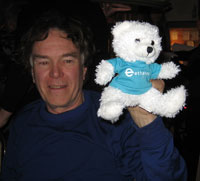
 The dogs may be pulling the sled when world-renowned arctic explorer Will Steger departs on his latest expedition February 14, but the trip will be powered by ethanol.
When Steger was looking for sponsors to support his Global Warming 101 expedition, he decided that the ethanol industry would be a natural choice.
“I’ve been talking up the benefits of ethanol for 18 years,” Steger said. “I wrote a book in 1988 and in that book I talked about ethanol as being one of the solutions.”
So, Steger approached Ron Fagen, president of Fagen, Inc. in Granite Falls, Minnesota, about the idea last year and Ron not only jumped at the opportunity, he brought the Ethanol Promotion and Information Council (EPIC) on board as well.
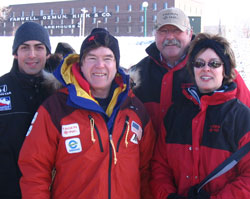 “The world has become acutely aware that the use of fossil fuels is warming our planet at an alarming rate,” said Fagen. “We are honored to support his efforts to document these effects and inspire changes that will halt this trend.”
Steger says he really believes that if Americans use more ethanol it will make a positive difference in the global climate situation and it has other benefits as well. “It’s best for our economy and our national security and above all supporting our people in the rural areas,” he said. Steger is pictured here with Ron and Diane Fagen and Team Ethanol Indy Car driver Jeff Simmons.
Listen to a brief interview with Will done at the Mukluk Ball this past weekend in Ely, Minnesota.  Steger Interview (1:30 min MP3)
To help support the Global Warming 101 expedition, EPIC is selling cute little polar bears in ethanol t-shirts, like the one Will is holding in the top picture. Go to www.drivingethanol.org and click on the e-mart link on the right side of the home page, then choose “polar expedition” under merchandise categories. They also have t-shirts.


 The nation’s fifth-largest oil refiner, Marathon Oil, has announced it is the first biodiesel storage and distribution terminal in Kentucky to provide in-line blending. From a company press release dated today, Mary Ellen Peters, Marathon’s senior vice president for marketing says “Biodiesel helps us meet thechanging needs of our customers while supporting Kentucky’s alternative

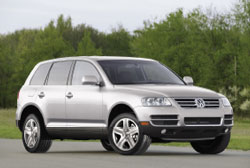 The Ride & Drive is bigger and better than ever here at the National Biodiesel Conference this year. If you want, you can drive any of several vehicles like this 2007 Volkswagen Toureg TDI.
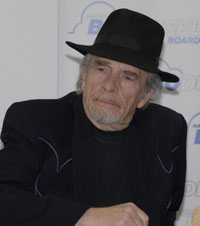 One of the newest stars to advocate biodiesel is Merle Haggard. The legendary country star performed for attendees at this year’s Conference after meeting with the press and the board of the
 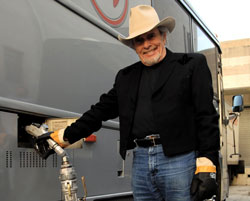 As someone who is in a diesel powered bus a lot he says he really doesn’t like the smell of burning diesel but heard that biodiesel smelled different and that was what got him interested. He also said that he’s happy for how the development of biodiesel is helping American farmers. (Thanks to Brian Kanof for the picture of Merle filling up)
 Being a Floridian at heart, if not by birth, I can honestly say I have never been in weather as cold as last weekend in Ely, Minnesota when I had the opportunity to attend Ely’s Winter Festival and visit with the community’s favorite son, arctic exporer Will Steger.
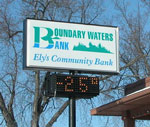 The official low Saturday night was 32 below zero, but it had warmed up to a balmy 25 below when we left Ely on Sunday morning to catch a plane out of Duluth.
  The documentary “Freedom Fuels” is now available for free download.
 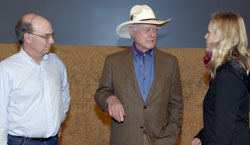 I think that I’ve mentioned that many of my interviews and some other audio files like general session presentations are available as a podcast. It’s the National Biodiesel Conference Podcast in fact. You can find the link and instructions on
 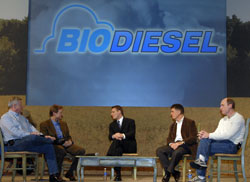 At this morning’s general session a panel discussion was held that featured U. S. Representatives, Collin Peterson (D-MN), Kenny Hulshof (R-MO), Thaddeus McCotter (R-MI) and Dave Wheldon (R-FL). These are also the members of The Second Amendments, the band that played at half time during the Super Bowl party yesterday here at the National Biodiesel Conference.