

 VeraSun Energy of Brookings, SD is test driving one of the new Ford Escape Hybrid FFVs for a two-year period to demonstrate the benefit of converging flexible fuel and hybrid technologies.
The Escape Hybrid FFV will produce up to 25 percent fewer greenhouse gas emissions when running on E85 as compared to the standard Escape Hybrid running on gasoline. Ford is delivering 20 Escape Hybrid FFVs to strategic partners and fleet customers in six different states.
The Escape Hybrid FFV is a “full” hybrid, meaning it automatically switches between pure electric power, pure E85 power or a combined operation to maximize efficiency and performance. Full hybrids achieve their greatest improvement in fuel economy during stop-and-go driving when the electric motor operates alone up to 25 mph.
Meanwhile, VeraSun is gearing up for the grand opening of its Charles City, Iowa plant next week. They are expecting quite a crowd at the event, as presidential hopeful Sen. Barack Obama will provide the keynote address. The celebration takes place on Friday, August 17.

 In Eugene, Oregon, SeQuential Biofuels opened the state’s first commercial biofuel facility last year. The station dispenses ethanol as well as locally sourced biodiesel. Company cofounder Ian Hill worked with his mother, Susan Hill, AIA, an architect based in Lexington, Kentucky, to incorporate green features into the station’s design. A roof embedded with a 32.6-kilowatt photovoltaic array shelters the pump islands; its central panels have clear backings to transmit more daylight. The roof above an accompanying 2,000-square-foot convenience store also received a green treatment: It is planted 5 inches deep with 4,800 native Oregonian plants. Bioswales adjacent to the parking areas filter storm water.
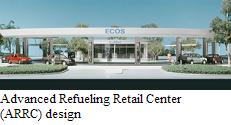 Alan Eliot Goldberg, FAIA, a former design consultant to ExxonMobil, has developed a prototype station that embraces sustainable materials as well as solar power, which is used to create hydrogen fuel via electrolysis. Adapted from his Advanced Refueling Retail Center concept, it dispenses six different kinds of fuel. The 5,000-square-foot station will include a convenience store and an information center for hydrogen power. “If you’re introducing a new product, you should have a new concept,” Goldberg says of its design. Developed by the ARRC/H2 Alliance, the first station is planned for Syracuse, New York.
  Production has started at Iowa’s 13th biodiesel plant… this one, a Western Dubuque Biodiesel, LLC, plant near Farley.
  Western Dubuque Biodiesel, LLC, will produce fuel from soybeans or other vegetable oils at the new plant, which will be beneficial to area soybean farmers, says Ray Gaesser, (Iowa Soybean Association) president and a soybean farmer near Corning, Iowa.
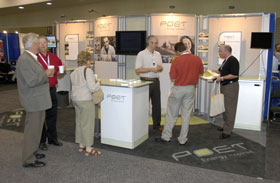 While at the ACE Convention I got to meet fellow biofuels blogger Nathan Schock. Nathan is the public relations director for
  As schools gear back up for another year, many of them will run their buses on biodiesel.
 Some people at City Hall on Wednesday were excited about the plant, which could produce 320 million gallons per year of biodiesel fuel.
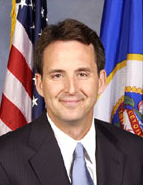 Minnesota Governor Tim Pawlenty has announced a new initiative to move his state from using two percent to 20 percent biodiesel by 2015.
 One of the relatively newer members of the staff of the