

 What started as a project to brew biodiesel in some old pots from the school cafeteria has turned into a 100,000-gallon-a-year production line that saves the school an estimated $125,000 a year in fuel costs.
This story in the Charlotte (NC) Observer says two years ago, the Gaston County Schools started making their own biodiesel from leftover grease from a local cracker factory, school cafeterias, and local restaurants and is the first school district in the state to make its own fuel:
“Grady [Truett, the schools’ assistant transportation director] came to us and said, `I can make diesel,’ ” said Transportation Director Baxter Starr. Starr smiled in disbelief, but he listened. And he supported the idea.
Starr and schools’ Superintendent Reeves McGlohon are proud of the program — especially because their biodiesel is easier on the lungs of the children who ride Gaston buses, they say.
That was Truett’s original inspiration.
“People might not know this, but school-bus emissions are worse inside the bus than outside,” Truett said. “That small particulate soot goes deep in your lungs. It doesn’t stop at your nose.”
Gaston uses a mix of biodiesel and regular diesel. Running the buses with straight biodiesel requires a lot of filter-changing, and the straight biodiesel thickens at cold temperatures.
The department has taken on the fuel-making without adding extra employees, Starr said. Next year, Starr may ask the administration for another person to run a second production shift.
The article goes on to say that Truett was able to find the biodiesel brewing equipment for cheap on the Internet and through old military surplus and other equipment… saving the district even more.
Now that’s what I call a quality education!
 A cellulosic ethanol company funded by California-based Khosla Ventures is holding a groundbreaking this week for its first planned facility in Georgia.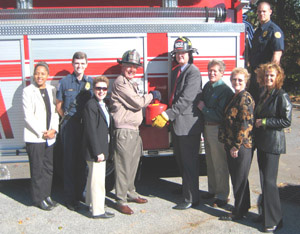
 Jessica Kelly, maker of the documentary “Revolution Green: A True Story of Biodiesel in America,” returned to her alma mater, the University of Colorado, for a screening this past weekend of her movie.
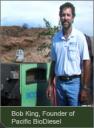 A decade ago, King chose to solve a grease overflow problem at Maui’s landfill. He now has turned that grease waste into biodiesel fuel and built 10 biodiesel plants across the country.
 Senator John Thune (R-SD) and Senator Charles Grassley (R-IA) led a bi-partisan group of Senators in writing a letter to the President last week urging him to direct the Environmental Protection Agency to approve higher blends of ethanol in commercial gasoline. The current maximum blend for non-flex fuel vehicles is 10% ethanol.
 Grassley said, “With consideration of a new farm bill as well as a new energy bill well underway, ethanol and renewable fuels are at the forefront of the discussion. And, while we’ve seen a tremendous jump in knowledge, promotion and usage of renewable fuels, there remain very real barriers. In the absence of widespread E85 use at this time, it’s important to ensure a market for today’s ethanol production.”
  A plan to build a 75-million-gallon-a-year biodiesel plant has received approval from the Clovis, New Mexico City Commission.
 The agreement is with an Australian company that plans to build a biodiesel plant near the eastern New Mexico community.
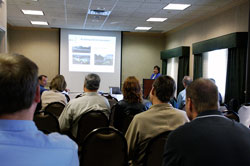
 There are a lot of pluses about operating vehicles with a blend of E85 fuel and the Director of Operations with the
  E85 “just makes sense” for the Manager of Special Projects at