

 Some prominent Democratic mayors in California have taken to the road to campaign for presidential hopeful Sen. Hillary Clinton in a bus fueled by biodiesel.
This story from San Francisco’s NBC 11 says Oakland Mayor Ron Dellums, San Francisco Mayor Gavin Newsom, Los Angeles Mayor Antonio Villaraigosa, and Fullerton Mayor Sharon Quirk have hit the road in the Golden State to praise Clinton’s proposals for “green-collar” job training:
In both Southern and Northern California companies have begun to sprout up that focus on solar, thermal and wind energy. Each mayor has expressed their approval for programs that would train former blue-collar workers for jobs in such companies.
“(Hillary Clinton) understands the importance of taking those ideals and working together to really make progress and sustainable change,” Newsom said. “Nowhere is it more important though, than in making sure that those who have been locked out of the industrial economy are locked into this green economy. We’re all lamenting the loss of blue collar jobs and here we are talking about this green wave, and locking folks into this green, sustainable economy.”
The campaigning is part of the run-up to February 5th’s Super Tuesday when 24 states will hold primaries and caucuses to help decide the Democratic and Republican nominees for president.
 As we mentioned here before, one of the best ways to make biodiesel more mainstream is to get it into the mainstream of the trucking industry in this country.
 REG’s Retail Biodiesel Blending Program, announced at the NATSO Show in Orlando, Fla., offers truck-stop operators both biodiesel injection equipment and a regular supply of high-quality biodiesel.
 Biodiesel could save Americans billions of dollars, while making the country cleaner… that according to a spokesman for a Mississippi-based biodiesel manufacturer.
 A demonstration-scale cellulosic ethanol facility in Jennings, Louisiana is getting closer to completion.
 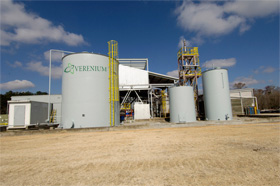 In February 2007, Verenium broke ground on a 1.4 million gallon-per-year demonstration plant right next to its Jennings pilot site. The company hopes to finish this second plant before April, where Verenium will fine-tune its enzymes, ethanol production and feedstocks (primarily local cane bagasse) before it goes full-scale with a third plant.
 Entrants can submit a :30 second video to
  Colorado Springs, Colorado has been picked as the top municipal biodiesel fleet in the nation, according to Government Fleet Magazine.
 The biodiesel documentary “Fields of Fuel” has walked away with one of the top honors at this year’s Sundance Film Festival at Park City, Utah.
 “Fields of Fuel” was chosen for the Audience Award for Best Documentary Film and was presented to Tickell by host William H. Macy. The film’s producer and other crew members accompanied Tickell onstage to accept the award. In his acceptance speech, Tickell said, “May we work together to create a green and sustainable future.”
 A Japanese company is planning on building a bioethanol making the green fuel from a plant that is said to yield more ethanol per hectare than any other biofuel crop currently being grown.
 Cellulosic ethanol is now in production at the first small scale waste wood commercial facility operating in the U.S.
 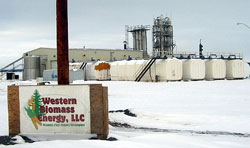 Located just 1 mile South of Upton, Wyoming, the plant was engineered, constructed and is operated by
 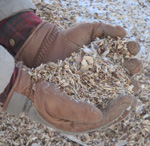 KL’s cellulosic ethanol plant is converting waste wood into a renewable fuel. The current production facility is utilizing soft woods, but successful test runs have occurred making use of waste materials such as cardboard and paper.
 U.S. Department of Energy Secretary Samuel W. Bodman