

In a first of a kind effort, a broad coalition of ethanol producers, automakers, agricultural advocates, convenience store owners, petroleum marketers, and equipment manufactures, are encouraging the Speaker of the U.S. House of Representatives to include tax credits that support new alternative fuel infrastructure in any pending energy bill or stimulus package.
 “Both Presidential candidates and several members of Congress have recently called for mandatory production of flexible fuel vehicles,” stated Executive Director of the National Ethanol Vehicle Coalition, Phil Lampert. “We support increased production of flexible fuel vehicles or FFVs, but frankly, that overlooks the primary issue which is the lack of sites to fuel these vehicles.”
The broad coalition sending the letter to the Speaker is encouraging that H.R. 6734, the E85 and Biodiesel Access Act introduced by Congresswoman Stephanie Herseth-Sandlin (D-SD) and Congressman John Shimkus (R-IL), be included in any energy legislation that may be approved during this session of Congress. This act would enhance the Alternative Fuel Vehicle Refueling Property Credit.
 “The inclusion of the E85 and Biodiesel Access Act in any energy bill or potential stimulus package is critical as it provides fuel retailers with more meaningful assistance in making clean-burning biofuels available to motorists,” stated Executive Vice President for the American Coalition for Ethanol, Brian Jennings.
Vice President for Government Relations of the National Association of Convenience Stores, John Eichberger, stated that the legislation would, “overcome one of the major obstacles to the availability of alternative and renewable fuels infrastructure by offsetting a major portion of the expense of such equipment.”
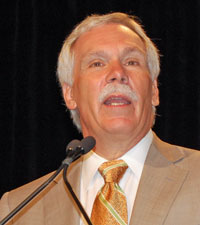 During an appearance this week in Kansas City, Schafer said ethanol producers need to prepare for an eventual end to these kinds of incentives. “Because they have been built in today, I think we can’t just shut them off,” Schafer said. “I think it’s important to say here’s the target, we are going to gradually reduce them so that you can adjust your operations to operate without them.”
 The world’s largest ethanol producer is opening two new 65 million gallon per year ethanol production plants this month.
 The federal government has granted leases for America’s first offshore wind projects.
  Biodiesel maker Solazyme, which uses algae as its feedstock for the truly green fuel, has announced that its variety of biodiesel is good enough for the airline industry.
 It appears that someone might have jumped the gun a bit when General Motors released the first pictures of the production version of its much-anticipated electric car, the Chevrolet Volt, earlier today.
 For nearly 140 years, the
  With the dedication of the new locomotive, the Railway signaled that it will supplement the coal-fired trains with several biodiesel engines, cutting emissions and the use of fossil fuels.
 Rocketboat… the “Blast on the Bay” as it is dubbed by its owners… promises to give riders an exciting 30-minute around San Francisco Bay, and they’ll enjoy that trip on clean-burning biodiesel.
 The open-air RocketBoat will carry 135 passengers on a windswept ride, departing eight times daily. To give riders a chance to catch their breath and take photos, the craft will make three sightseeing stops along the route, including AT&T Park, Treasure Island and Alcatraz. While rocketing around the Bay, passengers will be treated to an appropriately rock ‘n’ roll soundtrack, combined with live narration from an experienced Blue & Gold Fleet captain.