

“There are many reasons to shift away from fossil fuels, and we will do so in the next century without legislation, financial incentives, carbon-conservation programs, or the interminable yammering of fearmongers.”
Michael Crichton, author’s message at the end of State of Fear
 In 2004, Michael Crichton wrote in his novel, State of Fear, “From the beginning, the movement had had to fight apathy in the broader society. Human beings didn’t think in the long term. They didn’t see the slow degradation of the environment. It had always been an uphill battle to rouse the public to do what was really in its own best interest…that fight was far from over. In fact, it was just beginning.” The book’s premise is that an organization fakes environmental disasters to raise awareness of global warming and ultimately money to “educate consumers.” It could be argued that it was ahead of its time. Or maybe not since the theory of global climate change is still under intense debate.
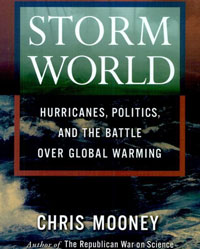
Which brings us to REAL environmental disasters — hurricanes — which science is arguing whether the increased number and intensity of hurricanes is in fact being caused by global climate change. Storm World, by Chris Mooney, sets out to debate this very issue. The book reminds me of college when during a graduate meteorology class we learned about the possible effects of a warming planet (which no one seemed to really buy into at the time) on the weather. Mooney points out that these predictions began as early as the 1900s. I find it interesting that Americans “rediscover” issues every few decades and then try to play it off as a new crisis. Anyway, I digress.Read More
 Our Domestic Fuel book and movie reviewer is Joanna Schroeder, who has been the communications director for the Ethanol Promotion and Information Council (now Growth Energy) since September of 2005, and is now starting her own communications company focused on the renewable energy industry. Joanna has a strong background in both environmental science and technical communications, which makes her well qualified to provide in-depth analysis of current literature and film in the field of energy and the environment.
 The
The  A conference titled “The Growing Role of Biofuels for Today, Tomorrow and Beyond,” featured Brooke Coleman, executive director of the
  2008 was a year that for the most part everyone would like to forget – including those in the ethanol industry. Now that 2009 is underway,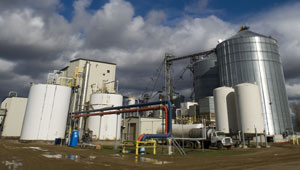
 Jim Sullivan of Informa Economics in Washington, D.C. told a crop outlook seminar at the
  This week’s major economic speech from President-elect Barack Obama pointed out how ethanol and biodiesel, as well as other alternatives to conventional energy sources, will be key to the nation’s economic recovery.
 In an effort to quell skepticism over the renewable energy industry’s chances to meet the 10.5-billion Renewable Fuels Standard in 2009, the National Biodiesel Board has reaffirmed its industry’s ability to hold up its end of the deal… and then some.
 “The U.S. biodiesel industry’s contribution to the nation’s fuel supply will help ensure that the RFS targets for 2009 will be met,” said Manning Feraci, NBB’s Vice President of Federal Affairs. “In 2008 alone, the U.S. biodiesel industry produced nearly 700 million gallons of biodiesel, which equates to 1.05 billion ethanol equivalent gallons for purposes of the RFS.”
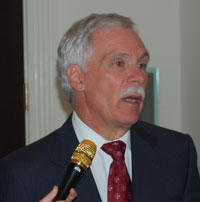 Speaking to reporters this week, Secretary Ed Schafer noted that growth in ethanol and biodiesel production have helped create “remarkable prosperity and growth in the agriculture economy” during the Bush administration.