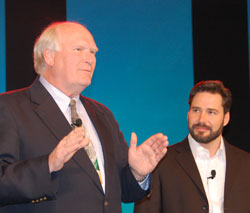
Bankrupt ethanol producer VeraSun has announced an agreement to sell a significant portion of its assets to Valero Energy Corporation for $280 million.
 The deal would involve VeraSun production facilities in Aurora, South Dakota; Charles City, Fort Dodge, and Hartley, Iowa; and Welcome, Minnesota; and a development site in Reynolds, Indiana. Having entered into the Valero agreement, the Company is now required to hold an auction to determine if other bidders will offer more favorable terms than Valero’s bid, referred to as a “stalking horse” bid.
“Given current difficult industry conditions and continued constrained credit markets, we believe that commencing a sale process is in the best interest of Company stakeholders,” said Don Endres, VeraSun’s Chief Executive Officer.
This would be Valero’s first foray into the ethanol business. The day before VeraSun announced the deal, Valero CEO Bill Klesse said in a conference call that they were “very interested” in making acquisitions in distillates, which include diesel fuel, jet fuel and heating oil, at the same time they are trying to sell a gasoline refinery in Aruba.
 Officials with
  Just last week, Crescent took part in the grand opening of a
  The City of Kokomo, Indiana has opened a city-run biodiesel plant… the state’s first municipally-run biodiesel refinery.
 On the heels of hosting the National Biodiesel Conference & Expo, San Francisco will be home to Algae Biofuels World Summit, March 23-25, 2009 at the Marines’ Memorial Club & Hotel.
  A California-based energy company has designed a mobile biodiesel production plant, able to make 2,000 to 3,000 gallons of the green fuel a week while fitting in the back of a 8 foot by 45 foot by 9.5 foot trailer.
 According to the Springfield News Leader, Missouri’s law of standardizing a ten percent ethanol fuel blend into gasoline recently re-emerged in a Senate agriculture committee hearing.
 The
The  Retired General Wesley Clark today embraced his new role as a leader in the growth of renewable energy.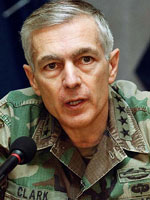
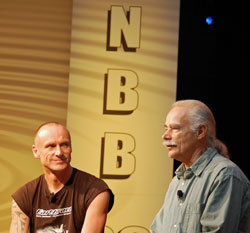 Several more awards were presented on the last day of the