In a time when we constantly hear about rising unemployment, there’s some good news for the U.S. job sector… thanks to ethanol and biodiesel. A new report says advanced biofuels could directly create nearly 200,000 jobs in the next 13 years, with indirect and direct effects accounting for more than 800,000 new jobs and nearly $150 billion in economic activity during that same period.
The report by Bio Economic Research Associates, U.S. Economic Impact of Advanced Biofuels Production: Perspectives to 2030, analyzes the growth of an advanced biofuels industry and how it will impact four areas critical to U.S. economic recovery, including job creation, economic output, energy security and investment opportunity.
 The report earned praise from The Biotechnology Industry Organization (BIO):
Brent Erickson, executive vice president of BIO’s Industrial and Environmental Section, said, “The advanced biofuels industry could create 29,000 new jobs and create $5.5 billion in economic growth over the next three years, as companies continue to deploy the
technology. As the advanced biofuels industry grows to the levels established in the Renewable Fuel Standard, it will create more than 800,000 new jobs throughout the economy. These new jobs will be in sectors of the economy that have experienced the highest rates of job losses over the past year, including agriculture and construction.”
The new study’s results include:
• Direct job creation from advanced biofuels production could reach 29,000 by 2012, 94,000 by 2016, and 190,000 by 2022.
• Total job creation, accounting for economic multiplier effects, could reach 123,000 in 2012, 383,000 in 2016, and 807,000 by 2022.
• Direct economic output from the advanced biofuels industry is estimated to rise to $5.5 billion in 2012, $17.4 billion in 2016, and $37 billion by 2022.
• Taking into consideration the indirect and induced economic effects, the total economic output effect for the U.S. economy is estimated to be $20.2 billion in 2012, $64.2 billion in 2016, and $148.7 billion in 2022.
• Advanced biofuels production under the RFS could reduce U.S. petroleum imports by approximately $5.5 billion in 2012, $23 billion in 2016, and nearly $70 billion by 2022.
• The cumulative total of avoided petroleum imports over the period 2010–2022 would exceed $350 billion.
And BIO officials say by 2030, a modest target of 45 billion gallons of biofuels could produce nearly 2 million jobs and $300 billion in economic activity… plus the savings the country would see by not importing the oil to cover that fuel. They believe that advancing technology will help meet those goals.
 Last summer, crude oil prices were skyrocketing to around $150 a barrel, and we were all sweating the $4-$5 a gallon fuel prices every time we pulled up to those gas pumps. It was during this time of anxiety that the debate around the role biodiesel and ethanol were playing in food price spikes that were also hitting everyone hard in the pocketbooks. Our friends at Farm Foundation took on this debate when they released in July 2008 the report, What’s Driving Food Prices?
 This edition of the DomesticFuel Cast… and yes, we have returned on a regular basis… we look at Destiny, Florida… a community striving to be the nation’s first eco-sustainable city.
 She explains Destiny was founded by South Florida land developer Anthony V. Pugliese, III and Fred DeLuca, co-founder of Subway restaurants based on the principles of being sustainable on an agricultural, environmental and economical basis. When it is fully operational, the city will operate an energy park that produces power from biodiesel, ethanol, solar and wind sources for companies that contribute to sustainable industries, such as building solar panels. In fact, she says they hope there will be 16,000 green tech jobs in the city one day.
 The Alternative Fuel Vehicle Institute (AFVi) have announced that General Wesley Clark, T. Boone Pickens, and Jeff Schuster will be their keynote speakers for their 2009 conference. Their fifteenth annual conference will be held in Orlando, Florida on April 19-22, 2009.

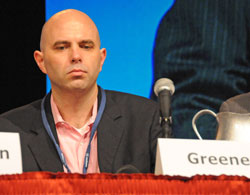 Indirect land use has been a hot topic at this year’s 14th annual National Ethanol Conference.
 Dell Computer officials have announced their 240,000 square-foot campus in Oklahoma City will be powered entirely by wind energy.
 Volkswagen will be running B5 biodiesel in all its race cars, transport vehicles and generators during the 2009 Jetta TDI Cup season.