ACE Conference 2026

Minnesota State Auction to Include FFVs

mnMore than 100 surplus vehicles will be sold at public auction on May 16 in Arden Hills, Minnesota including 40 flexible fuel vehicles. The vehicles are primarily from the 2001 through 2006 model years, with varying mileage.

The auction opens for inspection and registration at 8 a.m., with bidding beginning about 9:30 a.m., at the Department of Administration fleet and surplus services building, 5420 Old Hwy 8 in Arden Hills. All goods are sold as is; sales are final and must be settled in full via cash or personal check on the day of the auction.

The state conducts about 12 surplus goods auctions a year and sells surplus continuously online. In addition to eight live auctions slated for the Twin Cities this year, sales will be held in Bemidji, Luverne and Grand Rapids; a calendar is available here.

ffvlogoMinnesota has 360 of the 1,994 E85 fueling stations across the nation. Minnesota has more E85 outlets than any other state.

E85, Flex Fuel Vehicles

DF Cast: Climbing Over Ethanol’s Blend Wall

John Davis

df-logoEthanol seems to have hit a bit of wall. While it has been great for mixing with regular unleaded gasoline at a 10 percent blend, the industry wants to up that amount to 15 percent, overcoming what is being called a “blending wall” that is keeping the green fuel from growing beyond its current levels.

While some might worry what 15 percent ethanol would do to their engines, ethanol advocates, such as Tom Buis, CEO of Growth Energy… an advocacy group for ethanol… says America’s drivers can rely on higher blends of ethanol even in non-flex fuel vehicles without worrying about damage to engines and pipes.

growth-energy-smallerThe federal government is considering changing the rules to allow the higher blend. The Environmental Protection Agency has proposed raising the amount to 15 percent and is looking for comments about that idea. The comment period is currently until May 21st, but several ethanol groups are asking to extend that for 60 days. The American Coalition for Ethanol has a petition here that you can sign to encourage the upping of the ethanol blend.

In this edition of the Domestic Fuel podcast, you’ll hear from several of these groups pushing for the change, including Bob Dinneen, President of the Renewable Fuels Association, National Corn Growers Association first vice president Darrin Ihnen and Jessica Bennett, Director of Public Policy at NCGA, Buis with Growth Energy, as well as U.S. Secretary of Agriculture Tom Vilsack.

Pretty interesting conversation and you can here it hear: [audio:http://www.zimmcomm.biz/domesticfuel/DFCast-5-08-09.mp3]

You can also subscribe to the DomesticFuel Cast here.

You can find more information about the proposed rule change at the Growth Energy Web site.

Audio, Domestic Fuel Cast, Ethanol, Growth Energy, News, RFA

A Bigger Bang for the Buck: Bioelectricty or Biofuels?

Joanna Schroeder

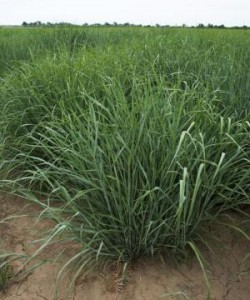
ScienceDaily.com broke a story today about an article that will published in the May 22, 2009 issue of Science. The article focuses on what is more efficient – converting biomass to fuel or converting biomass to electricity? The study authors wrote in the online edition of the journal that the best bet is to convert the biomass to electricity rather than ethanol.

Credit: Photo by Stephen Ausmus, USDA/Agricultural Research Service

Credit: Photo by Stephen Ausmus, USDA/Agricultural Research Service

They calculate that, “compared to ethanol used for internal combustion engines, bioelectricity used for battery-powered vehicles would deliver an average of 80% more miles of transportation per acre of crops, while also providing double the greenhouse gas offsets to mitigate climate change.” Producing biomass for electricity would also provide another option to replace coal, highly criticized for its contribution of  greenhouse gas emissions and other climate change gases.

Chris Field, co-author of the study and director of the Department of Global Ecology at Carnegie Institution, said nobody has asked nor answered the question which is relatively obvious. “The kinds of motivations that have driven people to think about developing ethanol as a vehicle fuel have been somewhat different from those that have been motivating people to think about battery electric vehicles, but the overlap is in the area of maximizing efficiency and minimizing adverse impacts on climate.”

Here is what they did: they performed a life-cycle analysis of both bioelectricity and ethanol technologies, taking into account not only the energy produced by each technology, but also the energy consumed in producing the vehicles and fuels.

Here is what they found: Bioelectricity wins in the transportation-miles-per-acre comparison, regardless of whether the energy was produced from corn or from switchgrass.

They also discovered: Bioelectricity and ethanol differ in their potential impact on climate change. Some approaches make the problem worse, some make the problem better.

Although the researchers acknowledge that bioelectricity is the winner, they caution that the issue facing society in choosing an energy strategy are complex. Bioelectricity may win in terms of transportation and climate but could lose in other categories like water consumption, air pollution and economic costs.

The study, “Greater Transportation Energy and GHG Offsets from Bioelectricity Than Ethanol,” is available on Science’s website.

biomass, Energy, Environment, Miscellaneous, Research

NREL Recipient of Recovery Act Funding

Joanna Schroeder

“The goal is to set America on a course for a secure and sustainable energy future.” DOE Energy Secretary Steven Chu

20090501_chu_group1

The alternative energy industry is already receiving the monies set aside to help spur the economy and reduce America’s dependence on fossil-fuel based energy sources. The National Renewable Energy Laboratory was the recipient of $110 million in funding, announced by U.S. Department of Energy Secretary Steven Chu. The funds were allocated as part of the Recovery and Investment Act.

The funds have been designated to accelerate the completion of the construction of NREL’s Golden Colorado campus. Once completed, this research facility will dramatically expand NREL’s capacity for renewable energy research. The facility will be equiped with the latest technologies to reduce energy consumption, a model for future buildings across America.

The remaining $10 million in funds will be used to improve NREL’s National Wind Technology Center located near Boulder, Colorado. NREL’s Director Dan Arvizu said, “These investments are an unmistakable signal from DOE about the Laboratory’s central role in advancing President Obama’s clean energy agenda. It is a significant investment in NREL’s future.”

The announcement was part of a half-day tour of NREL by Secretary Chu and included Colorado Governor Bill Ritter. Colorado has been positioning itself as a leader in renewable energy, and earlier this year President Obama went to Colorado where he signed the Recovery and Investment Act into law.

biofuels, Energy, Government, Legislation, News, Wind

“Super-Organism” Leads to Cellulosic Breakthrough

Joanna Schroeder

mascoma_logoThe golden dream may have become reality today as Mascoma Corporation announced a major technological breakthrough in the process strategy for production of biofuels from cellulosic biomass known as consolidated bioprocessing, or CBP. The major advantage of CBP is that is significantly reduces the cost to produce cellulosic ethanol by combining several steps into one through the use of a “super-organism”.  The high cost of cellulosic ethanol production has been a major concern facing the industry, and a barrier to entering the consumer market as a competitive fuel. This may now be a thing of the past.

CBP eliminates the need for the production of expensive enzymes that are typically needed to break down the lignen and covert it to sugar. Rather, Mascoma is using engineered microorganisms that produce cellulases and ethanol in one step. “This is a true breakthrough that takes us much, much closer to billions of gallons of low cost cellulosic biofuels,” said Dr. Bruce Dale, with Michigan State University. “Many had thought that CBP was years or even decades away, but the future just arrived. Mascoma has permanently changed the biofuels landscape from here on.”

Mascoma’s claims were proven during the 31st Symposium on Biotechnology for Fuels and Chemicals in San Francisco, during a demonstration given by Dr. Mike Ladisch, Chief Technology Officer. Additional advances with both bacteria that grow at high temperatures, coined thermophiles, and recombinant cellulolytic yeasts have been discovered.

These advances reduce the operating and capital costs required for cost-effective commercial production of cellulosic ethanol. This is great news and even more so in light of yesterday’s announcement of the creation of the Interagency Working Group which includes the funding of building and producing next generation biofuels.

biofuels, Cellulosic, Company Announcement, Research

Ethanol Production Begins at Plant in Iowa

ldcommoditiesThe Iowa Renewable Fuels Association announced that Louis Dreyfus Commodities has began production of its 100 million gallon ethanol plant near Grand Junction, Iowa.

IA RFA“Thanks to the fortitude of companies like Louis Dreyfus Commodities, Iowa’s ethanol industry continues to move forward,” said IRFA Executive Director Monte Shaw. “I can’t predict the future, but there is a sense that a corner has been turned away from the difficult ending of 2008. This new biorefinery creates green collar jobs and provides an attractive market for local farmers. That is what the ethanol industry has been about since day one and that won’t change.”

Jay Nelson of Louis Dreyfus Commodities stated: “We appreciate all the support we have received from our state, county and local partners in Iowa. Local partnerships have always been of paramount importance to Louis Dreyfus over the course of our 150-plus year history. We look forward to being an active part of the community for many years to come.”

Currently Iowa has 40 ethanol refineries producing 3.3 billion gallons annually and construction of future plants will produce almost 500 million gallons.

Ethanol

President Clinton to Speak at Ethanol Summit in Brazil

Joanna Schroeder

080329_bill_clintonLay down the red carpet. Former President Bill Clinton will be a headliner at this year’s Ethanol Summit in Sao Paulo, Brazil June 1-3, 2009. The conference is hosted by UNICA,vthe Brazilian Sugarcane Industry Association (UNICA), and is touted as one of the most important gatherings focused on biofuels in the world.

After eight years in the white house, President Clinton established the William J. Clinton Foundation with a mission, “to strengthen the capacity of people in the United States and throughout the world to meet the challenges of global interdependence.” The Foundation has grown to more than 1,400 staff and volunteers around the world.

So what’s the tie between Clinton and Biofuels? There are several: the Clinton Climate Initiative, the Clinton Hunter Development Initiative and the Clinton Giustra Sustainable Growth Initiative. The cross-over goals all the three campaigns are to fight worldwide climate change and develop sustainable growth, especially in Africa and Latin America.

There will be more than 90 speakers, in addition to Clinton, from every continent addressing challenges and opportunities during the summit. There will also be several panels and one will be moderated by The Economist. It’s not too late to update your passport and hop on a plane and engage in the worldwide discussion on biofuels.

For more information about the Ethanol Summit 2009, please visit: http://www.ethanolsummit.com.br/english

biofuels, conferences, politics

Ethanol Industry Chief Featured in NY Times

Cindy Zimmerman

The president and CEO of the Renewable Fuels Association had a chat with the New York Times this week about the whole issue of indirect land use changes and ethanol.

RFABob Dinneen is featured in a post today on the NY Times “Green Inc.” blog in a post by reporter Kate Galbraith.

Mr. Dinneen emphasized that his group was perfectly willing to factor in such indirect land-use changes. But he expressed concern that biofuels are the only industry for which this calculation is made. Petroleum, for example, does not factor in land use changes — and besides, he said, “Where’s the carbon impact associated with development in suburbia?”

“They can’t just do it to us and not to everyone else,” he argued.

Mr. Dinneen welcomed the comment period that will follow the E.P.A.’s proposals, and said that the ethanol industry believed that adjustments on the land-use front are needed.

“Right now, I think the model is too uncertain, the assumptions are out of whack and it needs to be promulgated more fairly,” he said.

Read the whole post here.

Ethanol, Indirect Land Use, RFA

Making Natural Gas Out of Algae

John Davis

pnnlScientists working for the federal government have found another way to turn algae into energy. The green pond scum has been found as a good source for biodiesel. Now, algae can be turned into natural gas.

This press release from the U.S. Department of Energy’s Pacific Northwest National Laboratory (PNNL) says the feds have transferred the technology to the marketplace under a license between Genifuel Corporation and Battelle:

The method, called catalytic hydrothermal gasification, creates natural gas out of algae – more quickly, more efficiently and at higher yields than other biofuel processes. Genifuel expects the process also requires less capital investment. The license agreement moves this technology for renewable energy production a step closer to commercial reality. Battelle operates PNNL for DOE.

“Algae and other aquatic biomass hold significant promise for our country’s ability to produce renewable energy domestically,” said Genifuel President Jim Oyler. “At Genifuel we have developed efficient growth and harvesting techniques for the aquatic biomass. With this gasification process, we can convert the biomass to a clean fuel that is almost completely carbon-neutral.”

He calls the PNNL process an “elegant system,” noting that more than 99 percent of the biomass is gasified to produce renewable natural gas and byproducts such as carbon dioxide which can be recycled and reused in the algae growth ponds.

PNNL originally developed the catalytic gasification process to clean up industrial and food processing waste as an alternative to incineration. Over the past 10 years, PNNL scientists advanced the technology to include a more stable catalyst that enables it to also convert wet biomass, such as algae. PNNL has tested the gasifier with terrestrial plants, kelp and water hyacinths. It works especially well for aquatic biomass such as algae, because the feedstock doesn’t require drying before fuel production.

Officials say that electricity made from the natural gas will help utilities meet renewable fuels standards. In addition, the natural gas produced from the process can be shipped through existing pipelines and used in conventional natural-gas turbine generators.

algae

RFS Rules: Bad for Some Biodiesel, Good for Others

John Davis

The new, proposed Environmental Protection Agency rules for the Renewable Fuels Standard has the biofuels community split over if they will be good for the green fuels. The point of contention has to do with the impact Indirect Land Use Change (ILUC) will have on biofuel production. Under the new rules, biodiesel made from soybeans has been deemed to reduce greenhouse gas emissions by only 22 percent… while it must reduce those emissions by 50 percent if it wants to count toward the RFS 1-billion-gallon goal by 2012. There also are emission goals for ethanol, but existing corn ethanol plants have been exempted; existing biodiesel refineries did not get the same break.

nbb-logo2So, what’s good news for ethanol… and welcomed in that community… is bad news for biodiesel. The National Biodiesel Board was on Capitol Hill today, where Vice President of Federal Affairs Manning Feraci told the U.S. House Committee on Agriculture, Subcommittee on Conservation, Credit, Energy and Research that the new requirement would seriously imperil the biodiesel industry:

“By statute, EPA must consider significant indirect emissions when calculating a renewable fuel’s emission profile. Unfortunately, it appears that the proposed rule EPA unveiled yesterday relies on uncertain, inexact assumptions pertaining to Indirect Land Use Change in calculating biodiesel’s greenhouse gas emission profile. The result is that biodiesel produced from domestically produced vegetable oils are disqualified from the Biomass-based Diesel program. There are many factors unrelated to U.S. biodiesel production that impact land use decisions abroad. For example, in Brazil, forestry, cattle ranching and subsistence farming drive land use decisions, yet the EPA’s proposed methodology appears to attribute this change to U.S. biodiesel production. This assumption defies common-sense…

“As a result of these dubious land use assumptions, the EPA’s proposed rule restricts feedstock for low-carbon diesel replacement fuel to only animal fats and restaurant grease. Vegetable oils account for more than sixty percent of the feedstock that is available to meet the RFS-2 Biomass-based Diesel targets, and the RFS-2 volume goals simply cannot be met if vegetable oils are disqualified from the program. Even under the so-called pathway for biodiesel that is briefly outlined in the proposed rule, there will not be enough feedstock available to meet the RFS-2 volume goals for Biomass-based diesel. This outcome is not consistent with either sound science or sound energy policy.

Meanwhile, the folks in the algae-biodiesel business seem happy with the proposed EPA changes. Dr. John Scott, chairman of PetroAlgae, released a statement today in favor of the nearly $800 million in biomass funding that will become available:

“This is a good first step toward building America’s clean energy economy, but it’s not the end game. Going forward, two things will be critical: investing in micro-crops like algae that are more productive and do not jeopardize our food and water supplies; and making sure we back solutions that are commercially viable today and sustainable over the long term.”


algae, Biodiesel