

Many drivers across the country are getting frustrated as gas prices are on the rise and oil prices have surpassed $70 a barrel. Algae production may be a good replacement for oil and today, OriginOil, Inc., announced that it has filed for a Patent Cooperation Treaty (PCT) on its technology to convert algae to renewable oil. The renewable oil could be used to replace diesel, gasoline, jet fuel, plastics, and solvents.
A challenge that has faced researchers on the culturing of microalgae has been light utilization. According to a company representative, “The invention addresses challenging problems in the culturing of microalgae, including high energy utilization, fouling of light emitting surfaces, and diurnal growth cycles.” To mix metaphors, in a nutshell, this technology allows the algae to have access to the light throughout the photobioreactor, rather than just on the surface.

The filing describes system and methods for enhancing mass production of microalgae, involving the use of light arrays. The systems and methods are useful in applications such as energy production, fuels, foods, pharmaceuticals, plastics, and CO2 fixation. Also described are systems and methods for lysing (rupturing) cells and extracting their components, and for producing electricity with closed-loop CO2 recycling.
Vikram Pattarkine, PhD joined the OriginOil team as the chief technology officer and oversees the company’s research program. Pattarkine noted, “The pace of development at OriginOil has been extremely rapid. With this filing, we have consolidated our intellectual property protection at the international level in a number of areas of innovation at OriginOil.”
Earlier this year, OriginOil announced that it had finalized a deal with the Department of Energy’s National Laboratory to validate and commercialize the technology. The company has also been awarded Biofuels Digest’s Top 50 award as a top company changing the face of the biofuels industry.
 The wind and solar industry continues its rapid growth in the U.S. with the announcement that
  The rationale of indirect land use remains in the hot seat and the biofuels industry continues to stand its ground. Today,
  Zubrin writes, “A more cogent critique, in my view, would be a moral one, as the Searchinger argument, now apparently embraced by the EPA, presupposes that it is or should be a proper goal of American policy to restrict the economic growth of underdeveloped nations.”
 The ethanol industry is looking forward to a
  Two venture capitol companies have invested in an Israeli company with technology for converting cellulosic materials into fermentable sugars.
 IDEA stands for “Immobilized Digestive Enzyme Assay” which Dr. Brad Lawrence with Novus says helps measure the digestibility of lysine and other amino acids in dried distillers grains (DDGS), the livestock feed by-product of ethanol production. “Distillers is one of the few ingredients that we have that does come from multiple manufacturing facilities with different methods that could impact amino acid digestibility,” said Dr. Lawrence. “We run this laboratory procedure that looks at all the digestibility of all the amino acids which gives us a tool to compare the economic value of distillers from different sources.”
 A new ethanol plant in Merrill, Iowa celebrated its grand opening last week.
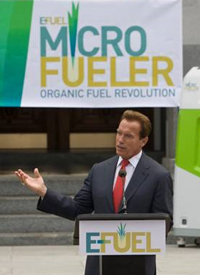 The
The  Electronic trading hours for CBOT grains, oilseeds and ethanol contracts will be expanded in the morning by one hour and fifteen minutes, until 7:15 a.m., starting July 1.
 Iowa Gov. Chet Culver joined industry representatives Thursday in meeting with House Speaker Nancy Pelosi and Senate Majority Leader Harry Reid, D-Nev., to urge them to enact higher mandates. “The number does matter,” Culver said later.