

 The U.S. Department of Energy (DOE) announced the availability of up to $5.5 million from the American Recovery and Reinvestment Act to increase the use of higher ethanol blends (up to E85). Two areas of interest are targeted: “Refueling Infrastructure for Higher Ethanol Blends” and “Outreach for Higher Ethanol Blends”.
DOE will offer up to $3.5 million to 15 to 30 cost-shared projects that will expand the infrastructure of fueling locations up to 85 percent ethanol. This may include modifications, upgrades, or expansions of existing fuel pumps and other infrastructure at retail stations or the installation of new equipment to accommodate the higher ethanol blends.
DOE will also select up to five national campaign projects and fund up to $2 million in an effort to raise public awareness of the benefits, safety, and use requirements of higher ethanol blends up to E85. This effort will help promote the use of renewable fuels to decrease dependence on petroleum.
Applications for this funding is due by September 30, 2009. For more information, click here and enter Reference Number DE-FOA-0000125.
 The state of Colorado is offering businesses the opportunity to apply for grants for small wind turbine installations.Colorado residents and businesses have until August 28, 2009 to apply for the New Energy Economic Development (NEED) grants. The grants provide funds to purchase and install small wind turbines (or other renewable energy systems). These NEED grants help Colorado residents (or businesses) install small wind turbine systems for much below the normal cost. The NEED grants can be used in conjunction with the Federal Investment Tax Credit (ITC) which further reduces the cost to install the small wind turbines.
 BBI International recently completed a county-wide biomass assessment and economic feasibility sponsored by The Agricultural Utilization Research Institute. The report is now available on the
  A biodiesel-powered hydroplane has been successfully tested at a Seattle-area boat race.
 Oregon has become the latest state to require diesel sold in the state… well, at least in nine counties in the northwest part of Oregon starting August 5th and the rest of the state by October 1… have a mix of biodiesel.
 The biodiesel industry and the soybean checkoff have teamed up to try to dispel some of the misinformation being used that would basically disqualify soybean-based biodiesel, the bulk of the nation’s biodiesel, from the proposed federal Renewable Fuel Standard (RFS-2).
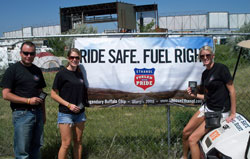 Bike riders at the Sturgis Motorcycle Rally are seriously appreciating their ethanol koozies. Here’s market development staff members from the
  Reps. Jay Inslee of Washington and Bill Delahunt of Massachusetts are preparing a bill that would require utilities to purchase small-scale renewable energy from developers at rates equal to the cost of production plus a premium. The so-called feed-in tariffs proposal would set European-style guarantees for investors that many credit for a recent boom in solar energy in Germany.
 “We have some brilliant Americans with brilliant business plans with brilliant technologies, but they don’t have financing,” Inslee said at a briefing last week on Capitol Hill. “The charm of the feed-in tariff is solid, take-it-to-the-bank security and confidence for the investing community.”
