

 The Colorado Corn Growers Association, the Governor’s Biofuels Coalition, Western Convenience Stores and Southern Colorado Clean Cities in Colorado Springs are partnering to celebrate the opening of a new E85 pump location at 227 West Fillmore Street in Colorado Springs, Colorado, on August 26. This will be the ninth station selling E85 in Colorado Springs.
“Use of ethanol can contribute greatly in our nation’s drive toward energy independence, improved air quality, reduced carbon emissions, and national security. Ethanol in our fuel had the net environmental impact of removing over 2 million cars from America’s roads in 2008 alone,” says Mark Sponsler, CEO of Colorado Corn. “And the product has to be conveniently available in order for consumers to use it regularly. This pump marks another step forward.”
“Many consumers have been duped into thinking that ethanol is not energy efficient and has caused significant food price increases. Credible independent scientists know differently, and so do the Governor’s Biofuels Coalition (GBC) and the many Clean Cities organizations across the country. Western Convenience has been a great partner and one of Colorado’s industry leaders in renewable fuels adoption.”
The number of E85 fueling locations in Colorado has grown significantly over recent years. Currently there are over 100 stations open and selling Biofuels. Western Convenience has invested in 23 of those locations throughout Colorado. The Colorado Corn Growers Association and GBC have provided funding and support to most of the E85 refueling sites across the state.
Consumers who drive FFV’s will have an opportunity to save money by filling up for only .85 cents a gallon on Wednesday, August 26. Western Convenience is making E85 available for .85 cents a gallon from 11:00 a.m. to 1:00 p.m. in a promotional effort to highlight the availability of the fuel at their Store in Colorado Springs.
 The Obama administration’s
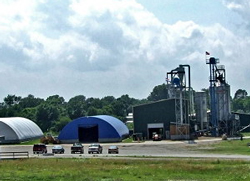
  Agriculture Secretary Tom Vilsack says the biomass facility is taking wood, corn stalks and other crop residue and converting it into pellets that can be used to produce energy or a substitute for propane on the farm.
  A one-million-gallon-a-year algae-biodiesel plant could soon become a reality for Massachusetts with some help from the state and federal governments.
 The bad news is: According to
 A pair of three-year National Science Foundation grants will help the St. Louis-based Donald Danforth Plant Science Center continue its biofuel research.
 The Canadian government is putting more than $72 million into a biodiesel plant in Ontario.
 The news was also welcomed by the Canadian Renewable Fuels Association (CRFA):
 The recent American Coalition for Ethanol’s 22nd Ethanol Conference & Trade Show in Milwaukee saw an exploration of an issue that remains a hot issue in the biofuels biz: Indirect Land Use.
 The concept that the growth of some biofuels feedstocks in the United States, especially corn and soybeans, could cause the cutting down of the rain forests in other parts of the world… and would disqualify some of the green fuels from being part of the proposed Renewable Fuels Standard.
 The latest discussion featured energy economist from Purdue University Wally Tyner and Air Improvement Resource President Tom Darlington, who talked about how studies that blamed corn-based ethanol for deforestation ended up being wrong and how the most common economic models used to figure the amount of Indirect Land Use vary too much and don’t consider things like dry distillers grains.
 The city of Gary, Indiana plans to replace 120 cars and trucks in its aging auto fleet this year with new flexible fuel vehicles (FFVs) paid for with a $3 million grant from the Federal Highway Administration.
 As the company moves closer to the commercial development phase for cellulosic ethanol,