

 A man who recycles restaurant grease into biodiesel while busting the myths the green fuel’s opponents have been spreading is being recognized by a network dedicated to sustainability issues.
Biodiesel Magazine reports that Brent Baker, the CEO of Tri-State Biodiesel LLC will receive the Social Venture Network’s 2009 Innovation Award at the group’s fall conference, starting October 22 in La Jolla, California:
 As a representative of the biodiesel industry, Baker said he has been involved in dispelling the “myths” created by certain lobbying groups meant to confuse the public about the benefits and characteristics of biodiesel. “It’s been particularly bad the past two years,” Baker said. “One is that biodiesel production and use is worse for the environment, and takes more energy, than petroleum—and that simply is not true,” he said. “The first 15 years I was involved in this business, I never heard that.” Baker feels his role in education and the promotion of biodiesel led to Tri-State’s selection as an SVN Innovator. “There’s been a lot of negative publicity and I’ve been educating legislators and others about the positives.”
One of the controversies surrounding biodiesel lately has been its perceived role in the destruction of South American and Southeast Asian tropical forests. Biodiesel Magazine asked him if palm methyl esters were tarnishing the reputation of the industry. “The palm oil industry was an industry well before biodiesel,” Baker said. “And there is sustainable palm oil production, so we can’t let pictures of fires and abandoned villages color our whole perception of palm production.”
The article goes on to point out that by using the grease from 2,700 restaurants in the New York City area and turning it into biodiesel, Baker is practicing on of the cornerstones of the SVN: sustainability. But he also tips his hat to the first generation biofuels of corn-based ethanol and soybean-based biodiesel as paving the way.
 Texas fuel retailers are now selling 10 percent ethanol. Local gas stations have been updating filters, checking tanks and applying green ethanol-blend stickers to put on pumps, but such a change is not without its cost and problems for retailers. The ethanol mixture is the result of 2005 and 2007 federal energy acts requiring specific benchmarks for refineries to produce cleaner-burning fuel.

 “We are delighted to work with the Fagen team,” said Fibrowatt CEO Rupert Fraser, “their experience as EPC contractors is very impressive and we are certain that we are moving forward with a contractor that understands the unique characteristics of our technology. This agreement is another step for us in North Carolina – helping the State move forward towards its goal of being a leader in the implementation of home-grown renewable energy.”
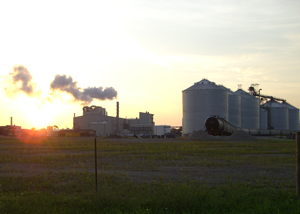 “Profitability has returned,” says Joe Victor, who is Vice President of commodity research advisory firm
  “Growth Energy supports a Low Carbon Fuel Standard as long as it is done right, and the Low Carbon Fuel Standard proposed by the California Air Resources Board is not done right,” said Growth Energy CEO Tom Buis. “It relies on a flawed, unproven and unscientific concept that would punish biofuels, despite the opportunity biofuels like ethanol provide as cleaner, greener fuels that are an alternative to dirty foreign oil.”
 Greensburg, Kansas, literally destroyed by a tornado in May, 2007, is getting some help from the government to have a green energy source supply the power for the town as it continues to rebuild.
 Leading researchers and companies looking to turn algae into biofuels will meet in Hawaii next month to talk about progress and challenges with the green-slime-into-green-fuel process.
 Corn Plus was one of five Minnesota businesses recognized by
  “Conducting the trials locally gives local farmers a chance to see DDGS and CGF use firsthand in a trial that utilizes their own climatic conditions. It provides them a reliable source of data they can be more confident in,” said Lori Feltis, USGC Rest of the World Advisory Team member, who is currently in Egypt to assess the use of U.S. DDGS and CGF.
 According to the